Comparison Between the Paleo-Hebrew Alphabets and Hieratic Egyptian & the Phoenician Alphabet
Comparison Between the Paleo-Hebrew Alphabets and Hieratic Egyptian & the Phoenician Alphabet: Click to

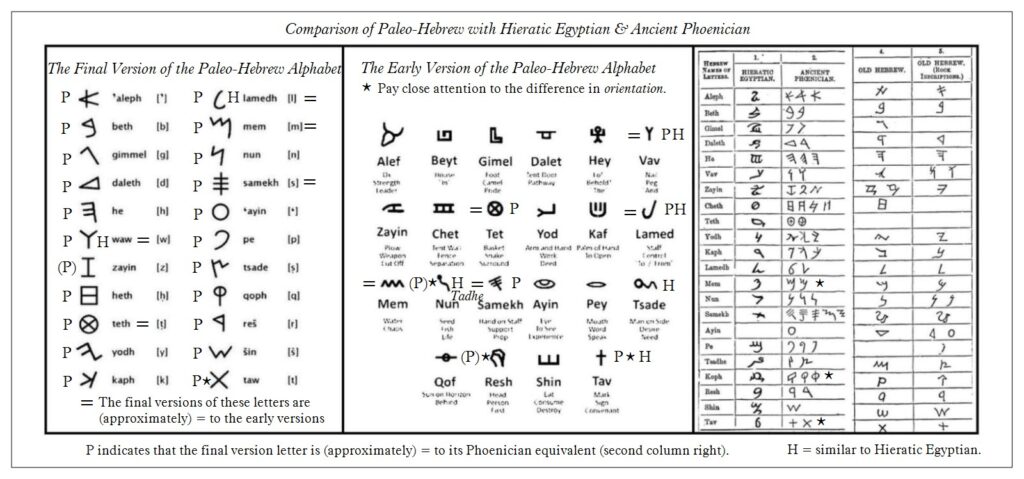
This chart clearly illustrates the comparison between both Early (right) and Late (left) Paleo-Hebrew with Hieratic Egyptian & Ancient Phoenician. The comparison between the Late Paleo-Hebrew with the Phoenician alphabet establishes beyond a reasonable doubt that they are virtually one and the same alphabet, based on the soundly reasoned inference that they developed simultaneously in the historical time line, implying in turn that the cross-cultural and cross-economic exchanges between these two civilizations was very intense. This quotation from Wikipedia is particularly telling,

Phoenician had long-term effects on the social structures of the civilizations which came in contact with it. As mentioned above, the script was the first widespread phonetic script. Its simplicity not only allowed it to be used in multiple languages, but it also allowed the common people to learn how to write. This upset the long-standing status of writing systems only being learned and employed by members of the royal and religious hierarchies of society, who used writing as an instrument of power to control access to information by the larger population.


https://en.wikipedia.org/wiki/Phoenician_alphabet

The Phoenician alphabet is also often tagged Proto-Canaanite for inscriptions anterior to 1050 BCE. It is the first ever consonantal proto-alphabet, otherwise known as abjad.  The Phoenician alphabet was derived from Egyptian hieroglyphics on the one hand and from cursive Hieratic Egyptian on the other. What is particularly striking about the Phoenician and Proto-Hebrew alphabets, which are mirror images of one another, is the fact that the former was used to write one of the earliest Semitic languages, while the latter was confined to Hebrew (also Semitic, but eventually to become completely unlike Arabic).
This may come as somewhat of a shock to die hard Jews and die-in-the-wool Muslims alike, but it is an incontestable historical fact which cannot be lightly brushed aside. It is absolutely essential to understand that these twin alphabets were far more ancient than the latter-day Hebrew alphabet, which was nevertheless a descendant of the Proto-Hebrew and the Phoenician alphabets alike. While the Phoenician alphabet was the scriptural medium for early Semitic Phoenician, that civilization, being far more ancient than Islam, was in intimate contact with Judeo-Palestine, with whom it cultivated friendly cultural and economic ties. In other words, the religious overlay imputed to the latter-day Hebrew alphabet, itself indirectly derived from the Phoenician alphabet versus the Arabic alphabet, was utterly absent from the consciousness of both the early Semitic Phoenicians and Hebrews. Of course, the Arabic alphabet eventually did develop on its own from the 6th. century AD, characteristically unlike the Phoenician and Proto-Hebrew alphabets in every conceivable way.

The Similarities Among Hieratic Egyptian, the Phoenician alphabet, Early Proto-Hebrew and Late Proto-Hebrew:

Now let’s take a good close look at the alphabets in this chart.

1. Oddly enough, Early Proto-Hebrew bears but a faint resemblance with the Phoenician and Late Proto-Hebrew alphabets, but it does have some points in common with Hieratic Egyptian. Given this scenario, it somehow strikes me that Early Proto-Hebrew was anterior to both the Phoenician and Late Proto-Hebrew alphabets; otherwise, how are we to explain all these bizarre discrepancies? Not that I would know, as I am no expert in Egyptian hieroglyphics or Hieratic Egyptian. I leave it to the expert linguists in that domain to enlighten us, and I certainly hope they will.

2. For all intents and purposes, the Phoenician and Late Proto-Hebrew alphabets are identical.

3. Except for lamedth and tav (taw), neither the Phoenician and Late Proto-Hebrew alphabets resemble Hieratic Egyptian and the Early Proto-Hebrew in any significant way, which is particularly surprising to this author. The early Proto-Hebrew letter vav mirrors both its Hieratic and Phoenician equivalents, as well as the letter waw in Proto-Hebrew, the latter merely being an avatar of the previous three. Lamedh is also equivalent in all four scripts. If we take it as oriented right, Hieratic Egyptian tadhe bears a close resemblance to early Proto-Hebrew nun & tsade, which instead are oriented left. There is absolutely nothing unusual in this phenomenon, which is so common to so many ancient scripts that it boggles the mind. Early Proto-Hebrew qof, horizontally oriented, bears a close resemblance to its equivalent, the vertically oriented Phoenician letter koph, while its tav resembles one of the two versions of the Phoenician tav. Just to complicate matters or to frustrate the living daylights out of us, taw in the Late Paleo-Hebrew alphabet resembles the other version of Phoenician tav.

PS If anyone who is an expert in Egyptian hieroglyphics or Hieratic Egyptian is willing to enlighten us poor ignorant folk on the finer points of their relationship with the other scripts we have discussed here, please do contact us, commenting on the inevitable errors in this post.

Richard
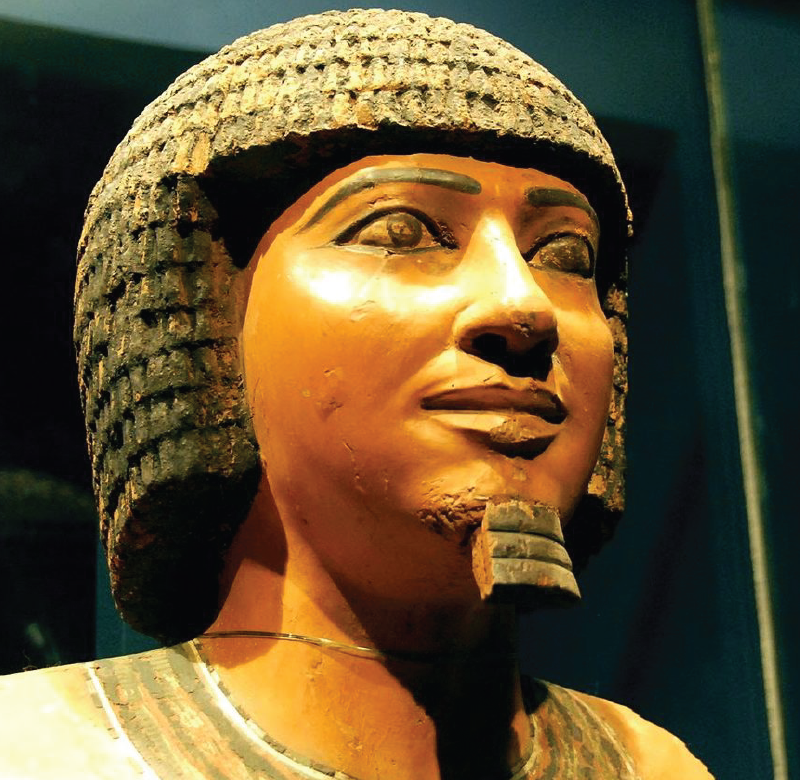
The Maxims of Ptahhotep or Instruction of Ptahhotep is an ancient Egyptian literary composition by the VizierPtahhotep around 2375–2350 BC, during the rule of King Djedkare Isesi of the Fifth Dynasty.[1] The text was discovered in Thebes in 1847 by Egyptologist M. Prisse d’Avennes.[2] The Instructions of Ptahhotep are considered didactic wisdom literature belonging to the genre of sebayt.[3] There are four copies of the Instructions, and the only complete version, Papyrus Prisse, is located in the Bibliothèque Nationale in Paris.[4] According to William Kelly Simpson, scholars tend to believe that the Instructions of Ptahhotep were originally composed during the Middle Kingdom, specifically the Twelfth Dynasty. The earliest extant copies of the text were altered to make them understandable for the Egyptians of the New Kingdom.[4] The text presents a very good picture of the general attitudes of that period.[4] The Instructions of Ptahhotep addresses various virtues that are necessary to live a good life and how to live accordingly to Maat, which was an important part of the Egyptian culture.
Summary
According to Simpson, the Vizier Ptahhotep was an elderly man of 96 years, ready to retire and was ready to pass down his position.[2] The king approved of Ptahhotep’s son succeeding him as vizier, but noted that the young cannot be born with wisdom and that they need the experience given by advanced age.[5] Typically viziers were replaced by someone older that had experience, so the Vizier Ptahhotep wrote the instructions to his son to give him wisdom and advice that can only be attained through experience.
This demonstrated the significance of growing old in ancient Egyptian society and the importance of having the wisdom to make the right decisions. The Instructions of Ptahhotep were texts that were constantly read and copied by students, scribes, and men that held a higher position.
The purpose of Instruction texts was to teach the youth how to live well and were usually written by elders. The main themes Ptahhotep focuses on are silence, timing, truthfulness, relationships, and manners.[2] The text helps to reconstruct the social context of that time by describing the cultural space in which the writings were influential.[6] In this way, this text can help a historian analyze the history of the period in which it was written.
Parkinson argued that ancient texts should be broken apart to properly understand the meaning of the text and to discern if any of it is accurate.[7] Since most of the wisdom literature was written like poetry, some parts may be true and others fictional to attract the reader. Most of the wisdom writings were accepted by the readers for their choice of words, for the author’s elite position held in society, and also based on the author’s personal experiences.[7]
There are four known copies of The Instructions of Ptahhotep, the first copy was written in the Old Kingdom and other copies were considered part of the Middle Kingdom. The Instructions from the original text were considered to originate from the Old Kingdom because it matched the social and intellectual thinking of that time period.[7] The copy on Papyrus Prisse, which is dated in the twelfth dynasty is considered as the original source. However, there are other Twelfth Dynasty versions and New Kingdom versions that omit some phrases, add phrases, and sometimes change the sequence of the words.[5] Papyrus Prisse contained three literary texts which were titled as “Instruction” or “Teaching”, and the only complete text within this papyrus was the Instruction of Ptahhotep.[6]
Select quotations (taken from Christian Jacq, The Living Wisdom of Ancient Egypt.[8])
“All conduct should be so straight that you can measure it with a plumb-line.” (p. 27)
“Injustice exists in abundance, but evil can never succeed in the long run.” (p. 32)
“Punish with principle, teach meaningfully. The act of stopping evil leads to the lasting establishment of virtue.” (p. 32)
“The human race never accomplishes anything. It’s what God commands that gets done.” (p. 41)
“Those whom God guides do not go wrong. Those whose boat He takes away cannot cross.” (p. 43)
“Follow your heart all your life, do not commit excess with respect to what has been ordained.” (p. 66)
“If you work hard, and if growth takes place as it should in the fields, it is because God has placed abundance in your hands.” (p. 74)
“Do not gossip in your neighbourhood, because people respect the silent.” (p. 74)
“Listening benefits the listener.” (p. 74)
“If he who listens listens fully, then he who listens becomes he who understands.” (p. 76)
“He who listens becomes the master of what is profitable.” (p. 76)
“To listen is better than anything, thus is born perfect love.” (p. 76)
“God loves him who listens. He hates those who do not listen.” (p. 76)
“As for the ignorant man who does not listen, he accomplishes nothing. He equates knowledge with ignorance, the useless with the harmful. He does everything which is detestable, so people get angry with him each day.” (p. 77)
“A perfect word is hidden more deeply than precious stones. It is to be found near the servants working at the mill-stone.” (p. 78)
“Only speak when you have something worth saying.” (p. 79)
“As for you, teach your disciple the words of tradition. May he act as a model for the children of the great, that they may find in him the understanding and justice of every heart that speaks to him, since man is not born wise.” (p. 85)
“A woman with happy heart brings equilibrium.” (p. 107)
“Love your wife with passion.” (p. 107)
“As for those who end up continually lusting after women, none of their plans will succeed.” (p. 108)
“How wonderful is a son who obeys his father!” (p. 112)
“How happy he is of whom it is said: ‘A son is kind-natured when he knows how to listen.'” (p. 112)
“Do not blame those who are childless, do not criticise them for not having any, and do not boast about having them yourself.” (p. 113)
“May your heart never be vain because of what you know. Take counsel from the ignorant as well as the wise…” (p. 119)
“So do not place any confidence in your heart in the accumulation of riches, since everything that you have is a gift from God.” (p. 126)
“Think of living in peace with what you possess, and whatever the Gods choose to give will come of its own accord.” (p. 127)
“Do not repeat a slanderous rumour, do not listen to it.” (p. 139)
“He who has a great heart has a gift from God. He who obeys his stomach obeys the enemy.” (p. 140)
“Those who[m] the Gods guide cannot get lost. Those they forbid passage will not be able to cross the river of life.” (p. 143)
SOURCE: Wikipedia 11/6/2024
Teaching of Ptahhotep (Complete English Translation)
The Introduction
The Teaching is set at court, with the highest official (‘vizier‘ in Egyptological translation), a man named Ptahhotep, requesting retirement from the king. The official paints a bleak picture of old age, evidently to convince the king that retirement is necessary, and asks that he be replaced in office by his son as ‘staff of old age’, a term also found in a late Middle Kingdom legal document to denote a son taking the office of his father, presumably on condition that he continues to support the father (UC 32037). This term, the Middle Egyptian syntax and the late Middle Kingdom date of the two earliest surviving manuscript copies, point to a Twelfth Dynasty date of composition.
The king consents to the request of Ptahhotep, with the observation that the young cannot be born with wisdom – by implication they need the experience given by advanced age. The Teaching presents then both a positive and the dramatised negative aspects of growing old in ancient Egyptian society.
Transliteration after Devaud 1916, using the copy on Papyrus Prisse as principal source. The section divisions here are those suggested by the red highlighting in Papyrus Prisse: after each section number are given the corresponding line-numbers in Papyrus Prisse.
Transliteration (using A, i, y, a, w, b, p, f, m, n, r, h, H, x, X, s, S, q, k, g, t, T, d, D) with translation
red: part of the text written in red in Papyrus Prisse
1 (Papyrus Prisse, column 4, line 1 to column 5, line 4)
sbAyt nt imy-r niwt TAty ptH-Htp xr Hm n nswt bity issi anx Dt r nHH imy-r niwt TAty ptH-Htp Dd.f ity nb.i tni xpr iAw hAw wgg iw iHw Hr mAw sDr n.f Xdr ra nb irty nDsw anxwy imrw r gr n mdw n.f ib tmw n sxA.n.f sf qs mn n.f n Aww bw nfr xpr m bw bin dpt nbt Smt irt iAw n rmT bin m xt nbt fnd DbA n ssn.n.f n tnw aHa Hmst wD.t(w) n bAk im irt mdw iAw ix Dd n.f mdw sDmyw sxrw imyw-HAt pAw sDm.n nTrw ix ir.t(w) n.k mitt dr.tw Snw m rxyt bAk n.k idbwy
The teaching of the Overseer of the City and Vizier Ptahhotep before the power of the dual king Isesi living for ever and eternity. The Overseer of the City and Vizier Ptahhotep declares: O my sovereign, Old age has struck, age has descended, Feebleness has arrived, weakness is here again. Sleep is upon him in discomfort all day. Eyes are grown small, ears deaf, Mouth silent, unable to speak, Heart emptied, unable to recall yesterday. Bones ache his whole length. Goodness has turned to evil, All taste is gone. What old age does to people is evil in every way. Nose is blocked, unable to breathe, how old (it feels) standing or sitting. Let a staff of old age be decreed to be made for this humble servant. Let him be told the speech of those who assess, the advice of the ancestors once heard by the gods. Then the same may be done for you, strife may be removed from the populace, and the Two Shores may toil for you.
2 (Papyrus Prisse, column 5, lines 4-6)
Dd.in Hm n nTr pn sbA r.k sw r mdt Xr HAt ix ir.f biA n msw wrw aq sDm im.f mtrt ib nb Dd n.f nn msy siA
Then the Power of this god said: Teach him then the speech from the past that he may provide the example for the children of the great. May hearing enter into him, the measure of every heart. Speak to him. For noone can be born wise.
3 (Papyrus Prisse, column 5, lines 6-8)
HAt-a m Tsw n mdt nfrt Ddt.n iry-pat HAty-a it-nTr mry nTr sA nswt smsw n Xt.f imy-r niwt TAty ptH-Htp m sbA xmw r rx r tp-Hsb n mdt nfrt m Axt n sDm.ty.fy m wggt n nty r tht st
Beginning of the collection of fine words Said by the man of the elite, foremost of arm god’s father and beloved of the god eldest son of the king of his body overseer of the city, vizier Ptahhotep in teaching the ignorant to be wise according to the rules of fine words, something useful to whoever heeds, and something harmful to whoever transgresses it.
4 (Papyrus Prisse, column 5, lines 8-10)
Dd.in.f xr sA.f m aA ib.k Hr rx.k nDnD r.k Hna xm mi rx n in.tw Drw Hmwt nn Hmww apr Axw.f dgA mdt nfrt r wAD iw gm st m-a Hmwt Hr bnwt
Then he addressed his son: Do not be proud on account of your knowledge, but discuss with the ignorant as with the wise. The limits of art cannot be delivered; there is no artist whose talent is fulfilled. Fine words are more sought after than greenstone, but can be found with the women at the grindstone.
5 (Papyrus Prisse, column 5, lines 10-13)
ir gm.k DAisw m At.f xrp ib m iqr r.k xAm awy.k XmsA.k m TA ib.k r.f nn mn.n.f n.k sand.k Dd bin m tm xsf sw m At.f nis.t(w).f m xm-xt pw rmn.n dAir ib.k aHa.f
If you meet an opponent in his moment A director of heart who is superior to you, bend your arms and bow; do not take up your heart against him, for he will not be swayed for you. You can belittle bad speaking by not clashing with him in his moment; it will mean he is called a fool, when your self-restraint has subdued his excess.
6 (Papyrus Prisse, column 5, lines 13-14)
ir gm.k DAisw m At.f mitw.k nty m rmnwt.k dd.k xpr iqr.k r.f m gr iw.f Hr mdt bint wr wfA in sDmyw rn.k nfr m rx n srw
If you meet an opponent in his moment Your equal, a man from your levels, silence is how you establish your superiority over him, while he is bad mouthing, greatly to the disgust of the assessors, and your name is the good one in the mind of the officials.
7 (Papyrus Prisse column 6, lines 1-3)
ir gm.k DAisw m At.f m Hwrw n is mitw.k m Ad ib.k r.f xft Xss.f imi sw r tA xsf.f n.f Ds.f m wSd sw r isy ib.k m ia-ib n nty xft.k qsn pw HDDw Hwrw ib tw r irt ntt m ib.k Hw.k sw m xsf n srw
If you meet an opponent in his moment Who is a poor man, and not your equal, do not vent your hear on him by his wretchedness. Put him on land for him to oppose himself. Do not pour out your heart at the man facing you. The demolition of a wretched heart is a difficult matter. What you wish will be done; beat him with the hostility of the officials.
8 (Papyrus Prisse column 6, lines 3-6)
ir wnn.k m sSmyw Hr wD n sxr n aSAt HH n.k sp nb mnx r wnt sxr.k nn iw im.f wr mAat wAH spdt n Xnn.t(w).s Dr rk wsir iw xsf.tw n swA Hr hpw swAt pw m Hr n awn-ib in nDyt iTt aHaw n pA DAyt mni sp.s iw.f Dd.f sxt.i r.i Ds.i n Dd n.f sxt.i Hr Hnt.i wn pHwy mAat wAH.s Ddw s w it.i pw
If you are to be among leaders at a command for the condition of the multitude, seek out for yourself every effective moment, until your condition reaches faultlessness. What is right is great, and (its) keenness enduring. It has not been overturned since the time of Osiris. The one who overlooks laws is punished; that is what is overlooked in the sight of the greedy. It is the small-minded that seize riches, but crime never managed to land its rewards. Whoever says ‘I snare for myself’ does not say ‘I snare for my needs’. The final part of what is right is its endurance; of which a man says ‘that is my father’
9 (Papyrus Prisse column 6, lines 8-10)
im.k ir Hr m rmT xsf nTr m mitt iw s Dd.f anx.i im iw.f Sw m t n tp-r.f iw s Dd.f wsr.i iw.f Dd.f sxt.i r.i siAt.i iw s Dd.f Hwt.f ky iw.f pH.f rdi.t(w).f n xm.n.f
Do not cause fear among people God punishes with the same. Anyone who says ‘I can live by it’ will lack bread for his statement. Anyone who say ‘I can be powerful’ will have to say ‘I snare against myself by my cleverness’. Anyone who says he will strike another, will end by being given to a stranger.
10 (Papyrus Prisse column 6, line 11- column 7, line 3)
ir wnn.k m s n Hmsw r st Tt wr r.k Ssp ddt.f diw r fnd.k m dgA r nty m-bAH.f m sti sw m gmH aSA bwt kA pw wdt im.f m mdw n.f r iASt.f n rx.n.tw bint Hr ib mdw.k xft wSd.f tw iw Ddt.k r nfr Hr ib ir wr wnn.f HA t sxr xft wD kA.f iw.f r rdit n Hssy.f sxr pw n grH xpr in xm anay.f Hr.s
If you are a man at a sitting at the table place of one greater than you, take whatever he causes to be set before you, do not stare at what is before him, do not pierce it with many glances Pressing it is an offence to the ka. Do not speak to him until he has requested: you never know what may displease. Speak when he questions you, and your speech will please. A great man, when he is at a meal, behaviour following the command of his ka, he will give to the one he favours, that is the night-time behaviour that happens – only a fool complains about it.
11 (Papyrus Prisse column 7, lines 3-5)
ir wnn.k m s n aq hAbw wr n wr mty Hr qd hAb.f tw ir n.f wpwt mi Dd.f aHA t(w) m sDw m mdt skn.ti wr n wr n dr mAat m sn.s n wHm.tw is ia n ib m mdyw rmT nbt
If you are a man of entry sent by official to official, be precise in the form he sent you carry out the mission for him as he says. Guard against harming with words, embroiling official with official. Grasp what is right by its likeness; an outburst of the heart is not repeated from the speech of all people.
12 (Papyrus Prisse column 7, lines 5-7)
ir skA.k rwd m sxt di st nTr wr m-a.k m sA r.k r-gs hAw.k wr irt Hryt nt gr ir nb qd m nb xt iT.f mi msH m qnbt m twA n iwty msw.f m Hwr m aba im iw wn wr it m Ahw mwt mst Htp kt r.s in wa sxprw nTr iw nb wHyt nH sSms.f
If you plough for plants on the margins, the god grants it to be great by your hand Do not inflate your mouth beside your neighbours; to inspire awe by being silent is greater. A master of character who is master of wealth, he seizes like a crocodile in the council. Do not scorn the childless man, do not bemean by boasting over it. Even a father can have his plenty of grief; a mother who has given birth may be less happy than a maid. It is the lone man that the god fosters, while the lord of a clan may beg to be followed.
13 (Papyrus Prisse column 7, lines 7-9)
ir Xs.k Sms s iqr nfr sSm.k nb xr nTr m rx.n.k nDsw xntw im.k aA ib.k r.f Hr rxt.n.k im.f xntw snd n.f xft xprt.n.f n iy is xt Ds hp.sn pw n mrrw.sn ir Ttf iw sAq.n.f Ds in nTr ir iqr.f xsf.f Hr.f iw.f sDr
If you are weak, follow a man of excellence and all your conduct will be good before god. When you have known lesser men before, do not be proud against him, from what you knew of him before. Respect him according to what he has become, for goods do not come of their own accord. This is their law for their desire. An overflow – he has assembled it of himself. It is the god who makes him excellent, and protects him while he sleeps.
14 (Papyrus Prisse column 7, lines 9-10)
Sms ib.k tr n wnn.k m ir HAw Hr mddwt m xb tr n Sms ib bwt kA pw HDt At.f m HAw n grg-pr xpr xt Sms ib nn km n xt iw sfA.f
Follow your heart as long as you live. Do not make a loss on what is said, do not subtract time from following the heart. Harming its time is an offence to the ka. Do not deflect the moment of every day beyond establishing your heart. As things happen, follow (your) heart. There is no profit in things if it is stifled.
15 (Papyrus Prisse column 7, line 10 to column 8, line 2)
ir wnn.k m s iqr ir.k sA n simA nTr ir mty.f pXr.f n qd.k nw.f xt.k r st iry ir n.f bw nb nfr sA.k is pw nsw sti kA.k im.k iwd ib.k r.f iw mtwt ir.s Snty ir nnm.f th.f sxr.k btn.n.f Ddt nbt Sm r.f m mdt Xst bAk.k sw r r.f mi qd.f wd r.k m xbd.n.sn wdd sdb n.f pw m Xt n nnm.n sSm.sn n gm.n iww.sn DAt
If you are a man of excellence and produce a son in the favour of god, if he follows precisely the outline of your character, and ties your things to their proper place, do everything good for him, for he is your son, he belongs to the shooting of your ka Do not separate your heart from him. Seed may make a disputant; if he wanders, and breaks your advice, and has rebelled against all that is said, and his mouth wanders into evil speech, battle him in all his words. He who attacks you is the one they have condemned. It means it was decreed that he be smitten (from the time he was) in the womb. Their guidance does not stray, their stranded never find a ferry.
16 (Papyrus Prisse column 8, lines 2-6)
ir wnn.k m rwryt aHa Hms r nmtt nbt wdd n.k hrw tpy m swA xpr Snat.k spd Hr n aq smi wsx st nt iAS.n.f iw rwryt r tp-Hsb sxr nb xft xAy in nTr sxnt st n ir.tw rdiw qaH
If you are in the approach hall stand and sit at every step as was ordered to you on the first day. Do not waver – that causes your expulsion The sight of the one who enters to report is keen, the space of the one he has summoned is broad. The approach hall follows regulations, every move according to the measure. It is the god who promotes a place Those who push forward are not made.
17 (Papyrus Prisse column 8, lines 6-11) ir wnn.k Hna rmT ir n.k mrt n kfA-ib kfA ib iwty pXr.f Dd m Xt.f xpr.f m Tsw Ds.f nb xt m-m sxr.f rn.k nfr nn mdwy.k Haw.k DfAw Hr.k r hAw.k ab.tw n.k m xmt.n.k wnn ib sDm n Xt.f di.f knt.f m st mrwt.f ib.f Akw Haw.f XsA iw wr ib rdiw nTr iw sDm n Xt.f nsw xfty
If you are to be with people appoint for yourself people you can trust, and be trustworthy. The man without speech running through his body is the one who becomes a commander himself. A master of goods – what is he like? Your good name is that you do not speak. Your body is fattened for you more than your contemporaries. You receive praise from those you do not know. When a heart heeds only its belly, it puts resentment of it in place of love of it. His heart is afflicted, his body unkempt. The great of heart is the gift of god, the one who obeys his body belongs to the enemy.
18 (Papyrus Prisse column 8, lines 11-14)
smi sSm.k nn am-ib di sxr.k m sH n nb.k ir Ttf r.f xft Dd.f nn qsn r wpwty smi nn wSb.tw m A rx st in wr r xt.f nnm ir kA.f r xsf.f Hr.s iw.f gr.f Hr iw Dd.n.i
Report your matters without hesitating give your advice in the council of your master. Anyone fully fluent in speaking, will find no difficulty in being a messenger in reporting. Noone will contest ‘but who can know it?’ It is the one who exceeds his field who comes unstuck – if he intends to prevail by it, he has to be silent at the words ‘I said so’.
19 (Papyrus Prisse column 8, line 14 to column 9, line 3) ir wnn.k m sSmy wstn sxrw m wdt n.k irr.k xt tnw sxA n.f hrw ii Hr-sA n iy mdt m qAb Hswt bss kApw xpr sfAt
If you are a leader with broad scope in what is commanded to you, you should do outstanding things, so as to be remembered in days to come. A (legal) case does not arise out of the midst of praises. The hidden beast intrudes – and then there is resistance.
20 (Papyrus Prisse column 9, lines 3-7)
ir wnn.k m sSmy hr sDm.k mdw sprw gfn sw r skt Xt.f m kAt.n.f Dd.n.f st mr Hr iw iat ib.f r irt iit.n.f Hr.s ir ir gnw sprt iw Dd.tw iw tr r-m th.f st nn sprt.n.f nbt Hr.s m xprt.sn snaa ib pw sDm nfr
If you are to be a leader be patient in your hearing when the petitioner speaks, do not halt him until his belly is emptied of what he had planned to have said. The victim loves to sate his heart even more than accomplishing what he came for – if a petition is halted, people say ‘but why did he break that rule?’. Not everything for which he petitions can come to be, but a good hearing is soothing for the heart.
21 (Papyrus Prisse column 9, lines 7-13)
ir mr.k swAH xnms m Xnw pr aq.k r.f m nb m sn m xnms r-pw r bw nb aq.k im aHA tw m tkn m Hmt n nfr n bw irw st im n spd n Hr Hr pxA st iw ngb.tw s xA r Axt n.f At ktt mitt rswt iw pH.tw mwt Hr rx st Ts pw Xs sti xfty pr.tw Hr irt.f ib Hr win.f ir whh m snk Hr.s n mar.n sxr nb m-a.f
If you wish friendship to last within a house you may enter, as master, as brother, or as friend, anywhere you may enter, resist approaching the wife. It is not good for the place where it is done, It is not clever to open it up, A thousand men are tied against what is good for them; a little moment is like a dream, but death is reached by knowing it. It is a vile twist to shoot the enemy, it comes out on his doing, the heart restraining him. The one who fails by lusting for her, no plan succeeds by his hand.
22 (Papyrus Prisse column 9, line 13 to column 10, line 5)
ir mr.k nfr sSm.k nHm tw m-a Dwt nbt aHA tw Hr sp n awn ib xAt pw mrt nt btw n xpr.n aq im.s iw.s sibt itw mwtw Hna snw Hr mwt iw nS.s Hmt TAy TAwt pw bint nbt arf pw n xbdt nbt wAH s aqA.f mAat Sm r nmtt.f iw.f ir.f imt-pr im nn wn is awn ib
If you wish your conduct to be good and to save yourself from all evil, resist the opportunity of greed. It is a sore disease of the worm, no advance can come of it. It embroils fathers and mothers, with mother’s brothers. It entangles the wife and the man, it is a levy of all evils, a bundle of all hatefulness. The man endures whose guideline is Right, who proceeds according to his paces. He can draw up a will by it. There is no tomb for the greedy hearted.
23 (Papyrus Prisse column 10, lines 5-8)
m awn ib.k Hr psSt m Hnt n is r Xrt.k m awn ib.k r hAw.k wr twA n sfA r nxt and pw prr Xr hAw.f Sw m int n mdt in nhw n awnt Hr.s sxpr Snty m qb Xt
Do not be greedy over a share, do not be jealous of what is not your due, do not be greedy against your kin. The mild man receives more respect than the strong. The one who goes out under his kin is a miserable man, deprived of the profit of speech. A fraction of the object of greed creates a quarreler out of a cool temperament.
24 (Papyrus Prisse column 10, lines 8-12)
ir iqr.k grg.k pr.k mr.k Hmt.k m-Xn Hsb mH Xt.s Hbs sA.s pXrt pw nt Haw.s mrHt sAw ib.s tr n wnnt.k AHt pw Axt n nb.s im.k wDa.s ryt sHr.s r sxm dAir.s Da.s pw irt.s mAA.s swAH.s pw m pr.k Snay.k s mw pw kAt dit.s n awy.s Snnt.s ir n.s mr
If you are excellent, found your household, love your wife within reckoning. Fill her belly, clother her back, ointment is the remedy for her body. Gladden her heart as long as you live. It is a field of benefit for its lord. Do not impose her in affairs. Distance her from power, restrain her. Her eye is her storm when it sees. This is what keeps her in your house. Your quelling her, is water. The womb puts her in her arms. In her turmoil a canal is made for her.
25 (Papyrus Prisse column 11, lines 1-4)
sHtp aqw.k m xprt n.k xpr n Hssw nTr| ir whh m sHtp aqw.f iw Dd.tw ka pw aAb n rx.n.tw xprt siA.f dwA kA pw kA n mty Htpw im.f ir xpr spw nw Hswt in aq Dd iywy n in.tw Htpt r dmi iw in.tw aqw wn Aq
Make your staff happy with what has come to you, it has come to one whom the god favours. Anyone neglecting the happiness of his staff is called a spirit of hoarding. Noone know what is coming, when planning tomorrow. The spirit of the correct man is the spirit that brings happiness. If moments of praising arise, it is the staff who would cheer. Food cannot be brought to town staff are fetched when there is shortage.
26 (Papyrus Prisse column 11, lines 5-8)
im.k wHm msk n mdt n sDm.k sw prw pw n tA-Xt wHm mdt mA n sDm.n st r-tA rsst mk xft Hr.k rx iqr iw wD.tw TAwt irt.s sxprw r iTt.s msdt mi hp iw mski mi sp n rswt mk sswn rswt pw Hbs.tw Hr.s
Do not repeat slander and do not listen to it. It is the result of the hot-headed. Repeat a word after seeing, not heard entirely skewed. See, what is before you is fine knowledge. When a levy is decreed to take place, the one made to exact it is hated, by law. Slander is like a moment of dreaming, See what is the remedy for the dream – concealment.
27 (Papyrus Prisse column 11, lines 8-11)
ir wnn.k m s iqr Hms m sH n nb.f sAq ib nb r bw iqr gr.k Ax st r tftf mdy.k rx.n.k wHa.k in Hmww mdw m sH qsn mdt r kAt nbt in wHa.s dd.s r xt
If you are as a man of excellence, sitting in the council of his master, rally every heart to excellence. Your silence is more benefit than creeping talk. You should say what you know how to explain. There are artists of words in the council, speaking is more difficult than any labour. The one who can explain is the one who makes it work.
28 (Papyrus Prisse column 11, line 12 to column 12, line 6)
ir wsr.k dd.k snd.k m rx m hrt Dd m wD tp n is r sSm iw Stm aq.f r iwt m qA ib.k tm.f dHi m gr sAw xn.k wSb.k mdt n nsr shr Hr.k Hn tw iw nswt nt tA-ib sXr.f an xndw qd mtn.f mnS n hrw r Aw.f nn ir n.f At nfrt wnf ib n hrw r Aw.f nn grg n.f pr stw mH mi Hmw sp r tA ky nDrw iw sDm.n ib.f r Hn A
If you are powerful in causing respect for you, by knowledge, by calming in speech, do not order people, except by the guidelines. The aggressive man ends up in trouble. Do not have your heart too high, or it will be brought down. Do not stay silent if it makes you stumble. When you answer the speech of a fiery man, distance your sight, restrain yourself. The spear of a hothead flies past, but a fine mover has his path smoothed. A man who worries all day long will never be allowed a good moment. A man who lazes all day long will never have a solid house. A shot filled is like an oar abandoned on the ground, when another is taken, his heart has obeyed the wish ‘if only I had…’
29 (Papyrus Prisse column 12, lines 6-9)
m xsf tw m At wr m sHnw ib n nty Atpw xpr sdb.f r Snt sw sfx kA m mrr sw dd kAw pw Hna nTr mrrt.f irt n.f sqd r.k Hr m-xt nSn iw Htp xr kA.f iw sdb xr xfty kAw pw srwd mrwt
Do not block the moment of a great man do not constrain the desire of one who is laden down. Barriers from him arise against the one who disputes with him, there is release for the ka with the one who shows love for him. This is the gift of sustenance, this and the god. What he loves is action for him. When the face is turned back to you, after a storm, there follows peace before his ka, and barriers before the enemy. Planting love brings sustenance.
30 (Papyrus Prisse column 12, lines 9-13)
sbA wr r Axt n.f sxpr Ssp.f m Hr rmT di.k xr sAA.f Hr nb.f wnn DfA n.k xr kA.f iw Xt nt mrwt r Htpw iw sA.k r Hbs Xr.s wn Ssp.f Hr.k r anx n pr.k xr saH.k mrr.k anx sw Xr.s ir.f qaH nfr im.k gr wAH grt mrwt.k pw m Xt nt mrrwt tw mk kA pw mrr sDm
Instruct the great in what is useful for him Foster his image in the sight of people, cause his wisdom to fall in front of his lord, and there may be rewards for you too before his ka. The stomach of the loved will be content, your back will be clothed by it, his image will be over you for the life of your house, Your noble, the one you love, he is alive by it. When he makes a good gesture, do not be silent. This is indeed the guarantee of your love in the body of those who love you. See, it is the ka that loves to listen.
31 (Papyrus Prisse column 13, lines 1-4)
ir ir.k sA s n qnbt wpwty n hrt aSAt Sd mAdw nw a mdy.k m rdi Hr gs sAw Dd.f sxr.f srw rdi.f mdt Hr gs iry wdb sp.k r wDat
If you play the son of a man of a council, a messenger for pleasing the multitude, select the fringes of action. In speaking do not take sides, in case he speaks his opinion: ‘officials, he sets the case on that side’, and your mistake is turned into judgement.
32 (Papyrus Prisse column 13, lines 4-6)
ir sf.k Hr sp xprw gsA.k n s Hr aqA.f swA Hr.f m sxA sw Dr gr.f n.k hrw tpy
If you show mercy on a past failure, incline to a man for his virtue. Pass over him, do not recall it, since he might stay silent for you on day one.
33 (Papyrus Prisse column 13, lines 6-9)
ir aA.k m-xt nDsw.k ir.k xt m-xt gAt tp im m niwt rxt.n.k m sSAw xprt n.k xntw m kfA ib.k Hr aHaw.k xpr n.k m rdiw nTr nn tw HA ky mitw.k xprw n.f mitt iry
If you are rich after your impoverishment, and acquire property after lack of it, in the city that you have known, with awareness of what happened to you before, do not place your trust in your wealth. It came to you by the gifts of the god, so you will not be behind another like you, but the same could happen to him
34 (Papyrus Prisse column 13, line 9 to column 14, line 4)
Xms sA.k n Hry-tp.k imy-r.k n pr nswt wnn pr.k mn Hr xt.f DbAw.k m st iry qsn pw itnw m Hry-tp anx.tw tr n sft.f n xA.n qaH n kftf m TAwy pr sAHw m dAir xt tkn im.k nn st Ax n st im.f siw r.k r sDmt.k im pw n ib bqbq ir rx st iw.f r Sny qsn pw n itnw m st tknt
Bend your back to your superior, your overseer of the king’s domain, and your house will be fixed on its goods, your rewards in their place. The man who struggles with the superior is an irritant. You live as long as the superior is pleased with you. The shoulder is not injured by being exposed. Do not seize the house of neighbours, do not suppress anything close to you, it gives no results in anything. Let him not speak ill of you before you have heard. A troublemaker is a man with no mind. Whoever is known as a quarreller, there is trouble for the struggler in places near to him.
35 (Papyrus Prisse column 14, lines 4-6)
im.k nk Hmt Xrd rx.n.k xsfwt r mw HAty.f nn qb n ntt m Xt.f im.f swxA r irt xsfwt qb.f m-xt HD.f ib.f
Do not have sex with a child woman when you knew the approach to the water of its chest. There is no cooling what is in his body. Do not go mad on making the approach. He is cool after damaging his heart.
36 (Papyrus Prisse column 14, lines 6-12)
ir Dar.k qd n xnms m Snn r.k tkn im.f ir sp Hna.f waw r tmt.k mn xrt.f DAis Hna.f m-xt aHaw wSm ib.f m sp n mdt ir pr mAt.n.f m-a.f ir.f sp Spt.k Hr.f xnms sw r-pw m iTw Hr sAq m wbA n.f mdt m wSb m sp n shA m wi tw r.f m hbw sw n pA sp.f tm iw n wh.n.tw m SA sw
If you seek out the character of a friend, do not make your own enquiries, go direct to him, make the case with him alone to avoid suffering in his matter. Debate with him after a period of time, and try his heart in the matter of the case. If what he has seen come out through him, and he does the matter that angers you about him, or that makes him a friend, do not seize the sight, be collected, do not deluge him with words, do not reply with a slight, do not react against him by destroying him. His moment cannot fail to come. Noone can escape from what is fated for him.
37 (Papyrus Prisse column 14, line 12 to column 15, line 2)
HD Hr.k tr n wnn.k ir pr m mXr n aq.n in t n psSt Hnty Hr.f srxy pw Sw m Xt.f xpr itnw m sAhhw m ir sw r tkn im.k sxA pw s iAmt n rnpwt imt-xt wAs
Let your face be bright as long as you live. Whoever leaves the store cannot enter. It is the bread of sharing that causes envy. A man with an empty stomach is a man to complain; the opponent is born out of impoverishment. Do not make him into someone to approach you. Favour is the memory of a man in the years after ruin.
38 (Papyrus Prisse column 15, lines 2-5)
rx Swt.k wnn xt.k m Xs biAt.k r xnmsw.k wdb.f pw mH.f wr sw r Spssw.f sw xt ky n ky Ax biAt nt sA s n.f iw qd nfr r sxAw
Know your plumage and your property will last. Do not be mean in your character towards your friends. They are his river field when it floods, more important than his riches. They are the property of one for another. The quality of a son of a someone is good for him; good character will be remembered.
39 (Papyrus Prisse column 15, lines 5-6)
xsf Hr tp sbA Hr qd iw nDrt xw r mnt biA ir sp n is Hr iyt rdi xpr anay pw m itnw
Punish from the head, teach by character. The force against a criminal will be a model example. Any instance except for results is what makes a moaner turn into an active opponent.
40 (Papyrus Prisse column 15, lines 6-8)
ir ir.k Hmt m Spnt wnft ib rxt.n niwt.s iw.s m hpwy an n.s nw m nS.s imi r.k wnm.s iw wnft ib sip.s aqAA
If you marry a good-time girl A joyful woman known to her town, If she is wayward, and revels in the moment, do not reject her, but instead let her enjoy; joyfulness is what marks calm water.
41 (Papyrus Prisse column 15, line 8 to column 16, line 2)
ir sDm.k nn Dd.n.i n.k wnn sxr.k nb r HAt ir sp n mAat iry Spss.sn pw rwi sxA.sn m r n rmT m-a nfr n Tsw.sn in.n.tw mdt nbt n sk.n m tA pn Dt irt.s Ssrt r nfr mdw srw r.s sbA s pw r Dd n m-xt sDm.f st xpr m Hmww sDmw nfr Dd n m-xt ntf sDm.f st ir xpr sp nfr m-a wnn m Hry-tp wnn.f mnx n nHH iw sAA.f nb r Dt in rx sm bA.f m smnt nfr.f im.f tp tA sA.tw rx Hr rxt.n.f in sr Hr sp.f nfr m-a n ib.f nst.f aqA spty.fy iw.f Hr Dd irty.fy Hr mAA anxwy.f twt Hr sDm Axt n sA.f ir mAat Sw m grg
If you heed these things that I have told you all your conduct will move forward. Their holding true, that is their wealth. The memory of them moves in the mouth of people from the excellence of their phrasing. When every saying has been brought, it does not perish in this land forever. Doing it is a matter for goodness, the words of the officials follow it. This is the teaching of a man to speak to posterity, hearing it he becomes an attentive craftsman. It is good to speak to posterity, for it will hear it. If there good cases arise from the one who is the superior, he will be eternally effective, all his wisdom will last forever. The wise man nourishes his soul by establishing his goodness with it on earth. The wise man is famed for what he has learned, it is the official who is after good conduct. from the action of his heart and his tongue, his lips are reliable when he is speaking, and his eyes in seeing, his ears intent in hearing what is useful for his son. Who does what is right, is free from falsehood.
42 (Papyrus Prisse column 16, lines 3-13)
Ax sDm n sA sDmw aq sDm m sDmw xpr sDmw m sDmi nfr sDm nfr mdt sDmw nb Axt Ax sDm n sDmw nfr sDm r ntt nbt pr mrwt nfrt nfr-wy Ssp sA Dd it.f xpr n.f iAwt Xr.s mrrw nTr pw sDm n sDm.n msddw nTr in ib sxpr nb.f m sDm m tm sDm anx wDA snb n s ib.f in sDmw sDm Dd mrr sDm pw ir r Ddt nfr-wy sDm sA n it.f rS-wy Dddy n.f nn sA an.f m nb sDm sDmw Ddw n.f st mnx.f m XtimAxy xr it.f iw sxA.f m r n anxw ntyw tp tA wnnt.sn
Hearing is good for a son who hears, hearing enters into the hearer. The hearer becomes one who is heard. Hearing is good, as speech is good. The hearer is the master of what is useful. Hearing is good for the hearer, hearing is better than any other thing; love of good comes into being. How beautiful it is when a son receives what his father says. Old age is achieved for him by it. The hearer is one whom the god loves. The one whom god hates does not hear. The heart is the creator of its master. Do not hear from the one who does not hear. A man’s heart is his life, prosperity and health. It is the hearer who hears the speaker, the one who acts according to what is said is the one who loves hearing. How good when a a son listens to his father. How joyful is the one to whom this is said. A son who is handsome is a hearing lord. The hearer to whom it is said is effective in the body. Mempory of him is in the mouth of the people, Those who are on earth, and those who will be.
43 (Papyrus Prisse column 16, line 13 to column 17, line 4)
ir Ssp sA s Ddt it.f nn nm n sxr.f nb sbA.k m sA.k sDmw iqr.ty.fy Hr ib n srw sSm r.f r Dddt n.f mAw m sDmw sA iqr.f nmtt.f tnw nnm bs n tm sDm dwA rx r smnt.f iw wxA mDd.f
If the son of a someone receives what his father says, There can be no wavering for any of his plans. Instruct your son to be a good hearer, who will be excellent in the hearts of the officials, guiding his mouth according to what he has been told, seen as a hearer. The son who excels, his steps are distinguished, but there is no straight way in for the one who fails to hear. The morning of the wise man will be his security, while the fool is pressed down.
44 (Papyrus Prisse column 17, lines 4-9)
ir wxA iwty sDm.f nn ir n.f xt nbt mA.f rx m xm Axt m mnt ir.f xbdt nbt r Tsst im.f ra nb anx.f m mwtt Xr.s aqw.f pw xbn Dd biAt.f im m rx n srw Hr mwt anx ra nb swA.t(w) Hr spw.f m-a aSA n iyt Hr.f ra nb
As for the fool unable to hear, nothing can ever be done for him. He sees wisdom as ignorance, and what is good as what is painful. He commits every error, to be accused of it each day. He lives on what one dies of, corrupt speect is his food. His character in this is well-known to the officials, saying ‘living death’ each day. His faults are passed over from the sheer number of faults on him each day.
45 (Papyrus Prisse column 17, line 10 to column 18, line 12)
sA sDmw m Sms Hr nfr n.f m-xt sDm.f iAww.f pH.f imAx sDd.f m mitt n Xrdw.f m smAw sbAw it.f s nb sbA mi ir.f sDd.f xr msw ix Dd.n.sn Xrdw.sn ir biA m rdi anDt.k srwd mAat anx msw.k ir tpi iy Xr isft ix Dd rmT mAAt.sn mitt is pfA pw Dd n sDm.ty.sn mitt is pfA pw gr mAA bw nb sn sgrH aSAt nn km.n Spss m xmt.sn m iT mdt m in.s m rdi kt m st kt aHA tw m wn ini im.k sAw tw r Dd rx xt sDm r.k mr.k smnt.k m r n sDmyw mdwy.k aq.n.k m sp n Hmww mdw.k r sp n qn wnn sxr.k nb r st.f
A son who hears is a follower of Horus It is good for him after he hears. In his old age he achieves revered status. He can tell the same to his children, renewing the teaching of his father. Every man teaches by his deeds. He tells on to the children, and they can tell their children. Show character, do not pass on your weaknesses. Securing what is right, is the life of your children As for the principal who arrives with wrongdoing, people say what they see ‘that is exactly how that man is’ to say to those who will hear ‘that is exactly how that man is’ too. Their everyone sees, and the multitude is pacified. There is no profit in riches without them. Do not remove a word, do not add it. Do not put one in place of another. Fight against opening up the bonds on you. Guard against a man of experience saying ‘listen up, if you wish to be secure in the mouth of those who hear; speak up when you have penetrated the case of the craftsman’. You speak at the case of closure, and all your plans will fall into place.
46 (Papyrus Prisse column 18, line 12 to column 19, line 3)
hrp ib.k Hn r.k ix sxr.k m-m srw mtr Hr qd xr nb.k ir r Dd.n.f sA pfA pw r Dd n sDm.ty.sn st Hs grt msy.n.f sw Dd.k xt tnw ix Dd srw sDm.ty.sn nfr wy prw n r.f
Flood your heart, restrain your mouth then your plans will be among the officials. Be straight in character before your lord. Do as he has said, that is the son, sothose who hear it say ‘indeed favour gave birth to him’. Say things of distinction, so the officials who hear may say ‘how perfect is the issue of his mouth’.
47 (Papyrus Prisse column 19, lines 3-8)
ir r Ddt nb.k r.k nfr wy sbA.n it.f pr.n.f im.f xnt Haw.f Dd.n.f n.f iw.f m Xt r-Aw wr irt.n.f r Dddt n.f mk sA nfr n dd nTr rdi HAw Hr Dddt n.f xr nb.f ir.f mAat ir.n ib.f r nmtt.f mi pH.k wi Haw.k wDA nswt Htp m xprt nbt iT.k rnpwt m anx nn Sr irt.n.i tp tA iT.n.i rnpt Snt mD m anx n dd n.i nswt Hswt xnt tpyw-a m-a irt mAat n nswt r st imAx
Do as your master has said for you. How good is one instructed by his father when he emerged from him out of his body, and he told him, while he was in the body, entirely, May what he has done be greater than what he was told. See, a good son, by the gift of the god, surpassing what he was told before his lord. He does what is right. His heart has acted according to his set steps. As you reach me, your body intact, the king content with everything, take years of life. What I have done on earth is not little. I took 110 years of life by the grant of the king to me, favour ahead of the ancestors, from doing what is right for the king until the stage of revered status.
There follows an end-note confirming the unity of the composition (Papyrus Prisse, column 19, line 9):
iw.f pw HAt.f r pHwy.fy mi gmyt m sS
‘this is its completion, from beginning to end as found in writing’.
For the Ancient Egyptian, the 42 Ideals of Ma’at represented the concept of balance and order; everything had its place in the world including culture, society, the seasons, and of course the Gods and Goddesses. Ma’at was the one that kept the stars in motion, the seasons changing and maintained the order of Heaven and Earth. The opposing force of this balance was known in ancient terms as “isfet” or chaos. Ancient Egyptians considered the desert beyond the Nile River to be chaotic; while the area close to the Nile was considered orderly. Together, these two forces brought balance to the world in which they lived and was an important part of everyday Egyptian life.
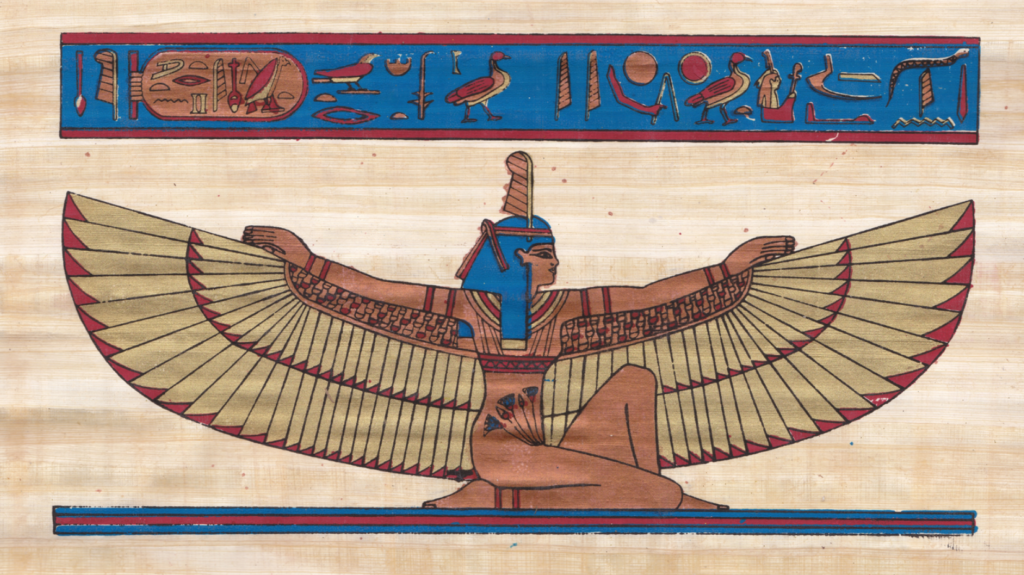
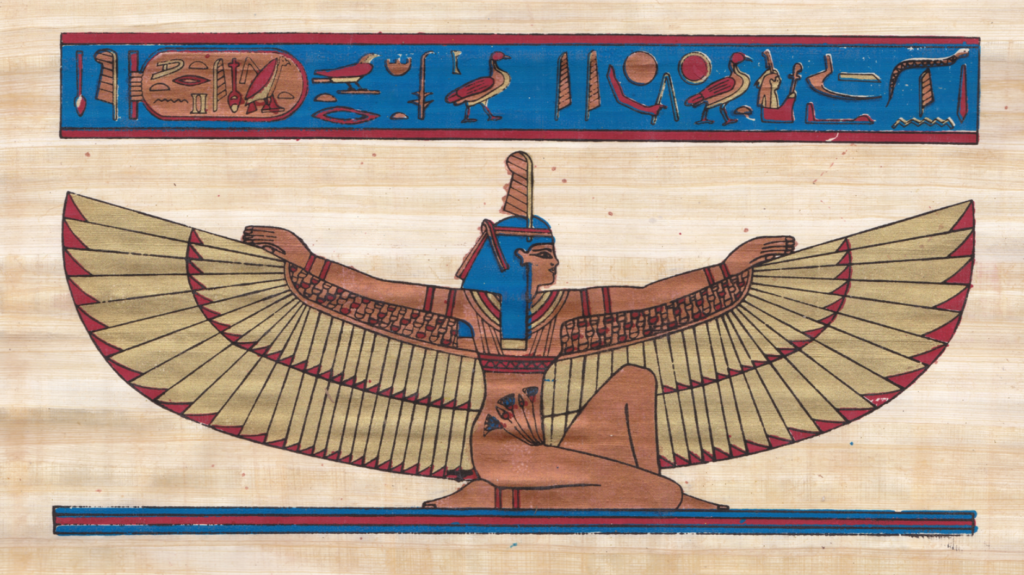
Ma’at is the Goddess of truth, justice, divine order, cosmic order and balance. She is depicted with wings of a vulture, her special animal, and the feather of truth in her headdress. She also carries an Ankh, the key of life, and sometimes a scepter. Ma’at can be traced as far back as the Old Kingdom (circa 3200 BCE). She is the daughter of Ra, sometimes referred to as the “eye of Ra.” Her equivalent and husband is Thoth, and her opposite is her brother Set. The Goddess Ma’at was most cherished by the rulers of ancient Egypt, and most were referred to as “Beloved of Ma’at.” Pharaohs would carry an effigy of Ma’at seated as a sign that he represented her regime of truth. She was the personification of the cosmic order and a representation of the stability of the universe.
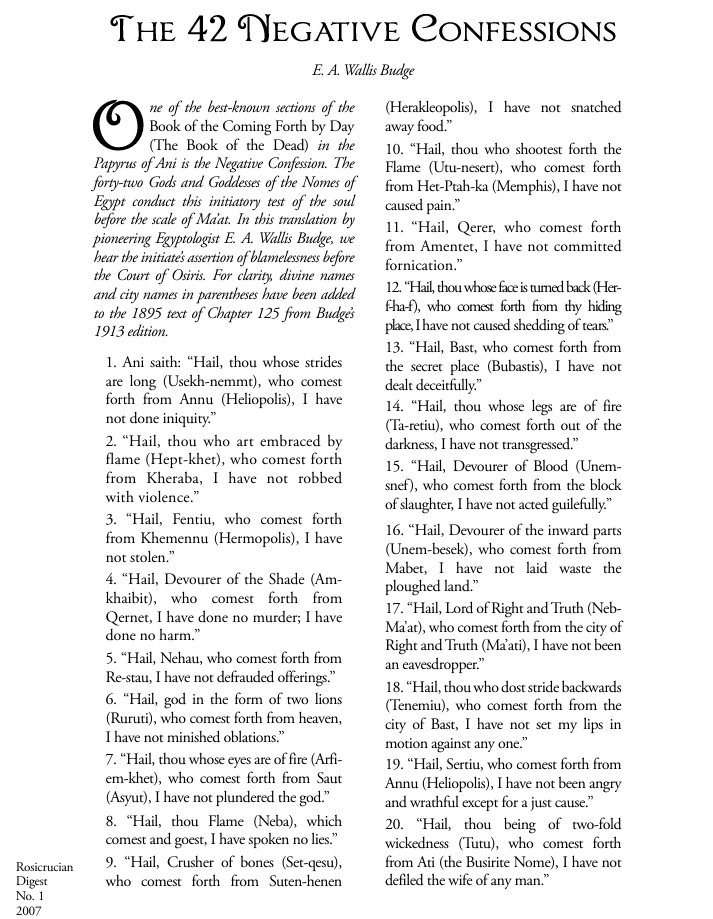
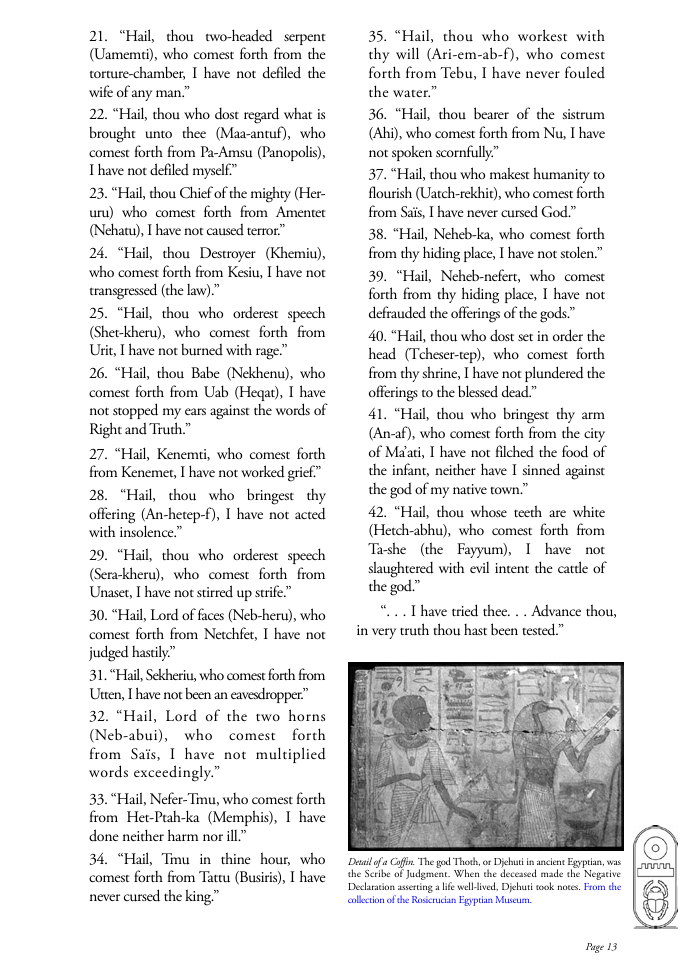
Ma’at is almost always shown wearing the feather of truth on top of her head. The feather came to be the hieroglyph “Shu” meaning truth. According to the Papyrus of Ani and The Book of Coming Forth (Book of the Dead) every person would be judged before Ma’at to determine whether they were truly good and able to move on to the afterlife. The feather was weighed against their soul while they stated the 42 Negative Confessions.
The following are the 42 Ideals of Ma’at as the 42 Negative Confessions translated by E. A. Wallis Budge:
1. I have not committed sin. 2. I have not committed robbery with violence. 3. I have not stolen. 4. I have not slain men or women. 5. I have not stolen food. 6. I have not swindled offerings. 7. I have not stolen from God/Goddess. 8. I have not told lies. 9. I have not carried away food. 10. I have not cursed. 11. I have not closed my ears to truth. 12. I have not committed adultery. 13. I have not made anyone cry. 14. I have not felt sorrow without reason. 15. I have not assaulted anyone. 16. I am not deceitful. 17. I have not stolen anyone’s land. 18. I have not been an eavesdropper. 19. I have not falsely accused anyone. 20. I have not been angry without reason. 21. I have not seduced anyone’s wife. 22. I have not polluted myself. 23. I have not terrorized anyone. 24. I have not disobeyed the Law. 25. I have not been exclusively angry. 26. I have not cursed God/Goddess. 27. I have not behaved with violence. 28. I have not caused disruption of peace. 29. I have not acted hastily or without thought. 30. I have not overstepped my boundaries of concern. 31. I have not exaggerated my words when speaking. 32. I have not worked evil. 33. I have not used evil thoughts, words or deeds. 34. I have not polluted the water. 35. I have not spoken angrily or arrogantly. 36. I have not cursed anyone in thought, word or deeds. 37. I have not placed myself on a pedestal. 38. I have not stolen what belongs to God/Goddess. 39. I have not stolen from or disrespected the deceased. 40. I have not taken food from a child. 41. I have not acted with insolence. 42. I have not destroyed property belonging to God/Goddess
In recent years, a list of 42 Positive Ideals were written by a group of priestesses as a parallel or balance to the Negative Confessions.
As a follower of Aset, and Ma’at as an aspect of Aset, it is beneficial to repeat these 42 ideals in the morning and evening, as way to encourage these ideals in oneself.
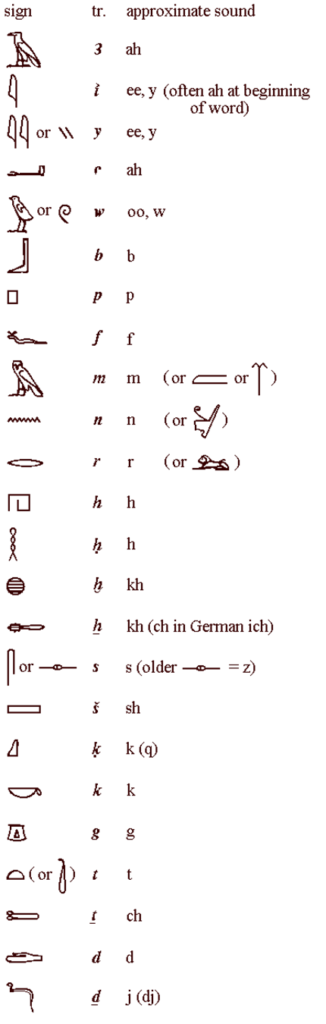
This is the Egyptian hieroglyphic alphabet, with transliterations which are used by Egyptologists, and the approximate sounds in English. These signs are essentially all consonants (even the ah’s and ee’s). The vowels were not written (see below), and are normally just said as “eh” (rarely “o”, in some words), nowadays.
Egyptian signs were of two types, phonetic signs, like these (along with many signs which were combinations of two or three sounds), and determinatives, signs which gave a clue to the meaning of the word. Most words were made up of phonetic signs, followed by one determinative. A few had two or three determinatives. Some very common words had no determinative. And, some other common words were written as just the determinative, with no phonetic signs. And there are common abbreviations, in which one or two signs stand for an entire word or phrase.
In this table, the alternative signs in parentheses were mainly used in later times.
Vowels: Above, I said that the vowels were not written. But, a few of these alphabetic signs are obviously vowels (pronounced “ah” or “ee”) in most modern languages. And signs with an “oo” or “w” sound were also used to represent a foreign (Greek, and other languages) “o” sound. These were not considered vowels, and sometimes had some guttural aspect. They are vowels in English, but not in Egyptian. So we write the a, i, o, u sounds, as these are Egyptian consonants.
If your name is David, then you could write it with five Egyptian signs (all consonants), “Dafid” (sorry there is no “v” sound). But if your name is Ben, I would write it “Bn,” in Egyptian. And I would not write other silent letters.
Actually the two “ah” signs in my list were not pronounced “ah.” The first one, the Egyptian vulture, was a guttural sound not found in English. It was followed by an unwritten vowel, often an “ah” sound. And so it often sounded very much like “ah,” even though it was a consonant. The second “ah,” the arm and hand, was a glottal stop, a short hesitation between vowel sounds, like in Cockney “bottle,” which sounds like “bah-uhl.” This sign too often sounded like “ah,” not because it was a vowel, but because it was followed by an unwritten vowel sound.
Other letters: Also, the lion which represented the “r” sound, was often used for the foreign “L” sound. The “q” sound is apparently slightly different from the “k” sound.
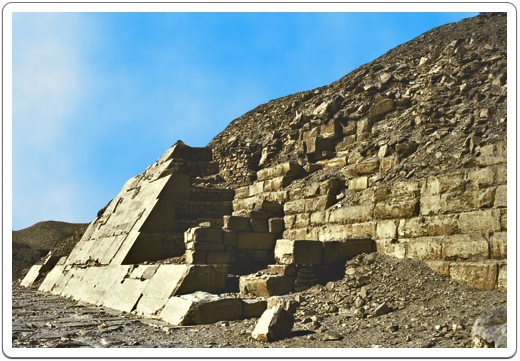
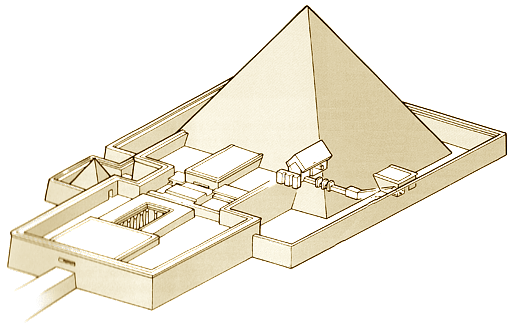
The Unis pyramid is a burial pyramid, not an initiatory pyramid. Text or hieroglyphics and not written inside of the initiatory pyramids. The other difference is an initiatory pyramid is made of blocks of stone, where the burial pyramids are made of rubble with an outside casing.. The Unis texts are unique in the sense that that are some of the oldest and best preserved carved text in a burial tomb. I have been inside this “pyramid” four times. When I found these resource links listed below, I felt I had to share it with everyone.