For the Ancient Egyptian, the 42 Ideals of Ma’at represented the concept of balance and order; everything had its place in the world including culture, society, the seasons, and of course the Gods and Goddesses. Ma’at was the one that kept the stars in motion, the seasons changing and maintained the order of Heaven and Earth. The opposing force of this balance was known in ancient terms as “isfet” or chaos. Ancient Egyptians considered the desert beyond the Nile River to be chaotic; while the area close to the Nile was considered orderly. Together, these two forces brought balance to the world in which they lived and was an important part of everyday Egyptian life.
Ma’at is the Goddess of truth, justice, divine order, cosmic order and balance. She is depicted with wings of a vulture, her special animal, and the feather of truth in her headdress. She also carries an Ankh, the key of life, and sometimes a scepter. Ma’at can be traced as far back as the Old Kingdom (circa 3200 BCE). She is the daughter of Ra, sometimes referred to as the “eye of Ra.” Her equivalent and husband is Thoth, and her opposite is her brother Set. The Goddess Ma’at was most cherished by the rulers of ancient Egypt, and most were referred to as “Beloved of Ma’at.” Pharaohs would carry an effigy of Ma’at seated as a sign that he represented her regime of truth. She was the personification of the cosmic order and a representation of the stability of the universe.
Ma’at is almost always shown wearing the feather of truth on top of her head. The feather came to be the hieroglyph “Shu” meaning truth. According to the Papyrus of Ani and The Book of Coming Forth (Book of the Dead) every person would be judged before Ma’at to determine whether they were truly good and able to move on to the afterlife. The feather was weighed against their soul while they stated the 42 Negative Confessions.
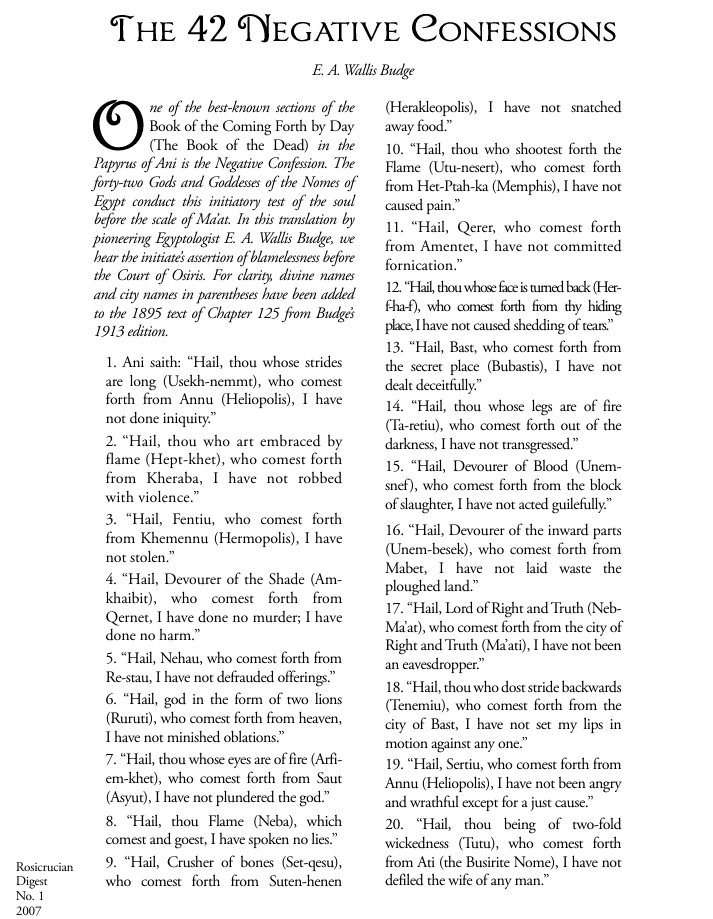
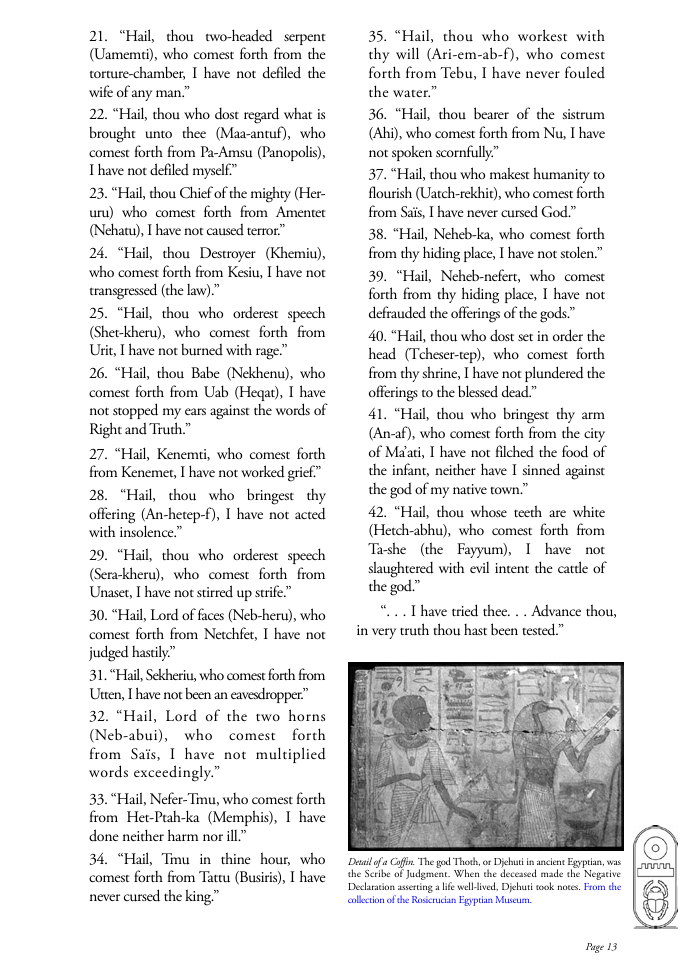
The following are the 42 Ideals of Ma’at as the 42 Negative Confessions translated by E. A. Wallis Budge:
1. I have not committed sin. 2. I have not committed robbery with violence. 3. I have not stolen. 4. I have not slain men or women. 5. I have not stolen food. 6. I have not swindled offerings. 7. I have not stolen from God/Goddess. 8. I have not told lies. 9. I have not carried away food. 10. I have not cursed. 11. I have not closed my ears to truth. 12. I have not committed adultery. 13. I have not made anyone cry. 14. I have not felt sorrow without reason. 15. I have not assaulted anyone. 16. I am not deceitful. 17. I have not stolen anyone’s land. 18. I have not been an eavesdropper. 19. I have not falsely accused anyone. 20. I have not been angry without reason. 21. I have not seduced anyone’s wife. 22. I have not polluted myself. 23. I have not terrorized anyone. 24. I have not disobeyed the Law. 25. I have not been exclusively angry. 26. I have not cursed God/Goddess. 27. I have not behaved with violence. 28. I have not caused disruption of peace. 29. I have not acted hastily or without thought. 30. I have not overstepped my boundaries of concern. 31. I have not exaggerated my words when speaking. 32. I have not worked evil. 33. I have not used evil thoughts, words or deeds. 34. I have not polluted the water. 35. I have not spoken angrily or arrogantly. 36. I have not cursed anyone in thought, word or deeds. 37. I have not placed myself on a pedestal. 38. I have not stolen what belongs to God/Goddess. 39. I have not stolen from or disrespected the deceased. 40. I have not taken food from a child. 41. I have not acted with insolence. 42. I have not destroyed property belonging to God/Goddess
In recent years, a list of 42 Positive Ideals were written by a group of priestesses as a parallel or balance to the Negative Confessions.
As a follower of Aset, and Ma’at as an aspect of Aset, it is beneficial to repeat these 42 ideals in the morning and evening, as way to encourage these ideals in oneself.
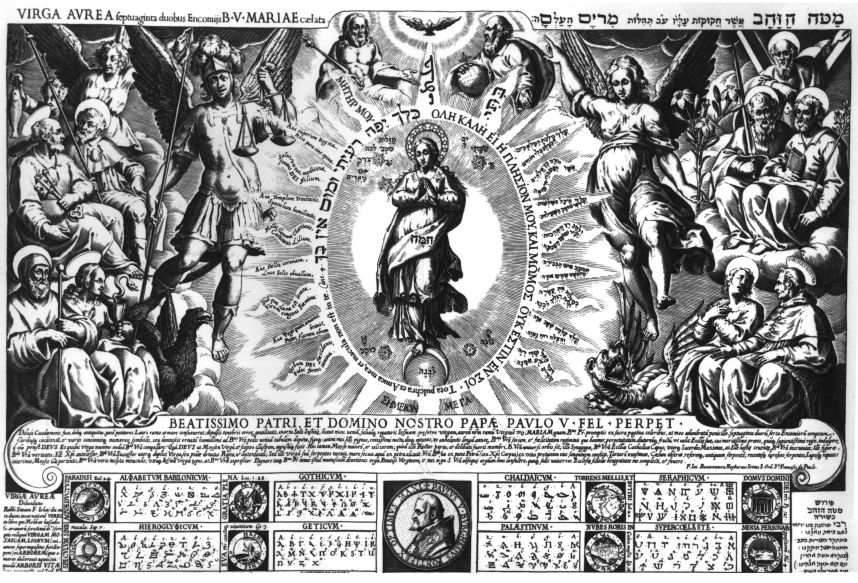
“The Heavenly Golden Rod of the Blessed Virgin Mary in Seventy-two Praises”
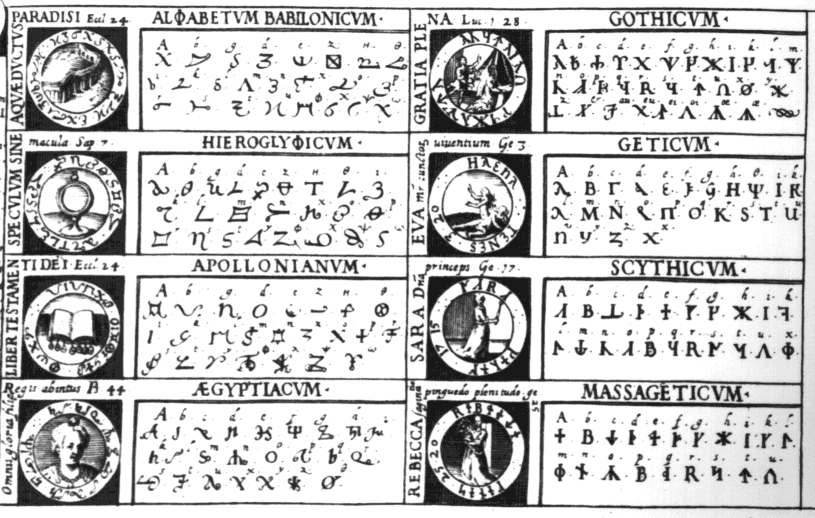
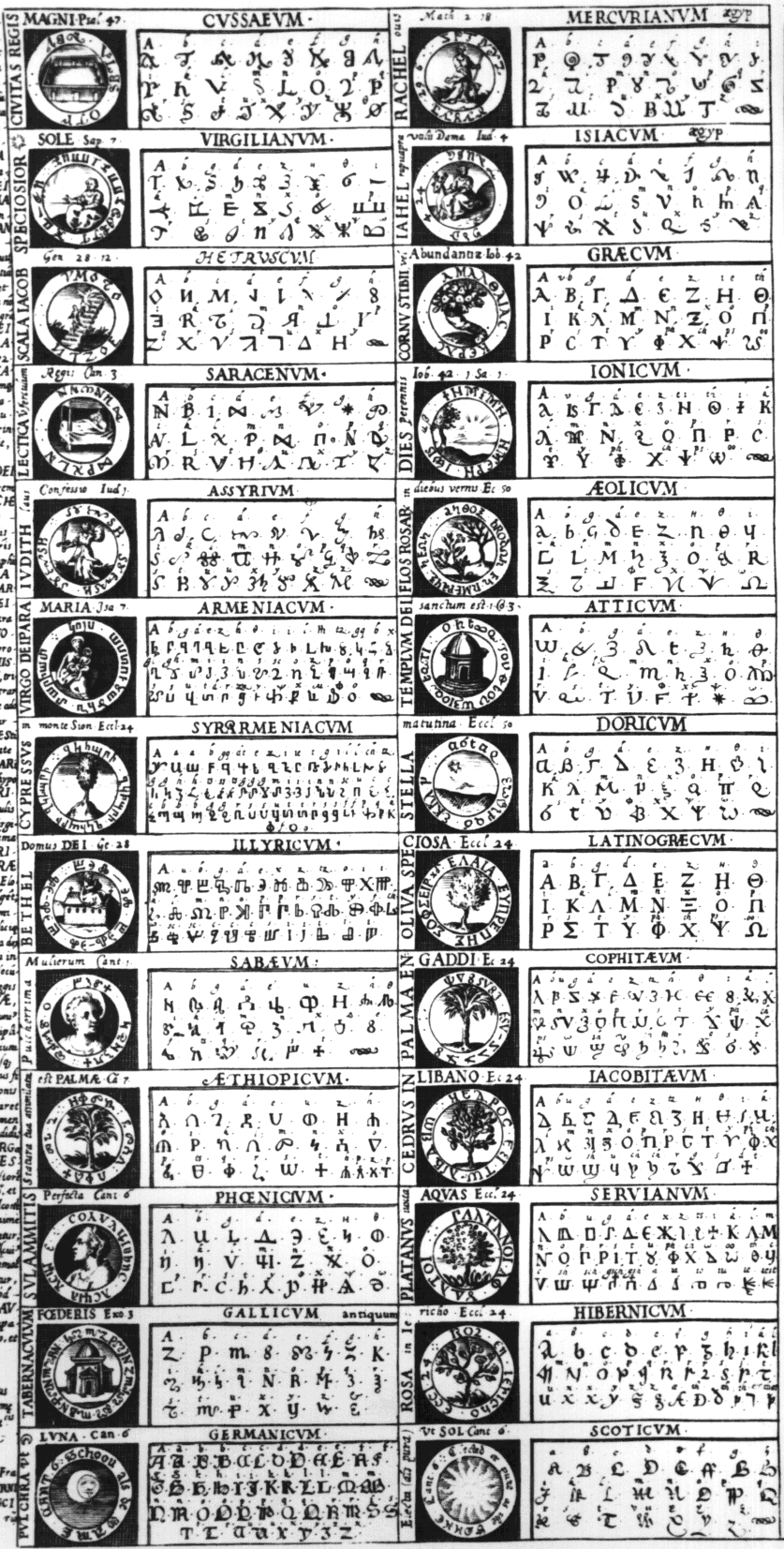
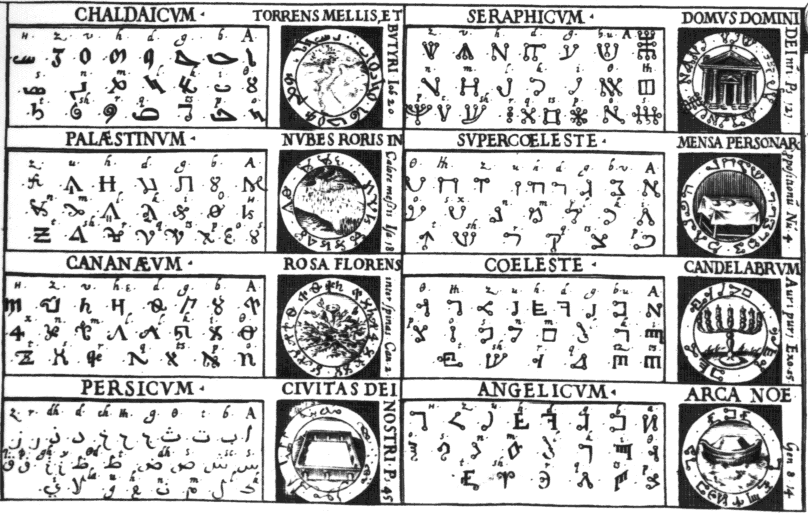
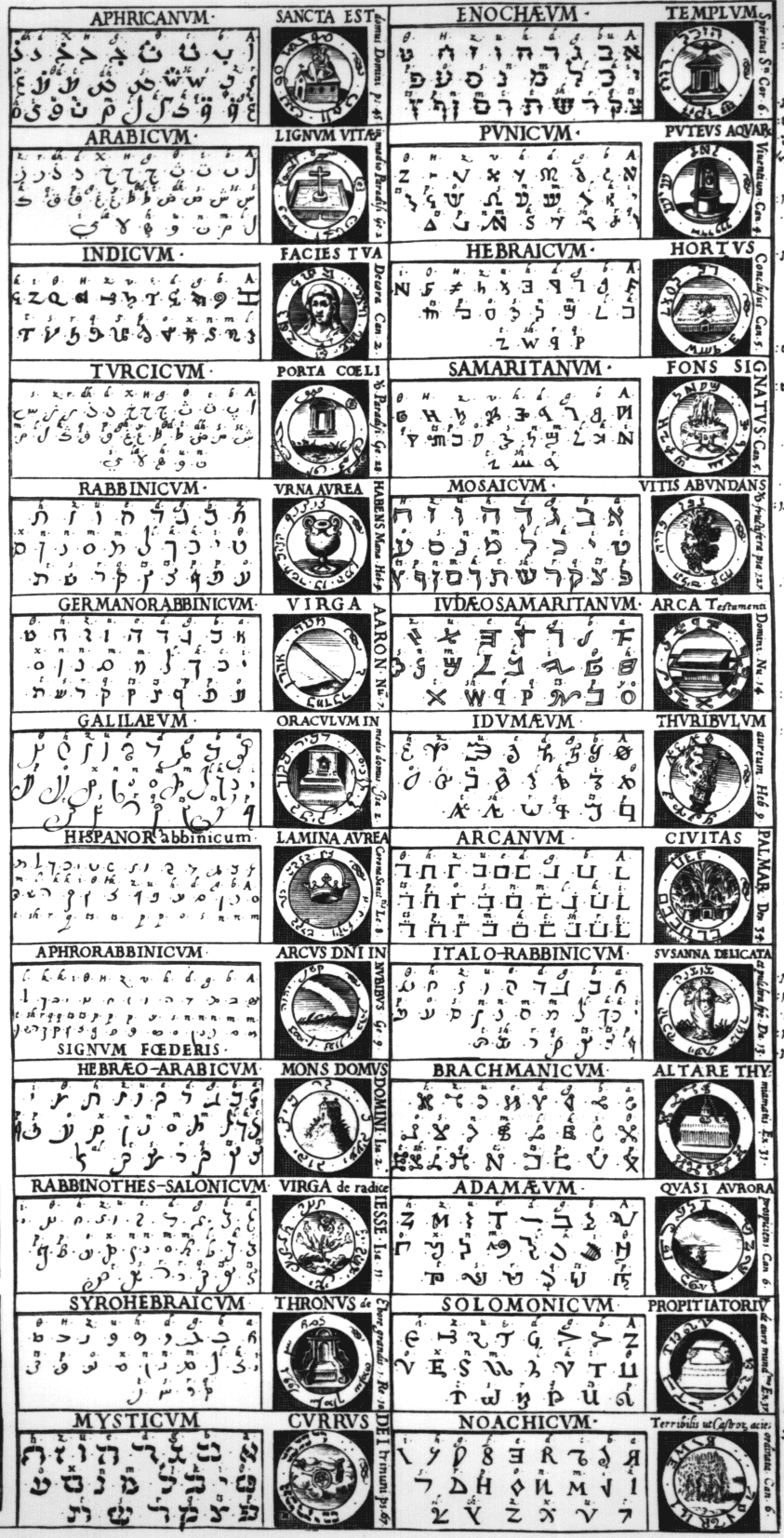
In 1978 while researching for my book on the Magical Calendar, I came across another large engraving which bore a certain superficial resemblance to the de Bry plate, (indeed the Frenchman F. De Mely who edited an edition of this work in 1922 seems to have thought them both part of the same book.) This was the Virga Aurea of James Bonaventure Hepburn published at Rome in 1616. The Virga Aurea, or to give the full title, “The Heavenly Golden Rod of the Blessed Virgin Mary in Seventy-two Praises” consists of a list of seventy two alphabets (actually seventy, plus Latin and Hebrew which are the two languages of the text of the plate). Some of these alphabets are those of known ancient languages, for example, Greek, Hibernian, Germanic, Phoenician, etc., while others are magical alphabets, Angelic, Coelestial, Seraphic, Solomonic, etc., and the whole plate is thus an encyclopaedia of alphabetic symbolism.
James Bonaventure Hepburn (1573 – 1620) was a Scot born in East Lothian near Edinburgh. He became an able and respected scholar, and being Catholic and a member of the austere order of St. Francis de Paul, he rose to the high position of Keeper of the Oriental Books and Manuscripts at the Vatican. He had a great knowledge of Eastern languages and, in particular, Hebrew. In 1591 he published his Arabic Grammar, and he was later to translate a Kabbalistic book from Hebrew into Latin, the ‘Kettar Maleuth’ of Rabbi Solomon, however I have not been able to locate a copy of this work.
The Virga Aurea was published as a large engraving (approx 20″ by 32″) at Rome in 1616, though it seems from internal evidence that Hepburn originally produced an illuminated manuscript bearing the essentials of the work done in various colours and possibly using gold. The engraving consists of a listing in four columns of the seventy alphabets, each letter of which is shown transliterated into Latin script, together with a small emblem and short text from the Bible. These lists are headed by a picture centred upon the figure of the Virgin Mary, standing below the Trinity of Father, on the right side, the Son, on the left, and the Holy Spirit completing the triangle, and shown as a dove descending. The Virgin stands on the crescent Moon within a brilliant egg of light centred on the Sun. Within the space of the egg are the other five planets, and the Virgin bears a halo of the twelve stars. On her left side a winged female Venus figure in flowing robes, stands upon a dragon, her right hand pointing heavenwards, her left holding a lily. On the Virgin’s right side, a winged Mars figure, attired with a helmet sword, and tunic, holds in his right hand a long spear and in his left a set of scales, and he stands upon an eagle. Flanking this scene are a number of Saints, including St. Peter, St. Bonaventure, and possibly St. Andrew.
The work is dedicated to Pope Paul V (Pope from 1605-21), who was particularly interested in books, greatly extending the Vatican Library during his Pontificate, and beginning a collection of Antiquities. He would, of course, be entirely sympathetic to, and probably encouraged, the scholarly pursuits of Hepburn. His more open approach to scholarship, allowed Hepburn the freedom even to consider publishing his translation of the Kabbalistic piece, even although a decade or so before, Giordano Bruno was burned at the stake in Rome as a heretic for pursuing similar interests.
This document is an invaluable collection of alphabets providing a wide survey of many different alphabet symbols both of contrived magical alphabets and those of extant languages. A complex pun is enshrined in the word ‘Virga’ of the title in Latin – Virga, ‘a rod’ being in one sense used for the alphabetic symbols, which are sometimes described as the ‘rods’ of a language, the other sense of the word ‘rod’ is mentioned in the text as the Rod of Moses and the Papal Rod or Staff of power; and finally ‘Virga’, the Virgin.
In order to bring all this mass of material together, Hepburn must have had a wide range of source material to study, and it seems most likely that this material was available in the Vatican Library itself. As to what Hepburn’s motives were for publishing such a collection of alphabets, we can only speculate. He certainly produced these in a form which gave it scholarly respectability and also by heading it with the figure of the Virgin Mary, using the pun ‘Virga’ Rod-Virgin, gave it credibility in terms of the Church. The timing of the publication, 1616, right at the centre of the Rosicrucian/hermetic publishing period, suggests that Hepburn in his own way may have been responding to that impulse. Under the guise of the Virgin Mary heading the plate, Hepburn was able to publicly reveal the symbolism of many alphabets, and in particular, magical alphabets. If we further take into account Hepburn’s interest in the Kabbalah, and his translation and publication of a Solomonic occult text, I think we are justified in assuming that Hepburn may have, in some small way, contributed to the public revelation at that time of the esoteric wisdom of the past. At the very least one can suggest that he was inspired by this movement into producing the Virga Aurea. As librarian at the Vatican, he certainly would have received early copies of the Rosicrucian publications. The Virga Aurea, although a single large engraving contains such a mass of detail that an exhaustive analysis will be left till later.
[Section below the figure of the Virgin translated by Patricia Tahil]
To Our Most Blessed Father And Lord, Pope Paul The Fifth, In Eternal Happiness Led astray by the deceits and deceptions of the Evil Spirit, antiquity held its peace from assisting seekers of the Laurel Bough; the darkness of error having been dispelled from the Gentiles by the rising of the Sun of Justice, may it now be allowed to seekers to prefer salvation, safety, and the Rod of Jesse, our golden branch, namely the Virgin Mary. So, 0 Most Blessed of Princes, sketched by my pencil from the sacred page, in colours that were to hand, arranged in a garland of seventy-two praises, surrounded by flowers and various pleasant numerical symbols, or adorned with ribbons, I most humbly place and fasten this votive picture at the feet of the Most Blessed Virgin. After much midnight striving, may I make pledge of my soul, yearning and striving long years after the Blessed Virgin, to the success of the Rule in which we are blessed, and to its long and eternal fruitfulness, so that it may please Omnipotent God to be kind to His Church, which you most deservedly lead, and most wisely rule. And whom may I not compel, armed with the Blessed Rod? That which God made as the Staff of Moses, famous and venerable in power, Moses was by this the greater and more heavenly, since he was ruler of a part, the severed bough, and may, by the Good Rod, be ruler of the whole world. With the aid of the Blessed Rod, but also by bloody sacrifice, the one (i.e. Moses) was Head of the Synagogue, the other (i.e. the Pope), by the blessing of the bloodless Rod is Great Pontiff of the Catholic Church. The one knew the appearance of truth, by the blessing of the Rod, and was the predecessor of Christ; the other, by the blessing of the Rod, is his successor, endowed with the twin, or extensive, royal and priestly Rod. For Moses subdued serpents with his Rod, parted the Sea, and drew water from the rock. By his blessed staff, the Pope makes the Rock (or Body of Christ) from bread, and His Precious Blood from Wine, crosses Hell, and bars or opens Heaven; he kills the old serpent, and recent heretical serpents.
One type of the Blessed Rod is that of Moses, famous for signs and true miracles, the other, more expressive of the Most Blessed Maiden, is of the character of Jesse’s Rod.
Deign therefore, 0 Most Blessed of Princes, to accept this tiny little gift of devotion to the Most Blessed Virgin, and to look kindly on my theory of the Holy Rod, and to embrace and cherish me in kindness, as you are accustomed to do with all the smallest sons of the Church.
Father James Bonaventure Hepburn, Scot.
Order of St Francis de Paul.
The 72 Alphabets, or “the seventy-two praises”, connect with the 72 lettered Name of God in the Hebrew tradition, the Shemhamphorash. This was contained in the three verses of Exodus XIV : 19, 20, and 21, each containing 72 letters in Hebrew, which when written down using the Kabbalistic system of boustrophedon, gives 72 Names of God. Interestingly enough the text of Exodus XIV, 21 describes Moses stretching out his hand over the Red Sea and parting the waters, which is referred to in the text of the Virga Aurea.
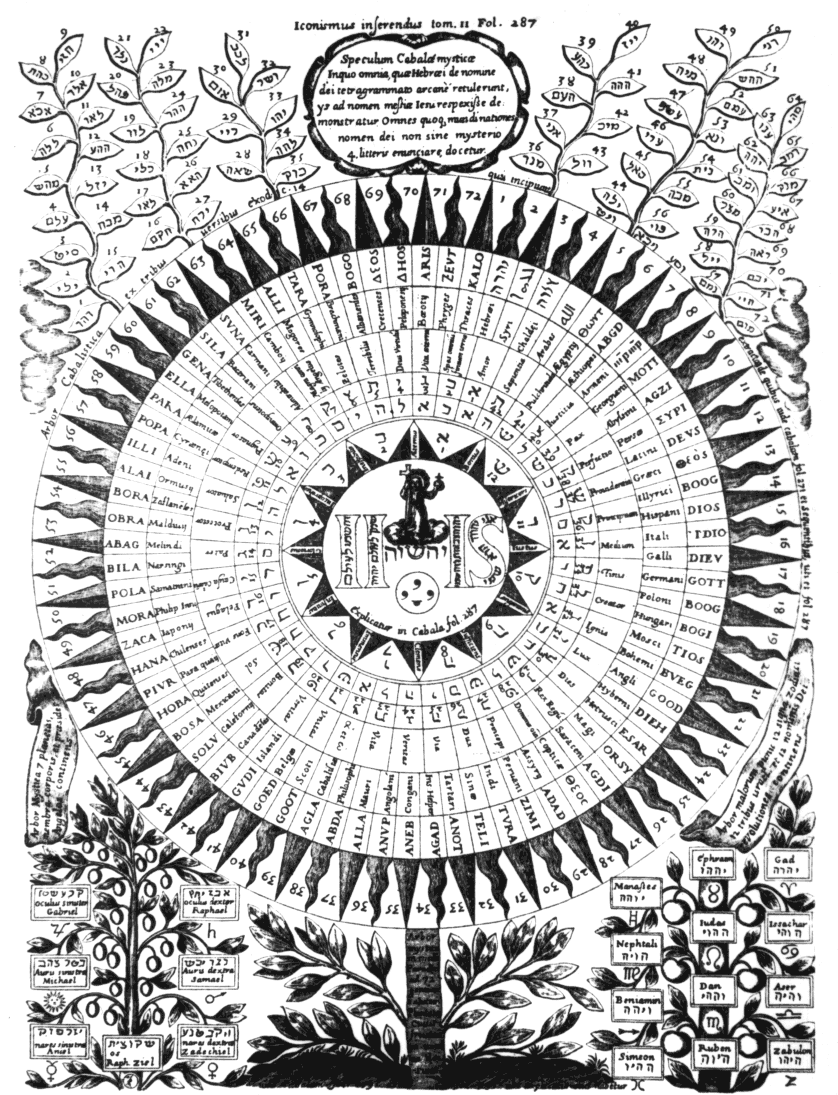
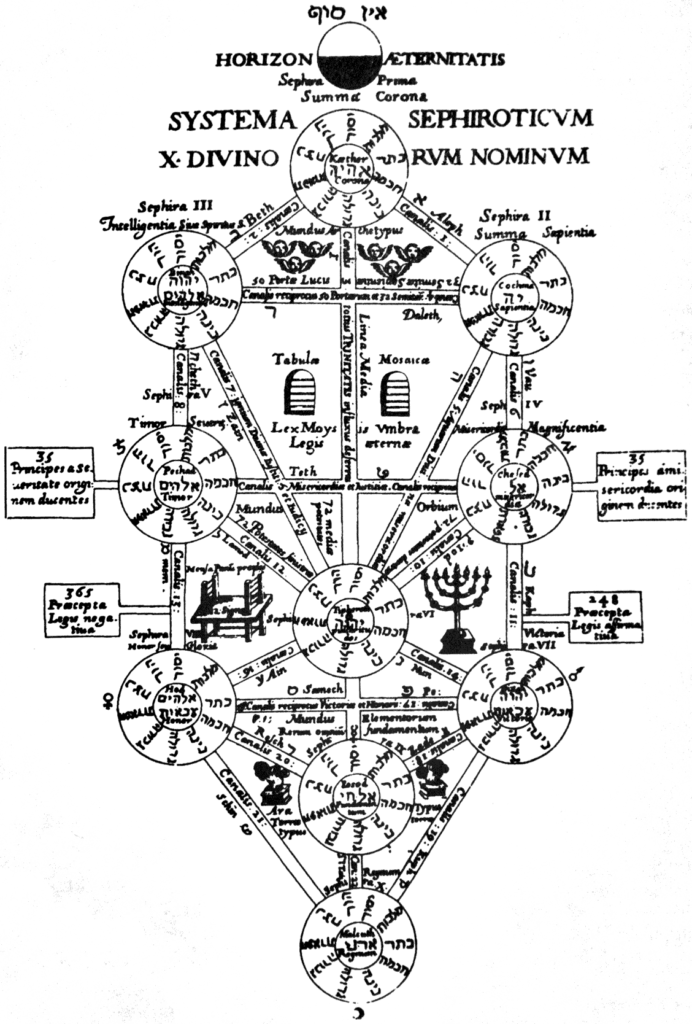
A generation later, the Jesuit Athanasius Kircher (1602 – 1680), another scholar working within the Catholic Church, was much concerned with languages. Kircher published his version of the Shemhamphorash, the 72 Names of God in the different languages, in the form of an engraved plate in his book Oedipus Aegypticus (Rome 1652-4), which is shown opposite, and he probably had knowledge of Hepburn’s work when compiling this plate.
The Latin text on Kircher’s version of the Tree of the Sephiroth is almost impossible to make out, even in the original print. Fortunately, the Freemason Manly P. Hall published Kircher’s Tree with English translations in place of the Latin.
Notice that Kircher appears to have intended that the horizontal channel between the seventh Sephirah, Hod, and the eighth Sephirah, Netzach, be numbered fifteen, and that the vertical channel between the sixth Sephirah, Tiphareth, and the ninth Sephirah, Yesod, be numbered seventeen. This is not absolutely clear, but seems most probable since on Kircher’s original diagram we see the Latin text 15 Canalis reciprocus Victoriae et Honoris on the channel between Netzach and Hod, then upside down in the same channel the Latin text Canalis: 17. Because this second caption is inverted on Kircher’s diagram (but not on Hall’s translation), it was probably intended to be placed on the vertical channel between Tiphareth and Yesod.
This is the opposite of the Golden Dawn practice, where the horizontal channel between Netzach and Hod is numbered seventeenth in order from the top, and the vertical channel between Tiphareth and Yesod is numbered fifteenth (the actual Golden Dawn numbering of these channels is twenty-seven and twenty-five, because it was the Order practice to begin numbering the paths with eleven, rather than one). The Golden Dawn numbering of these two channels is more sensible than Kircher’s numbering, based on the overall numbering on the Tree, but in my opinion is still not correct.
In my book New Millennium Magic I’ve given what I think is the correct numbering of the paths. I believe the Golden Dawn made a mistake in their numbering of the lower paths of Tiphareth (based purely on a logical analysis of the structure of the paths). Mathers numbered the vertical path between Tiphareth and Yesod fifteenth in sequence, and the diagonal path between Tiphareth and Hod sixteenth. In my view these numbers should be reversed. In all other respects the Golden Dawn numbering of the pathways is correct, for this particular pattern of the Tree (it is not the only possible pattern).
Kircher’s assigned the seven traditional planets of astrology differently than their Golden Dawn assignment. From a Golden Dawn point of view, all of Kircher’s planets are incorrectly place with the exception of the Sun in Tiphareth. However, Kircher’s assignment does make a lot of good sense. In the Kabbalah, Malkuth is the bride of the son (Messiah) in Tiphareth, so it is not unreasonable to give it the Moon. Mercury is a balanced planet, so it makes sense to put it on the middle pillar of the Tree. Kircher put the two male planets Mars and Jupiter on the masculine right pillar of the Tree, and their female opposites, respectively Venus and Saturn, on the feminine left pillar of the Tree.
It may be argued that Saturn is male, not female. However from the esoteric perspective Saturn exhibits many feminine qualities. It is common in alchemy to make a sexual pairing between Mars and Venus, and also between Jupiter and Saturn.
Reading classical or ancient Latin can be fun and easier than you think, especially if you speak English, Italian, and/or Spanish. French also helps with the vocabulary.
Special Pronunciation Note Reminders: “c” is a hard, like “candy” or “pico” “ph” can be an f sound or a “p” sound “th” can be a t sound or a “t” then a “h” sound “v” is pronounced as a “w” sound “g” is pronounced as a hard “g”, like “girl” “r” is a rolled “r” sound, like “rrrr”
Gender Notes: male – “us” on end, plural “i” on end female – “a” on end, plural “ae” on end
Person Endings of Latin Verbs (present tense)
Person
Singular
Plural
1st
o (= I)
mus (= we)
2nd
s (= you)
tis (= you)
3rd
t (= he/she/it)
nt (= they)
The part of the verb to which the person ending is added is called the stem. Thus, the stem ama plus the person ending – t produces amat, ‘he/she/it loves’. Alternatively, ama plus nt produces amant, meaning ‘they love.’
Discovering one’s purpose in life is a journey that many individuals embark upon at some point. This quest for meaning and direction has a profound influence on personal growth, happiness, and overall well-being. Finding a purpose can bring clarity to decision-making, boost motivation, and provide a sense of fulfillment that enhances every aspect of life.
The path to uncovering life’s purpose involves various techniques and approaches. These include looking back on past experiences, exploring passions and interests, and evaluating personal values and beliefs. Additionally, the process often involves identifying strengths and skills, thinking about one’s impact on others, and trying out different paths. Practices like mindfulness and meditation can also play a crucial role in this journey of self-discovery, helping individuals connect with their inner selves and the wider community.
Understanding the Concept of Life Purpose
Life purpose is a concept that has captivated human curiosity for centuries. It encompasses the central motivating aims of an individual’s life—the reasons they get up in the morning [1] https://www.takingcharge.csh.umn.edu/what-life-purpose. Purpose can guide life decisions, influence behavior, shape goals, offer a sense of direction, and create meaning [1] https://www.takingcharge.csh.umn.edu/what-life-purpose. It’s a fundamental aspect of human existence that has a profound impact on personal growth, happiness, and overall well-being.
Defining Life Purpose
William Damon, a Stanford University professor and author of “The Path to Purpose,” defines purpose as “a stable and generalized intention to accomplish something that is at the same time meaningful to the self and consequential for the world beyond self” [2] https://greggvanourek.com/most-common-myths-about-purpose/. This definition highlights the dual nature of purpose—it’s both personally fulfilling and contributes to something larger than oneself.
Purpose is adaptive in an evolutionary sense, helping both individuals and the species to survive [3] https://greatergood.berkeley.edu/article/item/how_to_find_your_purpose_in_life. It grows from our connection to others, which is why a crisis of purpose is often a symptom of isolation [3] https://greatergood.berkeley.edu/article/item/how_to_find_your_purpose_in_life. For some, purpose is connected to vocation—meaningful, satisfying work. For others, it lies in their responsibilities to family or friends. Some find meaning through spirituality or religious beliefs [1] https://www.takingcharge.csh.umn.edu/what-life-purpose.
Common Misconceptions
Several misconceptions about life purpose can hinder one’s journey of self-discovery:
Purpose is the same as passion: While connected, purpose (why we’re here) and passion (a compelling feeling or emotion) are not equivalent [2] https://greggvanourek.com/most-common-myths-about-purpose/.
Purpose must be completely original: The key is authenticity, not originality [2] https://greggvanourek.com/most-common-myths-about-purpose/.
Purpose is a luxury for the privileged: In reality, purpose is universally available and accessible to all [2] https://greggvanourek.com/most-common-myths-about-purpose/.
Purpose should come as a revelation: The notion that purpose will come fully formed and crystal clear is unrealistic. It often unfolds messily over time [2] https://greggvanourek.com/most-common-myths-about-purpose/.
Purpose is all about personal needs and wants: True purpose always comes back to others and to something larger than ourselves [2] https://greggvanourek.com/most-common-myths-about-purpose/.
Purpose is fixed and unchanging: For many, purpose evolves through different life chapters and seasons [2] https://greggvanourek.com/most-common-myths-about-purpose/.
Benefits of Having a Clear Purpose
Having a clear sense of purpose has numerous benefits for mental and physical well-being:
Stress Management: Purpose helps stave off stress and can aid in channeling challenges toward learning and growth [4] https://greatergood.berkeley.edu/article/item/how_strong_is_your_sense_of_purpose_in_life.
Improved Health: People with greater purpose make healthier life choices, engage in more preventative behaviors, and tend to have better health and longevity [4] https://greatergood.berkeley.edu/article/item/how_strong_is_your_sense_of_purpose_in_life.
Cognitive Benefits: Older adults who report more purpose in life experience less functional decline, less cognitive and memory impairment, and a lower risk of Alzheimer’s disease [4] https://greatergood.berkeley.edu/article/item/how_strong_is_your_sense_of_purpose_in_life.
Increased Fulfillment: Living a life on purpose is filled with meaning. People on purpose realize they are making a difference in the world simply by being in the world [5] https://personalgrowthinformation.com/top-ten-benefits-to-knowing-and-living-your-life-purpose/.
Enhanced Integrity: A life on purpose is a life of ultimate integrity—whole and complete. People who know their purpose and live it know who they are and why they are here [5] https://personalgrowthinformation.com/top-ten-benefits-to-knowing-and-living-your-life-purpose/.
Increased Synchronicity: Many people report a surprising increase in synchronicity and serendipity in their lives as they clarify and live true to their purpose [5] https://personalgrowthinformation.com/top-ten-benefits-to-knowing-and-living-your-life-purpose/.
Understanding the concept of life purpose is a journey of self-discovery that requires reflection, exploration, and often, trial and error. It’s a deeply personal process that can evolve over time, shaped by experiences, relationships, and personal growth. By grasping the true nature of purpose and dispelling common misconceptions, individuals can embark on a meaningful quest to uncover their unique reason for being, ultimately leading to a more fulfilling and impactful life.
Reflecting on Your Past Experiences
Reflecting on past experiences is a crucial step in discovering one’s purpose in life. This process involves examining significant moments, recognizing patterns, and learning from both challenges and successes. By delving into personal history, individuals can gain valuable insights that shape their future path and contribute to a more meaningful existence.
Identifying Meaningful Moments
Life is filled with defining moments that have the potential to shape an individual’s trajectory. These experiences often serve as turning points, offering clarity and direction. For instance, one engineering student discovered the importance of continuous learning during their final year, which ignited their curiosity and set the stage for future endeavors [6] https://greatergood.berkeley.edu/article/item/seven_ways_to_find_your_purpose_in_life. Similarly, others have found their defining moments in unexpected places, such as realizing they were not suited for working under others, leading them to pursue entrepreneurship [7] https://www.betterup.com/blog/finding-purpose.
To identify these meaningful moments, individuals can ask themselves:
What experiences have had a lasting impact on their life?
Which decisions or events led to significant changes in their path?
What moments have they felt most alive or purposeful?
Recognizing Patterns and Themes
As people reflect on their past, they often notice recurring themes or patterns in their experiences. These patterns can provide valuable insights into one’s strengths, values, and potential areas for growth. For some, this might manifest as a consistent ability to see connections or predict outcomes that others miss [8] https://medium.com/@anferneeck/finding-your-purpose-a-journey-of-self-discovery-8221054cf098. Others might notice recurring challenges in relationships or work environments [9] https://www.linkedin.com/pulse/how-find-purpose-life-my-journey-self-discovery-wong-msc-ind-eng-.
To recognize patterns and themes, individuals can:
Look for similarities in their reactions to different situations
Identify recurring challenges or successes in various aspects of life
Consider the types of activities or environments that consistently bring them joy or fulfillment
It’s important to approach this process with an open mind and a willingness to challenge one’s own assumptions. As one observer noted, the same qualities that make people extraordinarily clever can also make them vulnerable to mistakes in pattern recognition [8] https://medium.com/@anferneeck/finding-your-purpose-a-journey-of-self-discovery-8221054cf098.
Learning from Challenges and Successes
Both challenges and successes offer valuable lessons that contribute to personal growth and self-discovery. Reflecting on these experiences can help individuals develop resilience, identify their strengths, and uncover their passions.
For example, one individual faced significant challenges when graduating during a recession, attending 87 job interviews before securing a position [6] https://greatergood.berkeley.edu/article/item/seven_ways_to_find_your_purpose_in_life. This experience taught them the value of persistence and adaptability. Similarly, others have found that overcoming personal struggles, such as insomnia or claustrophobia, has strengthened their resolve and contributed to their sense of purpose [6] https://greatergood.berkeley.edu/article/item/seven_ways_to_find_your_purpose_in_life.
To learn from challenges and successes, individuals can:
Analyze the factors that contributed to their successes
Identify the skills or qualities they developed through overcoming challenges
Consider how past experiences have shaped their values and priorities
It’s also beneficial to recognize that life’s lessons often repeat themselves until they are fully understood or addressed [9] https://www.linkedin.com/pulse/how-find-purpose-life-my-journey-self-discovery-wong-msc-ind-eng-. By paying attention to recurring situations or emotions, individuals can identify areas for personal growth and development.
Reflecting on past experiences is an ongoing process that requires honesty, introspection, and a willingness to learn. As individuals engage in this practice, they may find that their purpose evolves over time, shaped by new experiences and insights [10] https://www.calm.com/blog/how-to-find-purpose. By regularly revisiting and analyzing their personal history, people can gain a deeper understanding of themselves and their place in the world, ultimately leading to a more purposeful and fulfilling life.
Exploring Your Passions and Interests
Exploring one’s passions and interests is a crucial step in discovering life’s purpose. This process involves identifying activities that bring joy, understanding the reasons behind that enjoyment, and connecting these interests to potential purposes. By engaging in this exploration, individuals can gain valuable insights into what truly matters to them and how they might contribute meaningfully to the world.
Listing Activities You Enjoy
One effective way to begin exploring passions and interests is by creating a “love list.” This simple activity allows individuals to write out all sorts of activities and things they would love to do [11] https://capd.mit.edu/resources/activities-to-help-you-find-your-purpose/. These activities don’t necessarily have to be work or career-related, as passions can often be uncovered through various aspects of life.
To create a comprehensive list, individuals can consider:
Activities that bring joy in the moment
Hobbies or interests from childhood
Skills they excel at or enjoy developing
Causes or issues that resonate with them emotionally
It’s important to remember that passions can be so ingrained in one’s way of thinking that they might be overlooked [7] https://www.betterup.com/blog/finding-purpose. In such cases, asking trusted friends or family members for their observations can provide valuable insights.
Analyzing Why You Enjoy Them
Once a list of enjoyable activities has been compiled, the next step is to analyze why these activities bring joy. This analysis can help individuals understand the underlying motivations and values that drive their interests.
Some questions to consider during this analysis include:
What specific aspects of the activity bring the most satisfaction?
How does engaging in this activity make you feel?
What skills or strengths do you utilize when participating in this activity?
Does the activity align with your personal values or beliefs?
Understanding the difference between joy and happiness can be helpful in this analysis. While happiness is a long-term measure of well-being, joy is an emotion experienced in the moment [12] https://aestheticsofjoy.com/why-the-secret-to-happiness-might-be-joy/. Focusing on activities that bring immediate joy can lead to broader, more open-minded thinking and increased flexibility in exploring new opportunities [12] https://aestheticsofjoy.com/why-the-secret-to-happiness-might-be-joy/.
Connecting Interests to Potential Purposes
The final step in exploring passions and interests involves connecting them to potential life purposes. This process requires reflection on how one’s interests can contribute to something larger than oneself.
To make these connections, individuals can:
Consider how their passions align with societal needs or challenges
Explore career paths or volunteer opportunities related to their interests
Think about ways to integrate their passions into their current work or personal life
For example, someone who enjoys helping others with relationship issues or workplace problems might consider a career as a personal coach [7] https://www.betterup.com/blog/finding-purpose. Alternatively, they could pursue coaching classes or certificates to incorporate this passion into their current work [7] https://www.betterup.com/blog/finding-purpose.
It’s important to note that purpose doesn’t always have to be tied to a career. Some individuals may prefer to keep their passions as hobbies or side hustles rather than full-time sources of income [7] https://www.betterup.com/blog/finding-purpose. The key is to find ways to engage with these interests regularly, as they can contribute significantly to overall life satisfaction and well-being.
By engaging in activities that bring joy, individuals can experience numerous benefits. These include improved health, lower stress levels, and even increased attractiveness to others [12] https://aestheticsofjoy.com/why-the-secret-to-happiness-might-be-joy/. Moreover, joy has a cumulative effect, often leading to “upward spirals” where positive experiences beget more positive experiences [12] https://aestheticsofjoy.com/why-the-secret-to-happiness-might-be-joy/.
Exploring passions and interests is an ongoing process that may evolve over time. As individuals try new things and remain open to both successes and failures, they often develop interests and passions they never could have conceived of initially [13] https://www.losangelesmftherapist.com/post/why-am-i-here-the-importance-of-connecting-with-your-purpose-for-mental-health-and-well-being/. This exploration helps ground them in what matters most as they make choices and set goals for the future.
Assessing Your Values and Beliefs
Identifying Core Values
Core values are the fundamental beliefs individuals have about their lives. They guide behaviors, decisions, and actions, bringing about a sense of purpose and self-worth [14] https://www.brightspacecoaching.com/blog/2020/5/10/how-core-values-help-you-find-your-purpose. These values represent the things people treasure most in life and serve as the essential foundation for finding one’s life purpose [14] https://www.brightspacecoaching.com/blog/2020/5/10/how-core-values-help-you-find-your-purpose. By identifying core values, individuals can remind themselves of what’s important to them now or what they want more of in their lives, such as work-life balance, abundance, or wisdom [14] https://www.brightspacecoaching.com/blog/2020/5/10/how-core-values-help-you-find-your-purpose.
To identify core values, individuals can follow these steps:
Reflect on times of greatest happiness, pride, or fulfillment
Consider what contributed to these feelings
Create a list of values that resonate personally
Narrow down the list to the top five core values [14] https://www.brightspacecoaching.com/blog/2020/5/10/how-core-values-help-you-find-your-purpose
Limiting the list to five core values allows for easier decision-making and alignment of actions with purpose [14] https://www.brightspacecoaching.com/blog/2020/5/10/how-core-values-help-you-find-your-purpose. Once identified, individuals can observe how these values play out in their daily lives for a week, noting instances where they experience gratitude or energy related to their core values [14] https://www.brightspacecoaching.com/blog/2020/5/10/how-core-values-help-you-find-your-purpose.
Examining Personal Beliefs
Personal beliefs are concepts that individuals hold to be true about the world or themselves, regardless of evidence [15] https://www.betterup.com/blog/meaning-of-personal-values. These beliefs, along with values, shape how people uniquely move through the world [15] https://www.betterup.com/blog/meaning-of-personal-values. It’s important to distinguish between values and core beliefs, as values represent what individuals consider important and want to express through behavior, while core beliefs are deeply held convictions about the nature of reality [15] https://www.betterup.com/blog/meaning-of-personal-values.
Examining personal beliefs involves:
Reflecting on one’s worldview and assumptions
Identifying beliefs that may be limiting or empowering
Considering the origins of these beliefs
Evaluating their current relevance and accuracy
Understanding personal beliefs is crucial for developing self-awareness and self-knowledge, which are integral to personal growth and decision-making [15] https://www.betterup.com/blog/meaning-of-personal-values.
Aligning Values with Potential Purposes
Aligning values with potential purposes is a critical step in discovering one’s life purpose. When individuals understand their values and align their lives with them, they tend to experience more fulfillment and satisfaction [16] https://startwithvalues.com/how-to-discover-your-purpose-through-core-values/. Research from the University of Minnesota has indicated that recognizing and living according to one’s values can lead to a richer sense of purpose [16] https://startwithvalues.com/how-to-discover-your-purpose-through-core-values/.
To align values with potential purposes:
Project your entire context of reality onto yourself
Consider where you fit in given your current understanding of reality
Ensure congruence between emotional and rational intelligences [17] https://stevepavlina.com/blog/2005/06/the-meaning-of-life-discover-your-purpose/
It’s important to note that purpose isn’t something merely discovered but rather co-created based on one’s relationship to reality [17] https://stevepavlina.com/blog/2005/06/the-meaning-of-life-discover-your-purpose/. If an individual’s context is sound, they should get congruent answers from both emotional and rational approaches to defining their purpose [17] https://stevepavlina.com/blog/2005/06/the-meaning-of-life-discover-your-purpose/.
By aligning values with potential purposes, individuals can:
Make decisions that resonate with their true selves
Feel a sense of being on the right path
Experience greater ease in their endeavors [14] https://www.brightspacecoaching.com/blog/2020/5/10/how-core-values-help-you-find-your-purpose
This alignment helps individuals stay true to who they are and how they’re meant to show up in the world, especially in a society where comparison and conformity can be tempting [14] https://www.brightspacecoaching.com/blog/2020/5/10/how-core-values-help-you-find-your-purpose. Ultimately, understanding and living in accordance with one’s values and beliefs provides a strong foundation for discovering and pursuing a meaningful life purpose.
Identifying Your Strengths and Skills
Identifying one’s strengths and skills is a crucial step in discovering life purpose. This process involves taking stock of natural talents, evaluating acquired skills, and leveraging these strengths for a meaningful purpose. By understanding and harnessing their unique abilities, individuals can navigate their personal and professional lives more effectively.
Taking Stock of Natural Talents
Natural talents are inherent abilities that come easily to an individual. These are often the activities or tasks that energize a person and make them feel strong. To identify these talents, individuals can engage in several reflective practices:
Self-reflection: Taking time to think about past successes and what made them possible can reveal underlying strengths [18] https://mentorloop.com/blog/using-your-strengths/.
Observing energy levels: Paying attention to tasks or activities that feel effortless or bring a sense of flow can indicate natural talents [18] https://mentorloop.com/blog/using-your-strengths/.
Childhood interests: Consulting family members about activities loved as a child can uncover forgotten talents [19] https://www.lifehack.org/articles/productivity/10-ways-identify-your-talents-and-utilize-them.html.
Journaling: Writing freely in a journal can help thoughts flow and direct individuals towards things they love [19] https://www.lifehack.org/articles/productivity/10-ways-identify-your-talents-and-utilize-them.html.
Analyzing media consumption: Looking at book, music, or movie collections can reveal inclinations and interests that might point to talents [19] https://www.lifehack.org/articles/productivity/10-ways-identify-your-talents-and-utilize-them.html.
Evaluating Acquired Skills
While natural talents are innate, acquired skills are those developed through learning and experience. These skills can be just as valuable in identifying one’s strengths:
Professional assessments: Tools like the Evaluating Acquired Skills in Communication – Third Edition (EASIC-3) can help assess skills in various areas [20] https://www.therapro.com/Assessments/Receptive-Expressive-Language-Assessments/Evaluating-Acquired-Skills-in-Communication-Third-Edition-EASIC-3.html.
Life assessments: Free online tests can help individuals understand their performance in different aspects of life [19] https://www.lifehack.org/articles/productivity/10-ways-identify-your-talents-and-utilize-them.html.
Feedback from others: Asking friends, family, or colleagues about one’s best qualities can provide valuable insights [18] https://mentorloop.com/blog/using-your-strengths/.
Reviewing past experiences: Reflecting on situations where one has been thanked or appreciated can highlight acquired skills [19] https://www.lifehack.org/articles/productivity/10-ways-identify-your-talents-and-utilize-them.html.
Skill inventories: Creating a list of skills acquired through education, work, and life experiences can provide a comprehensive view of one’s capabilities.
Leveraging Strengths for Purpose
Once strengths and skills are identified, the next step is to leverage them to find and fulfill one’s life purpose:
Aligning with passions: Purpose often lies at the intersection of one’s passions, strengths, and way of serving others [21] https://www.astridbaumgardner.com/blog-and-resources/blog/how-strengths-help-you-live-your-purpose/.
Setting meaningful goals: Using strengths as fuel for pursuing goals that align with one’s values and interests [21] https://www.astridbaumgardner.com/blog-and-resources/blog/how-strengths-help-you-live-your-purpose/.
Exploring new opportunities: Being open to change and using identified strengths to tackle new challenges [19] https://www.lifehack.org/articles/productivity/10-ways-identify-your-talents-and-utilize-them.html.
Continuous improvement: Upgrading skills and knowledge in areas of strength to reach higher levels of proficiency [19] https://www.lifehack.org/articles/productivity/10-ways-identify-your-talents-and-utilize-them.html.
Serving others: Using strengths to contribute positively to the community and make the world a better place [21] https://www.astridbaumgardner.com/blog-and-resources/blog/how-strengths-help-you-live-your-purpose/.
By systematically identifying and leveraging their strengths and skills, individuals can gain clarity on their unique capabilities and how to apply them meaningfully. This process of self-discovery not only enhances personal growth but also contributes to overall well-being and happiness. As research in positive psychology demonstrates, identifying and using one’s strengths enhances the capacity for greater well-being and happiness [21] https://www.astridbaumgardner.com/blog-and-resources/blog/how-strengths-help-you-live-your-purpose/. Therefore, the journey of identifying strengths and skills is not just about self-improvement, but about finding a path to a more fulfilling and purposeful life.
Considering Your Impact on Others
Reflecting on How You Help People
Considering one’s impact on others is a crucial step in discovering life purpose. It involves reflecting on how one’s actions and contributions affect the lives of those around them. This process can lead to a deeper understanding of personal values and the potential for making a meaningful difference in the world.
One effective way to reflect on how one helps people is to volunteer in community organizations focused on areas of personal interest [6] https://greatergood.berkeley.edu/article/item/seven_ways_to_find_your_purpose_in_life. This not only provides valuable experience but also allows individuals to do good while exploring their passions. Working with organizations serving others can connect individuals with like-minded people who share their values and can inspire them to pursue their purpose [6] https://greatergood.berkeley.edu/article/item/seven_ways_to_find_your_purpose_in_life.
Imagining Your Ideal Contribution
Imagining one’s ideal contribution to the world can be a powerful tool for discovering purpose. The Greater Good’s Purpose Challenge asked high school students to envision themselves at 40 years old, assuming everything had gone as well as possible in their lives [6] https://greatergood.berkeley.edu/article/item/seven_ways_to_find_your_purpose_in_life. This exercise prompted students to consider questions such as:
What are you doing?
What is important to you?
What do you really care about, and why?
Similarly, individuals can engage in a “best possible self” exercise, which involves imagining their dream life in 10 years [22] https://www.centreforoptimism.com/your-best-possible-self. This practice has been shown to boost optimism levels and increase happiness. To implement this exercise:
Spend 15 minutes writing about having the best possible circumstances in your future.
Consider your goals and dreams, imagining everything working out for the best.
Spend five minutes vividly imagining this best possible future.
This exercise can improve mood and future outlook, especially for those prone to worry [22] https://www.centreforoptimism.com/your-best-possible-self.
Exploring Ways to Make a Difference
Exploring ways to make a difference involves aligning one’s skills and passions with contributing to the greater good. This alignment can lead to a sense of fulfillment and purpose in one’s work and personal life.
One approach is to get clear about how one’s work can contribute to something they genuinely care about [23] https://www.linkedin.com/pulse/forget-finding-your-passion-contribute-instead-patrick-manigault. By letting work become a vehicle for solving important problems, individuals can find greater meaning and motivation in their daily activities. Imagine a world where everyone loves their work because they know the difference they are making impacts what they care most about [23] https://www.linkedin.com/pulse/forget-finding-your-passion-contribute-instead-patrick-manigault.
To explore ways to make a difference:
Identify causes that resonate deeply with personal values.
Consider how existing skills and strengths can be applied to these causes.
Seek out opportunities to contribute, whether through work, volunteering, or personal projects.
By focusing on contribution rather than solely on passion, individuals may discover that their true passion lies in what they most want to contribute to [23] https://www.linkedin.com/pulse/forget-finding-your-passion-contribute-instead-patrick-manigault. This approach requires courageous self-reflection and experimentation but can lead to a more fulfilling and purposeful life.
Ultimately, considering one’s impact on others is about applying skills toward contributing to the greater good in a way that matters personally [6] https://greatergood.berkeley.edu/article/item/seven_ways_to_find_your_purpose_in_life. By reflecting on how to help people, imagining ideal contributions, and exploring ways to make a difference, individuals can align their actions with their values and find a deeper sense of purpose in life.
Experimenting with Different Paths
Discovering one’s purpose often involves stepping out of comfort zones and exploring new avenues. This process of experimentation can lead to unexpected insights and opportunities for personal growth. By engaging in various activities and experiences, individuals can gain a deeper understanding of their passions, strengths, and potential contributions to the world.
Trying New Activities
One effective way to uncover purpose is to engage in a variety of activities designed to stimulate self-reflection and personal growth. These exercises can help individuals tap into their inner motivations and aspirations:
Creating a personal vision statement: This involves synthesizing values, strengths, and goals into a guiding statement for life and career [11] https://capd.mit.edu/resources/activities-to-help-you-find-your-purpose/.
Future self-projection: Imagining oneself five years into the future can reveal aspirations and the steps needed to achieve them [11] https://capd.mit.edu/resources/activities-to-help-you-find-your-purpose/.
Developing a love list: Writing down activities and things one would love to do, regardless of their relation to work or career, can uncover hidden passions [11] https://capd.mit.edu/resources/activities-to-help-you-find-your-purpose/.
Wheel of Life exercise: This self-assessment tool helps identify areas of life that may be out of balance [11] https://capd.mit.edu/resources/activities-to-help-you-find-your-purpose/.
Reflecting on heartbreaks: Considering issues that deeply affect one’s passions can motivate action and reveal purpose [11] https://capd.mit.edu/resources/activities-to-help-you-find-your-purpose/.
Volunteering and Community Involvement
Volunteering provides a unique opportunity to explore different paths while making a positive impact on others. This form of experimentation can lead to personal growth, new perspectives, and a sense of fulfillment:
Community engagement: Volunteering in organizations focused on personal interests allows individuals to gain experience and do good simultaneously [6] https://greatergood.berkeley.edu/article/item/seven_ways_to_find_your_purpose_in_life.
Networking: Working with service organizations can connect individuals with like-minded people who share their passions and inspire them [6] https://greatergood.berkeley.edu/article/item/seven_ways_to_find_your_purpose_in_life.
Health benefits: Studies have shown that volunteering can improve health and longevity for some people [6] https://greatergood.berkeley.edu/article/item/seven_ways_to_find_your_purpose_in_life.
Finding the right fit: It’s important to choose volunteer activities that feel engaging and accomplishing, rather than draining [6] https://greatergood.berkeley.edu/article/item/seven_ways_to_find_your_purpose_in_life.
Starting small: Beginning with a commitment of just a few hours each week can help individuals ease into volunteering without feeling overwhelmed [24] https://www.shondaland.com/act/a30554899/the-benefits-of-volunteering/.
Seeking Diverse Experiences
Exposing oneself to diverse experiences and perspectives can broaden horizons and contribute to personal growth and purpose discovery:
Youth empowerment: Young people can become powerful advocates for peace and unity within their communities when given the opportunity [25] https://www.edweek.org/policy-politics/opinion-the-importance-of-diverse-perspectives-and-how-to-foster-them/2018/11.
Inclusive environments: Including multiple perspectives from diverse backgrounds creates a more reflective and enriching environment [25] https://www.edweek.org/policy-politics/opinion-the-importance-of-diverse-perspectives-and-how-to-foster-them/2018/11.
Challenging conversations: Supporting diverse groups requires building capacity to listen, teach, and engage in difficult discussions [25] https://www.edweek.org/policy-politics/opinion-the-importance-of-diverse-perspectives-and-how-to-foster-them/2018/11.
Experiential learning: New experiences shape learning in profound ways, enhancing clarity and willingness to confront social inequities [25] https://www.edweek.org/policy-politics/opinion-the-importance-of-diverse-perspectives-and-how-to-foster-them/2018/11.
Workplace diversity: Embracing diverse perspectives in professional settings can lead to better decision-making and improved service to a broad customer base [26] https://www.linkedin.com/pulse/seek-diverse-perspectives-success-follow-mike-bidwell.
By actively engaging in new activities, volunteering, and seeking diverse experiences, individuals can gain valuable insights into their passions, skills, and potential contributions to society. This process of experimentation and self-discovery can ultimately lead to a clearer sense of purpose and a more fulfilling life journey.
Conclusion
The journey to uncover one’s life purpose is a multifaceted exploration that has a profound influence on personal growth and fulfillment. By reflecting on past experiences, exploring passions, assessing values, identifying strengths, considering impact on others, and experimenting with different paths, individuals can gain valuable insights to guide their quest for meaning. This process of self-discovery not only helps to clarify personal goals but also contributes to a deeper understanding of one’s place in the world.
Ultimately, finding purpose is an ongoing journey that evolves with time and experience. It requires openness to new ideas, a willingness to step out of comfort zones, and the courage to align actions with deeply held values. By embracing this journey of self-discovery, individuals can unlock their potential, make meaningful contributions to society, and lead more fulfilling lives. The pursuit of purpose, while challenging, offers rewards that extend far beyond personal satisfaction, positively impacting communities and inspiring others to embark on their own quests for meaning.
FAQs
What does self-discovery entail?Self-discovery involves understanding your own identity, preferences, goals, and potential. It’s about exploring your fundamental values and principles, and recognizing what you can achieve in your life.
How can I identify my life’s purpose?To find your life’s purpose, consider these steps: Identify your passions and what you deeply care about, reflect on your most important values, acknowledge your strengths and talents, engage in volunteer work, envision your ideal self, foster positive feelings such as gratitude, and draw inspiration from people you admire.
What are the key elements of self-discovery?The three main elements of self-discovery are awareness, stepping out of comfort zones, and living intentionally. These pillars help you increase your consciousness, empower yourself, and achieve the best version of yourself.
What are the stages involved in discovering oneself?The process of self-discovery consists of four stages: gaining self-awareness, recognizing your interests, understanding your dreams and ambitions, and exploring potential career paths.