All posts by Leo

Hieratic Egyptian & the Phoenician Alphabet

Comparison Between the Paleo-Hebrew Alphabets and Hieratic Egyptian & the Phoenician Alphabet

Comparison Between the Paleo-Hebrew Alphabets and Hieratic Egyptian & the Phoenician Alphabet: Click to 

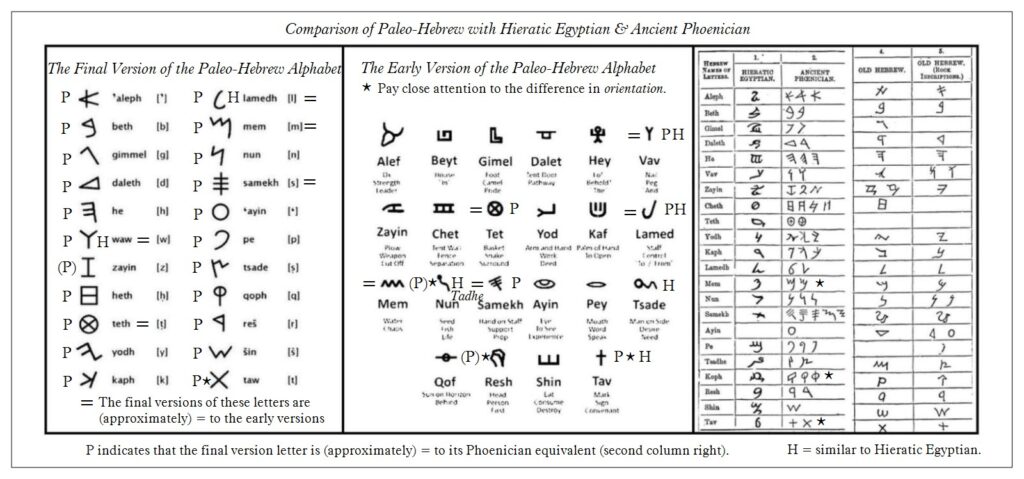
This chart clearly illustrates the comparison between both Early (right) and Late (left) Paleo-Hebrew with Hieratic Egyptian & Ancient Phoenician. The comparison between the Late Paleo-Hebrew with the Phoenician alphabet establishes beyond a reasonable doubt that they are virtually one and the same alphabet, based on the soundly reasoned inference that they developed simultaneously in the historical time line, implying in turn that the cross-cultural and cross-economic exchanges between these two civilizations was very intense. This quotation from Wikipedia is particularly telling,

Phoenician had long-term effects on the social structures of the civilizations which came in contact with it. As mentioned above, the script was the first widespread phonetic script. Its simplicity not only allowed it to be used in multiple languages, but it also allowed the common people to learn how to write. This upset the long-standing status of writing systems only being learned and employed by members of the royal and religious hierarchies of society, who used writing as an instrument of power to control access to information by the larger population.


https://en.wikipedia.org/wiki/Phoenician_alphabet

The Phoenician alphabet is also often tagged Proto-Canaanite for inscriptions anterior to 1050 BCE. It is the first ever consonantal proto-alphabet, otherwise known as abjad. The Phoenician alphabet was derived from Egyptian hieroglyphics on the one hand and from cursive Hieratic Egyptian on the other. What is particularly striking about the Phoenician and Proto-Hebrew alphabets, which are mirror images of one another, is the fact that the former was used to write one of the earliest Semitic languages, while the latter was confined to Hebrew (also Semitic, but eventually to become completely unlike Arabic).
This may come as somewhat of a shock to die hard Jews and die-in-the-wool Muslims alike, but it is an incontestable historical fact which cannot be lightly brushed aside. It is absolutely essential to understand that these twin alphabets were far more ancient than the latter-day Hebrew alphabet, which was nevertheless a descendant of the Proto-Hebrew and the Phoenician alphabets alike. While the Phoenician alphabet was the scriptural medium for early Semitic Phoenician, that civilization, being far more ancient than Islam, was in intimate contact with Judeo-Palestine, with whom it cultivated friendly cultural and economic ties. In other words, the religious overlay imputed to the latter-day Hebrew alphabet, itself indirectly derived from the Phoenician alphabet versus the Arabic alphabet, was utterly absent from the consciousness of both the early Semitic Phoenicians and Hebrews. Of course, the Arabic alphabet eventually did develop on its own from the 6th. century AD, characteristically unlike the Phoenician and Proto-Hebrew alphabets in every conceivable way.

The Similarities Among Hieratic Egyptian, the Phoenician alphabet, Early Proto-Hebrew and Late Proto-Hebrew:

Now let’s take a good close look at the alphabets in this chart.

1. Oddly enough, Early Proto-Hebrew bears but a faint resemblance with the Phoenician and Late Proto-Hebrew alphabets, but it does have some points in common with Hieratic Egyptian. Given this scenario, it somehow strikes me that Early Proto-Hebrew was anterior to both the Phoenician and Late Proto-Hebrew alphabets; otherwise, how are we to explain all these bizarre discrepancies? Not that I would know, as I am no expert in Egyptian hieroglyphics or Hieratic Egyptian. I leave it to the expert linguists in that domain to enlighten us, and I certainly hope they will.  

2. For all intents and purposes, the Phoenician and Late Proto-Hebrew alphabets are identical.

3. Except for lamedth and tav (taw), neither the Phoenician and Late Proto-Hebrew alphabets resemble Hieratic Egyptian and the Early Proto-Hebrew in any significant way, which is particularly surprising to this author. The early Proto-Hebrew letter vav mirrors both its Hieratic and Phoenician equivalents, as well as the letter waw in Proto-Hebrew, the latter merely being an avatar of the previous three. Lamedh is also equivalent in all four scripts. If we take it as oriented right, Hieratic Egyptian tadhe bears a close resemblance to early Proto-Hebrew nun & tsade, which instead are oriented left. There is absolutely nothing unusual in this phenomenon, which is so common to so many ancient scripts that it boggles the mind. Early Proto-Hebrew qof, horizontally oriented, bears a close resemblance to its equivalent, the vertically oriented Phoenician letter koph, while its tav resembles one of the two versions of the Phoenician tav. Just to complicate matters or to frustrate the living daylights out of us, taw in the Late Paleo-Hebrew alphabet resembles the other version of Phoenician tav.

PS If anyone who is an expert in Egyptian hieroglyphics or Hieratic Egyptian is willing to enlighten us poor ignorant folk on the finer points of their relationship with the other scripts we have discussed here, please do contact us, commenting on the inevitable errors in this post. 

Richard

SOURCE: https://linearbknossosmycenae.wordpress.com/2015/04/28/comparison-between-the-paleo-hebrew-alphabets-and-hieratic-egyptian-the-phoenician-alphabet-click-to-enlarge/

Compassion Is a Journey, Not a Destination

There are countless ways for a mystic to seek enlightenment, and compassion stands as a vital component along every path. Whether through meditation, silence, devotion, study, ecstatic surrender, or other practices, the pursuit of lasting compassion comes only through understanding, love, and acceptance.

Many mystics recognize this truth, which is why enlightenment is often described not as an instant achievement, but as an ongoing process—your great work!

True compassion, beyond fleeting sentimentality, develops gradually and quietly. When your heart no longer feels the need to defend against the world and its happenings, you are moving in the right direction.

Compassion softens the heart, shifting focus toward a unified love and away from fear, misunderstanding, pain, or suffering.

To embody compassion is to witness another’s pain without turning away, to replace fear with love, judgement with curiosity and empathy, and to let the boundaries of self dissolve for the sake of all living beings as one.

Oneness, love, and compassion are essential for true enlightenment and for achieving Peace Profound.

Steps Toward Compassion

How do we embark on this journey?

  • First, acknowledge who you are and where you stand.
  • Second, accept the work and service that lies ahead in your life.
  • Third, open the door and begin the journey each day, rather than remaining in thought alone.

The Path to Illumination

Compassion truly is a path to illumination. The process of learning and practicing genuine compassion is a lifelong journey.

This journey is shaped by experience; it involves learning along the way, including the inevitable ups and downs of life.

Love, understanding, and oneness are the foundational keys.

The Nature of Illumination

Illumination is not a single, grand moment of arrival. Instead, it grows from daily experiences, service, trials, and challenges, alongside compassion.

Practical Actions to Foster Compassion

  • Pause irritation and listen more deeply and curiously.
  • Assess situations without judgement.
  • Offer help without seeking praise or acknowledgment.
  • Recognize the pain within another’s suffering or anger.
  • Understand that everyone is experiencing what they need to experience.
  • Live each moment, adjusting as needed, without judging yourself or others.
  • Be conscious in thought, word, and action, and continue moving forward.

Principles and Practices of Compassion

Certain Rosicrucian and Hermetic principles support the journey toward illumination and compassion:

  • All is One—We are all connected.
  • As Above, So Below—As within is as without.
  • Universal or Divine Cosmic Higher Love.

Practices that nurture compassion include kindness, understanding, and the pursuit of Peace Profound. For all mystics, reflection, meditation, adaptation, and service are essential practices.

Compassion as a Mode of Perception

Compassion is more than a feeling; it is a mode of perception. It involves shifting from seeing only the surface—such as behavior, flaws, or roles—to recognizing the underlying fear, longing, suffering, and basic humanity.

This perceptual shift is the path to illumination, as it dissolves the illusory boundaries between “Self” and “Others.”

As this shift unfolds, “your” problems become “our” problems, and “they” become “us.”

This transformation does not happen overnight; it is gradual, fluctuating according to life’s circumstances.

The journey of compassion and oneness reveals the shared spark of consciousness in all beings. As perception shifts, the ego releases control, the heart opens, and enlightenment emerges.

Compassion clears the inner mirror, fostering self-understanding and peace.

Beginning the Journey

Start with yourself, focusing on your personal journey while embracing the shared journey of humanity. Here are some practical tips:

  • Ask yourself what you need to learn or experience.
  • Embrace the journey, including the unexpected.
  • Be present; assess and adjust daily.
  • Take one moment and one day at a time.
  • Release anger, jealousy, bitterness, hatred, and fear.
  • Recognize what you can control.
  • Manage and mitigate challenges, knowing some cannot be eliminated.
  • Enjoy each moment, even if it’s difficult.
  • Focus on happiness that is not dependent on circumstance or time.

Peace Profound

The concept of Peace Profound is central to achieving lasting inner peace and compassion. H. Spencer Lewis described it as “The harmony of man’s accord with the Cosmic.”

Peace Profound is a state of mind in which you acknowledge and care about what is happening, but do not become overwhelmed by external situations. Instead, you consciously, philosophically, and compassionately evaluate your thoughts and actions.

Embracing the Shared Journey

Consider the possibility that everyone is doing what they are meant to do. Often, we try to fix others or situations from our personal perspective, but one key Rosicrucian principle is to begin with yourself and those closest to you. If everyone did this, the world would improve for all.

So, begin with your own thoughts, words, and actions. Stop judging where others should be or what they should be doing. Accept the unexpected, assess, and adjust as needed.

Compassion is about understanding, not necessarily agreeing. You can have compassion for someone or a situation, even when you disagree.

Everyone brings something unique to our shared journey. Pay attention!

The Challenge of Judgement

Judgement is our greatest accuser. In various traditions, the devil or demon represents this force. Self-judgement is a major obstacle to healthy personal growth, while judgement of others blocks true compassion.

Try an exercise: for one day, honestly refrain from judging others and count how often you catch yourself doing so in thought.

Be present, assess, and adjust—remember, you create your reality through thought and action. Forgive yourself, forgive others, and move forward with love.

Compassion in Mystical Traditions

Across mystical traditions, compassion is seen as dissolving self-centeredness and expressing higher love:

  • Buddhism: Compassion keeps the enlightened being engaged with the world to help others awaken.
  • Christianity: Compassion is agape, a divine love that shares in suffering and redeems humanity.
  • Sufism: Compassion arises from a heart polished by remembrance, reflecting divine qualities.
  • Taoism: Compassion is one of the “Three Treasures,” aligning human life with the Tao’s harmony.

In each tradition, compassion is both the path and the result of illumination.

Stoicism and Compassion

Ancient Greek and Roman Stoicism offers valuable insights for practicing compassion. Stoicism encourages living virtuously, cultivating wisdom, justice, courage, and moderation. It teaches acceptance of what we cannot control and focuses on thoughts, actions, and character.

  • Cultivate wisdom, justice, courage, and moderation.
  • Live in accordance with nature.
  • Focus on the present.
  • Embrace fate and accept what happens.
  • Develop a rational, resilient mindset.
  • Control your reactions.
  • Apply objective understanding.
  • See obstacles as opportunities.

Compassion aligns with Stoic ideals of interconnectedness, social duty, empathy, and self-transformation. Practicing Stoicism does not mean indifference; rather, it means accepting reality, helping where you can, and striving to better yourself.

Dissolving the Self: The Alchemical Journey

Mystically, extending true compassion shifts the sense of self toward unity, making separation feel like an illusion. All suffering becomes part of your awareness, ideally without overwhelming you.

This leads to personal alchemical transformation, where you accept and reflect on trauma, suffering, pain, or awakening revelations—experiences that may unsettle your world.

This process, known as calcination and dissolution, involves combining the ashes of previous experiences with the water of your heart and emotions. Through this reflection, you move forward with compassion for yourself and others.

Immersing yourself in the unconscious or rejected parts of your heart or mind can be dark, but it is also an opportunity to transform fear into understanding, anger into clarity, pain into connection, and ignorance into wisdom.

Rather than avoiding suffering, compassion allows for reflection, forgiveness, release, adjustment, acceptance, and presence with others and yourself. See these experiences as opportunities, not punishments or karma.

The Seven Alchemical Processes of Life

Everyone undergoes the seven alchemical processes of life daily. Understanding these natural phases inspires compassion for the journeys that others—and you—may be undertaking.

Compassion is a two-way street; it is important to have compassion for yourself as well as others, embracing the processes you may need to experience or learn from.

Summary of the Seven Processes of Transformation

  • Calcination: Extreme events, trauma, or awakening of self-consciousness; destruction of ego and defense mechanisms; opportunity for release and growth.
  • Dissolution: Combining the ashes of previous experiences with the heart’s emotions; immersion in the unconscious or rejected parts of the self.
  • Separation: Rediscovering dreams and visions; creating a new path forward.
  • Conjunction: Empowering your true self through harmony of mind and heart.
  • Fermentation: Releasing fears and limitations; embracing new experiences with inner guidance and surrender.
  • Distillation: Purifying the self; raising consciousness and harmonizing transformation.
  • Coagulation: Achieving new confidence and unity with all; mastery of self and cosmic consciousness.

These processes are ongoing; you may revisit stages to learn or experience something previously missed or not yet ready for.

The Journey of the Wanderer: Symbolism and Metaphor

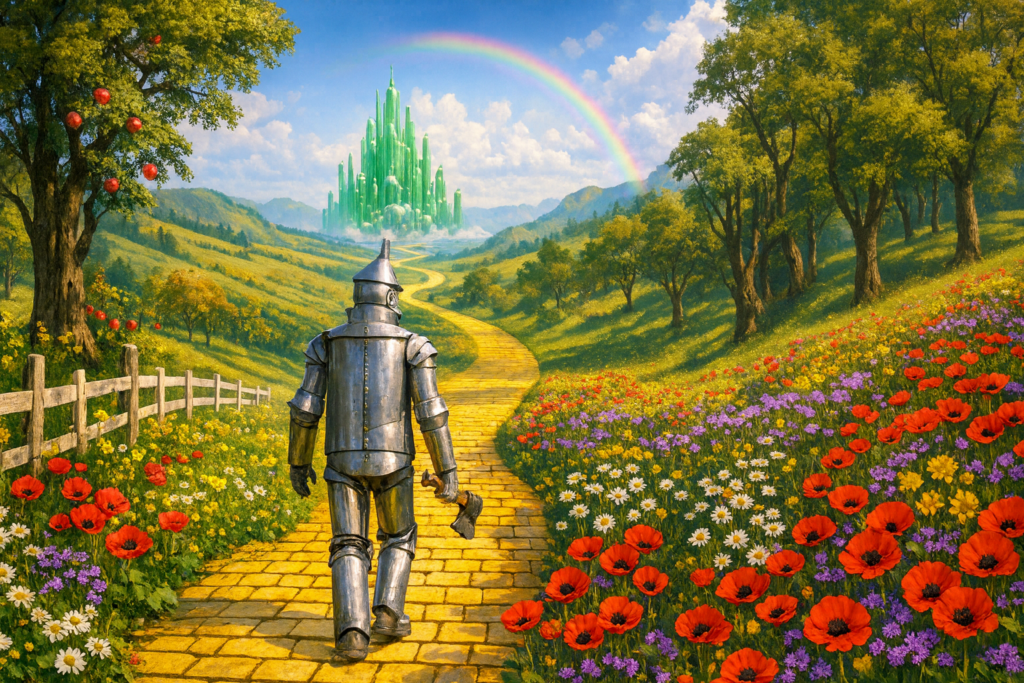
The wanderer’s journey to enlightenment is depicted in symbols such as the Fool tarot key and the loyal dog, representing consciousness and reason—much like Dorothy and Toto in the Land of Oz. In these stories, they to go through the seven alchemical processes. This can also be depicted in the Tarot via Le Tableau where when aligned in seven columns, they correspond to the seven alchemical processes of life’s journey summarized:

  • Calcination or release from bondage
  • Dissolution or awakening of new inner potential
  • Separation or revelation to move forward
  • Conjunction or acceptance of the inner and outer Self
  • Fermentation or regeneration of purpose
  • Distillation or realization of higher purpose
  • Coagulation or mastery of Self and oneness with all

Opportunities for compassion, enlightenment, experience, lessons, or initiation may arise unexpectedly. Keep your mind and heart open. Like the Fool or Dorothy, do not let fear keep you from your path.

Dorothy’s compassion for her companions helped her discover her inner strengths and the magic within herself.

You do not need a wizard to tell you that you possess a heart for compassion; simply embrace the journey and continue along the path of enlightenment and compassion each day at your own pace.

Embracing Oneness and Practicing Compassion

Embrace the experience of oneness. Practice understanding, acceptance, and love. Engage in good, kind, caring, and nurturing behavior that aligns with natural law and avoids judgement. By doing so, you will naturally walk the path of enlightenment and compassion, becoming a healthy, integral part of the all-oneness.

Remember, “there is no place like home,” and in this journey, home is your Master Within.

The Mystical Journey in The Wizard of Oz

The Wizard of Oz is a metaphorical, Hermetic, Alchemical, and initiatic journey, filled with elements, alchemical processes, esoteric symbolism, compassion, understanding, forgiveness, acceptance, and awakening to enlightenment.

Dorothy represents the soul’s unfolding, with compassion for all beings—her companions representing the divine essence within the mystical elements of fire, water, air, and earth, which exist within each of us. Toto symbolizes the totality or “all.”

The Tin Man represents the work of finding the heart of compassion, already present within.

You already have a heart for compassion; embrace the journey and move forward each day.

Love and Peace Profound.

Presentation Video:

Presentation Slides:

Decoding Ancient Alchemical Symbols: The Hidden Truth of Hermetic Cross

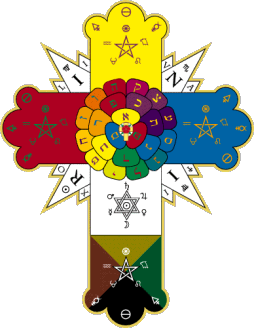
Ornate Hermetic Cross surrounded by alchemical tools, candles, and crystals on a wooden table with mystical smoke. Alchemical symbols have fascinated scholars and mystics for centuries, serving as a secret visual language for those who sought to transform base metals into gold and discover the elixir of life. Hidden within these enigmatic markings lies a complex system of knowledge that extends far beyond mere chemical formulas. These cryptic representations once protected the sacred wisdom of transformation from uninitiated eyes, encoding spiritual and philosophical concepts that remain compelling even in our modern era.
Throughout history, specific symbols have held particular significance in alchemical tradition, specifically the Hermetic Cross, which represents the perfect union of opposing forces. Similarly, the three primary substances—Salt, Sulfur, and Mercury—symbolize the body, soul, and spirit respectively, forming the foundation of alchemical philosophy. Beyond these basics, symbols like the Rose became central to Rosicrucian traditions, representing secrecy, rebirth, and the unfolding of spiritual consciousness.

Indeed, decoding these ancient symbols reveals a sophisticated understanding of the universe that blended science, spirituality, and psychology. From the Tria Prima to the seven planetary metals, each symbol contains layers of meaning waiting to be uncovered. Whether you’re new to esoteric traditions or a seasoned student of hermetic philosophy, this exploration will illuminate the profound symbolic language that alchemists used to encode their quest for physical and spiritual transformation.

The Tria Prima: Foundations of Alchemical Symbolism

The cornerstone of alchemical philosophy rests upon the tria prima, or three primes—a revolutionary concept introduced by the 16th-century Swiss alchemist Paracelsus. According to his teachings, all material substances in existence are composed of three essential principles: Sulfur, Mercury, and Salt [1]. This trinity creates the foundation for understanding both physical matter and spiritual transformation in alchemical practice.

Sulfur 🜍 as the Soul and Volatility

The symbol for Sulfur—a triangle atop a cross (🜍)—represents the active, masculine principle in alchemy [2]. Often called “the soul,” Sulfur embodies the principle of combustibility [1], associated with fire and transformation. This element symbolizes consciousness, the volitive nature that drives change, and the expansive force that enables dissolution [3].

Sulfur holds the qualities of heat and dryness, aligning with the element of fire and solar energy [3]. In practical demonstrations, alchemists like Paracelsus would illustrate Sulfur’s nature by burning wood—the resulting flame representing this volatile principle [3]. As the soul component of existence, Sulfur connects the higher spiritual realms with material reality, functioning as a fluid bridge between elevated and mundane states [3].

Mercury ☿ as the Spirit and Fluidity

Mercury, represented by the symbol ☿, embodies the spirit or mind—the omnipresent life force that mediates between opposing states [3]. Known as “quicksilver” for its liquid form at room temperature, Mercury physically demonstrates its philosophical attribute of transcending states of matter [4]. This unique characteristic led alchemists to view Mercury as transcending fundamental dualities: life/death, heaven/earth, liquid/solid [3].

Essentially, Mercury represents the principle of fusibility and volatility [1], characterized by cold and moist qualities—opposite to Sulfur’s hot and dry nature [3]. The symbol itself combines a crescent moon (receptivity), circle (infinity), and cross (matter), visually depicting Mercury’s role as the channel for infinite spirit entering material form [2]. Furthermore, Mercury functions as the passive feminine principle that receives and shapes the active force of Sulfur [3].

Salt 🜔 as the Body and Stability

Salt, symbolized by a circle bisected by a horizontal line (🜔), represents the physical body and material foundation of existence [3]. This principle embodies non-combustibility and non-volatility [1], serving as the stable, fixed element that grounds spiritual energies. The horizontal line within Salt’s symbol represents time—beginnings and endings within the context of eternity (the circle) [2].

Salt corresponds to the contractive force, condensation, and crystallization in nature [3]. Additionally, it represents the essence of all things [5], starting as coarse and impure but capable of refinement through alchemical processes [3]. This purification mirrors the alchemical journey itself—breaking down to build anew with greater purity [3].

The three primes function together through a process alchemists called Solve Et Coagula—dissolving and coagulating—whereby materials are separated, purified, and recombined [3]. This relationship creates a multidimensional correspondence system:

  • Material aspects: flammable (Sulfur), volatile (Mercury), solid (Salt) [3]
  • Elements: fire (Sulfur), air (Mercury), earth/water (Salt) [3]
  • Human nature: soul/spirit (Sulfur), mind/spirit (Mercury), body (Salt) [3][3]

Through this triadic framework, alchemists developed a comprehensive system for understanding both physical transformations and spiritual development, establishing the foundation upon which all other alchemical symbols and processes would build.

The Four Classical Elements and Their Symbolic Geometry

Ancient alchemists adopted a visual language based on geometric forms to represent the four classical elements—Fire, Water, Air, and Earth. These fundamental elements, first canonized by Aristotle, formed the basis of alchemical understanding long before modern chemistry emerged. Their symbols, derived from the medieval magical Seal of Solomon, encode profound philosophical principles through simple triangular forms.

Fire 🜂: Upward Triangle and Transformation

The alchemical symbol for Fire (🜂) is represented by a simple upward-pointing triangle. This geometric form perfectly captures fire’s natural tendency to rise, reflecting its aspiring, transformative nature. Greek philosopher Heraclitus considered fire the most fundamental element, believing it gave rise to all others through a series of transformations he called the “turnings of fire” [6].

Fire embodies the qualities of heat and dryness according to Aristotelian philosophy. The upward triangle symbolizes not only physical flames but consequently represents powerful emotions—passion, love, anger, and hate [7]. In Plato’s cosmology, fire associates with the tetrahedron, the Platonic solid with the least volume and greatest surface area, mirroring fire’s sharp, stabbing heat [6].

In practical alchemy, fire relates to sulfur, representing the combustible principle. When Paracelsus burned wood, he demonstrated this connection—the flame represented sulfur’s work [8]. Moreover, the symbol’s masculine characteristics align with its active, transformative powers, making it a potent symbol for conversion in alchemical operations.

Water 🜄: Downward Triangle and Intuition

Water’s alchemical symbol (🜄) appears as an inverted triangle—a perfect inversion of fire’s symbol, visually representing their opposing natures [9]. This downward-pointing triangle embodies water’s natural tendency to sink and find its level. The Greek philosopher Thales believed water was the first substance created in the world [10].

Aristotle classified water as cold and wet, whereas Hippocrates connected it to the bodily humor phlegm [10]. Throughout alchemical tradition, water has been associated with intuition, emotion, and receptivity [11]. The symbol was often depicted in blue, reinforcing its connection to depths, both physical and psychological [12].

Furthermore, water corresponds to mercury in alchemical associations, both sharing feminine qualities [10]. This relationship highlights water’s flowing, adaptive nature—a substance that takes the shape of its container while maintaining its essential properties.

Air 🜁: Breath, Thought, and Expansion

Air’s symbol (🜁) features an upward-pointing triangle bisected by a horizontal line, representing breath, thought, and expansion [1]. The ancient Greeks used two distinct words for air: aer for the lower atmosphere and aether for the bright upper atmosphere [3]. Plato associated air with the octahedron, placing it between fire and water in his elemental hierarchy [3].

According to Aristotle, air possesses qualities of both heat and wetness, occupying an intermediary position between fire and water among the elemental spheres [3]. Anaximenes, among the early Greek Pre-Socratic philosophers, named air as the arche—the fundamental principle [3].

In alchemical practice, air mediates between fire’s volatile energies and water’s emotional nature, creating balance within the alchemical process [1]. Additionally, air connects to the alchemical process of “separation,” whereby truth is distinguished from illusion, promoting deeper self-awareness and personal growth [1].

Earth 🜃: Grounding and Materiality

Earth’s symbol (🜃) appears as a downward-pointing triangle crossed by a horizontal line—the inverse of air’s symbol [13]. This geometric form represents stability, solidity, and material existence. Aristotle classified earth as cold and dry, connecting it to the bodily humor black bile [10].

The alchemical symbol’s connection to green and brown colors reinforces its association with the physical world of nature and growth [12]. Earth represents grounding, physical sensations, and material reality in alchemical operations [10].

Throughout history, alchemists incorporated these four elements into laboratory designs, often arranging them in quadrants to create harmonious and balanced environments for alchemical transformations [14]. Their geometric symbolism continues to inform contemporary esoteric practices, encoding ancient wisdom about the fundamental nature of reality.

Seven Planetary Metals and Their Celestial Associations

From antiquity through the mid-eighteenth century, only seven metals were known and recognized—each “ruled” or “dominated” by one of the seven classical planets visible to the naked eye. This sevenfold correspondence between metals and celestial bodies formed a cornerstone of alchemical practice, creating a unified system that connected earthly substances to cosmic influences.

Gold ☉ and the Sun: Perfection and Heart

Gold, the most noble metal, bears the symbol of a perfect circle with a central point (☉), mirroring the sun’s radiance. As the supreme light in alchemy, gold represents physical, mental, and spiritual perfection. Just as the Sun occupies the center of the classical cosmos, gold correlates with the heart—the central organ of vitality in the human body. Alchemists viewed this incorruptible metal as the ultimate goal of the “Great Work,” symbolizing enlightenment and divine truth.

Silver ☽ and the Moon: Reflection and Mind

Silver carries the crescent moon symbol (☽), embodying clarity, purity, and reflective qualities. The metal’s lustrous appearance perfectly mirrors the moon’s ability to reflect sunlight. Throughout alchemical tradition, silver connects with the brain and mind, governing intuition and the subconscious. The term “lunatic” derives from luna (moon), reflecting ancient beliefs that the moon could influence mental states by manipulating fluids in the brain.

Iron ♂ and Mars: Strength and Gallbladder

Iron bears the symbol of Mars (♂)—a circle with an arrow emerging, representing the god’s shield and spear. This hard, durable metal naturally associated with war and conflict corresponds to the gallbladder in medical alchemy. Named after the Roman god of war, iron’s strength made it ideal for weapons, cementing its martial associations.

Copper ♀ and Venus: Harmony and Kidneys

Copper carries Venus’s symbol (♀)—a circle with a small cross beneath, representing the goddess’s mirror. Found abundantly near Cyprus (thought to be Venus’s birthplace), copper’s warm, reddish hue and malleability connected it with feminine beauty and harmony. In the body, it governs the kidneys.

Mercury ☿ and Mercury: Duality and Lungs

Quicksilver, uniquely liquid at room temperature, bears the symbol (☿) resembling the caduceus—the staff carried by Mercury, messenger of the gods. This metal transcends solid and liquid states, symbolizing duality and transformation. Mercury governs the lungs, facilitating the exchange between inner and outer worlds.

Tin ♃ and Jupiter: Wisdom and Liver

Tin’s symbol (♃) represents Jupiter, king of the Roman gods. Sometimes called the “breath of life,” tin embodies the concept that “the whole is stronger than the sum of its parts.” In the body, it corresponds to the liver—an organ of growth and regeneration reflecting Jupiter’s expansive qualities.

Lead ♄ and Saturn: Weight and Spleen

Lead, the heaviest common metal, bears Saturn’s symbol (♄)—resembling a scythe or stylized “h” with a cross. Considered the oldest metal and the prima materia (first matter), lead represents the starting point of alchemical transformation. Its correspondence with the spleen reflects Saturn’s association with restriction and melancholy.

Alchemical Compounds and Processes in Symbolic Practice

Beyond the foundational elements and planetary metals, alchemists developed complex symbolic representations for compounds and processes essential to their practice. These symbols encoded both practical laboratory procedures and spiritual transformations within a unified visual language.

Vitriol 🜖 and the Path of Inner Purification

Vitriol, represented by a circle with a horizontal line extending beyond it (🜖), was considered the most important liquid in alchemy, serving as a catalyst for all subsequent reactions [15]. This symbol entered the Unicode block as U+1F716 [16]. The alchemical motto for vitriol—Visita Interiora Terrae Rectificando Invenies Occultum Lapidem—translates to “Visit the interior of the earth and purifying you will find the hidden stone” [15]. Chemically, vitriol referred to various sulfates that functioned as powerful solvents [2].

Aqua Regia 🜆 and the Power to Dissolve Gold

Aqua regia (🜆), also called “royal water,” consists of nitric and hydrochloric acids mixed in a 1:3 molar ratio [17]. This powerful solvent earned its regal name because it could dissolve gold—something neither acid could accomplish independently [17]. First appearing in alchemical literature around 1300 CE [18], aqua regia works through a complex process: nitric acid oxidizes gold into ions while hydrochloric acid provides chloride ions that convert these gold ions into soluble chloroauric acid [17].

Calcination ♈︎ and the Fire of Transformation

Calcination, symbolized by the astrological sign for Aries (♈︎), represents the first stage in the alchemical magnum opus [2]. This fire operation literally means “reduced to bone by burning” [19]. Psychologically, calcination symbolizes the burning away of the ego through life experiences, creating space for spiritual growth [19]. Associated symbols include phoenixes, funeral pyres, and scenes from hell [19].

Sublimation ♎︎ and the Rise of Spirit

Sublimation, marked by Libra’s symbol (♎︎), involves solid material giving off vapors that condense directly into pure powder [19]. Alchemists considered this a superior form of distillation—a direct path to the Philosopher’s Stone [19]. The process symbolizes the elevation of consciousness from material to spiritual planes.

Fermentation ♑︎ and the Birth of New Matter

Fermentation, represented by Capricorn (♑︎), introduces new life into previously transformed matter [20]. Beginning with putrefaction (decomposition), this stage creates fertile ground for rebirth [20]. Symbolized by the color green, grapevines, and rebirth imagery, fermentation represents spiritual enlightenment through the death of the old self [19].

Modern Encoding and Preservation of Alchemical Symbols

Unlike the enduring philosophical concepts behind alchemical symbols, their written representations nearly vanished from practical use after the 18th century. By 1813, Berzelius had introduced modern chemical notation, effectively eliminating what remained of alchemical symbology [21]. Despite this scientific obsolescence, these ancient symbols found new life in the digital age.

Unicode Block U+1F700–U+1F77F Overview

Until recently, digital representation of alchemical symbols remained fragmented. Eventually, in 2010, Unicode version 6.0 introduced a dedicated block for alchemical symbols, spanning code points U+1F700 to U+1F77F [22]. This block contains 124 distinct symbols [22], representing substances, processes, and equipment essential to alchemical practice. The Indiana University Digital Library Program’s “Chymistry of Isaac Newton Project” played a pivotal role in developing this proposal [23].

Symbol Rendering Challenges in Digital Media

In fact, despite formal standardization, rendering these symbols remains problematic. Few fonts support more than a handful of characters in this block as of 2021 [22]. For researchers studying historical texts, this creates significant obstacles. Notably, the freely available Symbola 14.0 font offers comprehensive support [22], while others have developed specialized fonts like Newton, LudyTenger, and Alchemy Textbook [4].

Use of Alchemical Symbols in Contemporary Esotericism

Surprisingly, although scientific utility has waned, these symbols maintain relevance in scholarly literature, creative works, New Age disciplines, and the gaming industry [23]. Their visual power transcends their original context, offering modern practitioners connection to ancient wisdom traditions.

Conclusion

Ancient alchemical symbols represent far more than mere chemical formulas or laboratory instructions. Throughout this exploration of hermetic visual language, we have uncovered layers of meaning embedded within these cryptic markings. The Tria Prima—Sulfur, Mercury, and Salt—stands as the philosophical cornerstone of alchemical thought, embodying the soul, spirit, and body respectively. These principles established a framework for understanding both material transformations and spiritual development.

Additionally, the four classical elements—Fire, Water, Air, and Earth—expressed through elegant geometric triangles, provided alchemists with a comprehensive system for categorizing the natural world. Their visual representations elegantly captured essential qualities: Fire’s upward aspiration, Water’s downward flow, Air’s mediating presence, and Earth’s solid foundation.

Perhaps most fascinating was the correspondence between the seven planetary metals and celestial bodies. Gold associated with the Sun, Silver with the Moon, Iron with Mars, Copper with Venus, Mercury with Mercury, Tin with Jupiter, and Lead with Saturn. This seven-fold system connected terrestrial substances to cosmic influences, creating a unified worldview where microcosm reflected macrocosm.

Alchemical processes like Vitriol, Aqua Regia, Calcination, Sublimation, and Fermentation further enriched this symbolic language. Each operation encoded both practical laboratory procedures and metaphorical transformations of consciousness.

Though scientific advancement eventually replaced alchemical notation with modern chemical symbols, these ancient markings survived through esoteric traditions. The recent inclusion of alchemical symbols in Unicode demonstrates their enduring cultural significance despite challenges in digital rendering.

Ultimately, the Hermetic Cross and its accompanying symbolic language remind us that ancient alchemists sought more than material transmutation—they pursued a comprehensive understanding of nature, consciousness, and spiritual evolution. Their visual wisdom continues to fascinate and inspire, bridging centuries of human inquiry into the fundamental nature of reality. These enigmatic symbols still beckon modern seekers to decode their mysteries, offering glimpses into a worldview where science, spirituality, and art formed an integrated whole rather than separate domains of knowledge.

References

[1] – https://www.sanctuaryeverlasting.com/meaning-of-the-element-of-air/
[2] – https://en.wikipedia.org/wiki/Alchemical_symbol
[3] – https://en.wikipedia.org/wiki/Air_(classical_element)
[4] – https://scholarworks.iu.edu/dspace/bitstreams/94d647a1-beed-4e5d-93f4-a44a07c5caee/download
[5] – https://symbolikon.com/downloads/salt-alchemy/
[6] – https://en.wikipedia.org/wiki/Fire_(classical_element)
[7] – https://religion.fandom.com/wiki/Fire_(classical_element)
[8] – https://www.cabinet.ox.ac.uk/alchemy-four-elements-and-tria-prima
[9] – https://en.wiktionary.org/wiki/🜄
[10] – https://blog.prepscholar.com/alchemy-symbols
[11] – https://www.occult.live/index.php/Water_(element)
[12] – https://www.thoughtco.com/alchemy-symbols-and-meanings-4065063
[13] – https://www.oksymbols.com/2022/07/alchemical-symbol-copy-paste-alchemical-symbols.html
[14] – https://12thhousejewelry.com/blogs/12th-house-journal/the-fascinating-connection-between-alchemy-and-sacred-geometry?srsltid=AfmBOooJpXAgSheh4FQJXD5wAeHy605W8i_PP20bztOPesUrskPg9CJt
[15] – https://www.reddit.com/r/TrueDetective/comments/3crn34/season_2_alchemical_meaning_of_catalyst_and_the/
[16] – https://www.hotsymbol.com/symbol/alchemical-symbol-for-vitriol
[17] – https://www.chemicals.co.uk/blog/what-is-aqua-regia?srsltid=AfmBOoriRVHiGp1BaHGmW2OPX7yQ-OHoqQmujPcY0wEXU6semGdYY1jW
[18] – https://www.labyrinthdesigners.org/alchemy-ancient-chemistry/aqua-regia-and-fulminating-gold-according-to-lemery/
[19] – https://www.hogwartsishere.com/courses/ALCH-401/lesson/611/
[20] – https://alchemical.fandom.com/wiki/Fermentation
[21] – https://hsm.stackexchange.com/questions/2178/modern-usage-of-alchemical-symbols
[22] – https://en.wikipedia.org/wiki/Alchemical_Symbols_(Unicode_block)
[23] – https://webapp1.dlib.indiana.edu/newton/fonts/Alchemy Unicode Proposal—March 31 2009.pdf

Messages from the Celestial Sanctum Summary by Raymond Bernard

The book discusses the teachings of the Rosicrucian Order, focusing on spiritual concepts, healing, and the nature of existence. Messages from Celestial Sanctum  The text is a collection of messages from the Celestial Sanctum, translated by Elizabeth Quan. It emphasizes the importance of visualization and cosmic attunement for spiritual growth. The author, Raymond Bernard, served as a Supreme Legate of the Rosicrucian Order AMORC for Europe.

Celestial Sanctum

Celestial Sanctum is visualized as a cathedral, representing a place of spiritual connection and enlightenment. Members are encouraged to visualize their own sanctum to facilitate personal spiritual experiences.  The sanctum serves as a focal point for receiving cosmic light and guidance.

Spiritual Healing

Healing is presented as a natural ability that can be cultivated through spiritual practices and positive thought. The text emphasizes the importance of intention and love in the healing process. It discusses the relationship between physical health and spiritual well-being.

Law of Compensation or Karma

The law of karma is described as a universal principle governing actions and their consequences. It emphasizes personal responsibility for one’s actions and the impact on future experiences.  The text explains that karma can be influenced by positive thoughts and actions.

Successive Lives

The concept of reincarnation is explored, stating that soul-characteristic personalities evolve through multiple lives.  Each life is an opportunity for growth and learning, with experiences shaping the soul’s journey.  The text asserts that once a soul reaches the human stage, it cannot regress to lower forms of existence.

Modern Mystic

The modern mystic is portrayed as someone who integrates spiritual practices into daily life while remaining engaged with the world.  The text highlights the importance of balance between spiritual pursuits and material existence.  It encourages individuals to embrace their unique paths while contributing positively to society.

Initiation in Celestial Sanctum

The initiation ceremony is described as a profound experience that elevates the initiate’s consciousness.  It symbolizes the awakening of the soul and the attainment of greater spiritual understanding.  The text emphasizes the importance of humility and service in the life of an initiate.

Conclusion

The document concludes by urging readers to seek knowledge and understanding through the teachings of the Rosicrucian Order.  It encourages regular visits to the Celestial Sanctum for spiritual growth and enlightenment.  The overarching message is one of unity, love, and the pursuit of higher consciousness.

Exploring as a Mystic and Rosicrucian

There is so much data, stuff, and made-up garbage, mixed in with some legitimate information on the internet today. The information is disorganized and not structured for the inexperienced. This is a problem for many people, especially young people or seekers looking for some answers to life. Let me tell you…the questions are many. The gurus, coaches and teachers are many. The real answers are few. Where to start?

The problem is that many people and organizations claim to have THE answers. No book, organization or guru will give you the answer, because the answers will come from within you or as the Rosicrucians would say, the Master Within.

The Kybalion is one of the most succinct synopses of the fundamental answers to everything from a Hermetic and Rosicrucian perspective. There are some very basic principles and laws that you can use to validate all the information you find elsewhere. Question everything. Know it in your heart and mind. Have faith in a few things but do not blindly believe anything.

There are many organizations to join which much to offer. Do not join for joining sake. Find people you can share and discuss with about many topics or for that matter anything. If a Master shows up RUN! If you think you have found the answer, give it a few weeks (or days) and re-evaluate.

The Rosicrucian Order, AMORC is a very solid foundation for exploring “everything” in a very non-extreme safe way. All the information AMORC provides to members is online somewhere, but it is not organized properly and the truths are mixed in with a bunch of garbage and made-up stuff. You study on you own and initiate yourself when you are ready. There is no guru or book to tell you how to be a Rosicrucian or for that matter, “THE ANSWER.” The Rosicrucian Order, AMORC will ask you to council with the Master Within and question everything including the information they provide.

There are many other organizations that I could recommend for various focus areas like Tarot, Kabbalah, Hermeticism, Ceremonial Magick, New Age, or Masonry, but I will refrain in this article because, I feel, staying on the road is more important than launching to the moon when it comes to mystical studies and exploration.

I wish I could just type a few words to give everyone the answer, but then it would not be yours. It would be mine as I understand and know it today and we should all be evolving and progressing individually on our own path for the benefit of All.

True Sidereal Astrology and Different Zodiac Systems

SOURCE: Danielle Krey, Apr 20, 2024, https://www.sparkyspirit.life/post/true-sidereal-astrology-and-different-zodiac-systems

True Sidereal Astrology uses one of several Zodiac systems and approaches in Astrology. It’s the only system that is based on the actual sky and our alignment with the constellations.

I recommend you read this blog along with How Your Natal Chart is Calculated and Understanding Your Sun, Moon, and Ascendant Signs to get the most comprehensive understanding of this cosmic information!

What is True Sidereal Astrology?

Just like any profession, Astrology has branches, facets, and different approaches. The Zodiac calendar is not the only variation found in this modality; the House system and even the overall chart construction can be approached in various ways. It all depends on the Astrologer you’re consulting or learning from. Each system has a reason and purpose behind it. This is why you may get different charts when using different online chart calculators! Don’t fret; just because you have two different charts doesn’t mean that one is “wrong;” it just means there are multiple ways of interpreting the information present. My blog about How Your Natal Chart is Calculated is an excellent resource to read in addition to this blog post.

Though I personally use multiple approaches to understanding my chart, I professionally prioritize the True Sidereal Zodiac because of the different perspective and depth it has offered me. Here’s a short video to go along with this written content!

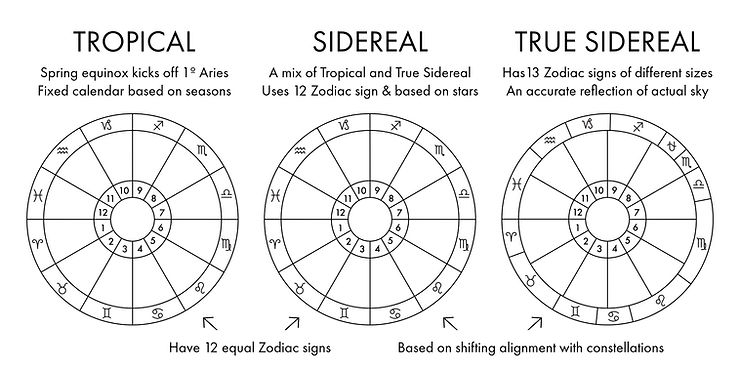
There are three main Zodiac systems used in Astrology these days: The Tropical Zodiac, used by mainstream or Western Astrology; the Sidereal Zodiac, used by Vedic Astrology; and the True Sidereal Zodiac, used by Astronomical or Constellation-based Astrology. We will take a quick look at each, but first, let’s briefly discuss what the Zodiac even is.

What is the Zodiac?

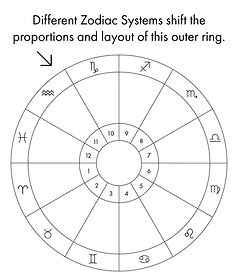
Natal chart showing Zodiac and House system

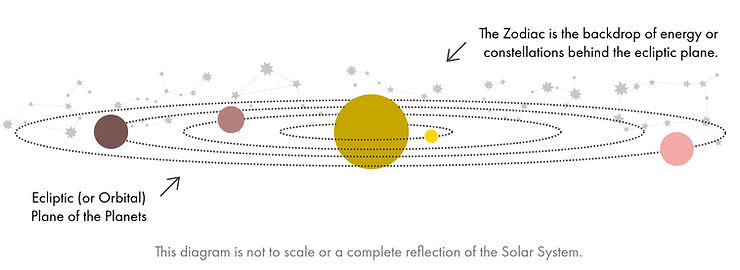
A brief definition of the Zodiac or Zodiacal belt is that it is the backdrop and energy cycle behind the ecliptic plane in our Solar System (shown below). When looking at your natal chart, the Zodiac is the outermost ring consisting of the Zodiac signs we are all so familiar with, like Aries, Taurus, and Gemini. What is the ecliptic plane? This is the path that the celestial bodies orbit around the Sun. It’s an electromagnetic plane of energy that once captured the physical matter in orbit that we now know as planets, asteroids, and more.

Behind this ecliptic plane lies the Zodiac, which shifts depending on the approach used to calculate it. This will make more sense as you continue reading!

For the purpose of this blog, we are only looking at and discussing the very outer ring of the chart, the backdrop of all of your chart placements. From Aries to Pisces, this cycle of energy infuses your various chart components with a specific expression associated with the Zodiac sign they align with.

Ecliptic plane diagram of Solar System with Zodiac constellations

The Tropical Zodiac

By far, the most well-known and commonly used Zodiac system is the Tropical Zodiac. Used by the majority of Astrologers in the United States, this is the system with the dates that we are all familiar with. Born between March 21st and April 19th? You have an Aries Sun sign, at least according to this system.

The Tropical Zodiac consists of 12 Zodiac signs, each getting an even 30º slice of the 360º Zodiac wheel. As we make our annual orbit around the Sun, the Sun spends about a month in each of the 12 signs. This system is calculated by the seasons on Earth, not the constellations. That is the main difference between this system and the others.

When using the Tropical Zodiac, the first day of spring or spring equinox (the day in March when we experience 12 equal hours of night and day) always marks 1º Aries. So, the first day of spring always kicks off the Aries season. The first day of Summer, or summer solstice (the longest day of the year), marks 1º Cancer. Cancer season kicks off the Summer season. The first day of Fall, or the fall equinox (the day in September when we experience 12 equal hours of night and day), always marks 1º Libra, so Libra kicks off the Fall. On the first day of Winter, the winter solstice (the longest night of the year) marks 1º Capricorn. Capricorn greets the winter season. And then the cycle starts all over again with the following spring equinox kicking off Aries once again. It’s a consistent system that never changes.

The Tropical Zodiac runs on a cycle of time created by the tilt of the Earth’s axis in relation to the ecliptic plane. Because our axis isn’t parallel with this plane, we experience chapters of longer days and longer nights each year, with the equinoxes and solstices marking changing points in the seasons.

What most don’t realize is that just because the Tropical Zodiac categorizes the Sun in Aries or Gemini or Scorpio doesn’t mean that’s where it’s actually located by constellation. In fact, the Tropical Zodiac isn’t based on constellations as we align with them in our sky today. As soon as you start wanting to know where the Sun and other celestial bodies actually were in the sky by constellation at a specific time, you are headed into the territory of the Sidereal and True Sidereal Zodiac.

Sidereal and True Sidereal Zodiac

These two systems are similar, so we will discuss them together. The word sidereal means “of or with respect to the distant stars.” The Sidereal and True Sidereal approaches to the Zodiac are systems founded on our alignment to the constellations rather than the seasons. There are Astronomical rotations (the precession of the equinoxes) in our solar system that cause our alignment with the constellations to be ever-changing, meaning that as we make annual orbit around the Sun, we don’t return to the same position and alignment with the constellations as we had when we started the orbit. Our cosmic position shifts ever so slightly year after year, meaning that the dates when the Sun is located in the Aries constellation also shift. It’s a system based on our placement in the Solar System at large, not on the seasonal time of year for us on Earth. The Tropical Zodiac does not consider this third rotation of the Earth (the precession of the equinoxes), but Sidereal and True Sidereal Astrology do.

So, let’s say you were born on March 30th, a solid Aries Sun Sign according to the Tropical Zodiac. Even though mainstream astrology would categorize you as having an Aries Sun, the Sun was technically still located in the constellation Pisces when you were born. So, Sidereal and True Sidereal Astrologers would categorize you as having a Pisces Sun sign. Confusing, right? How can you be an Aries and Pisces Sun? Stay with me…

The Sidereal and True Sidereal Zodiac are systems that honor our ever-changing alignment with the constellations and interpret chart components based on our alignment with the stars, not the seasons. The Sun is still in the Pisces constellation when the first day of spring arrives, so Sidereal and True Sidereal Astrologers would interpret it as such. In another several thousand years, the first day of spring will align in the Aquarius constellation. These two systems will continue calculating the Zodiac according to our positioning with the stars, not the season. Right now, there is about a whole sign difference between the Tropical and Sidereal/True Sidereal Zodiac systems.

The only difference between the Sidereal Zodiac used by Vedic Astrologers and the True Sidereal Zodiac used by Constellation-based Astrologers is the number and size of the constellations used in the calendar. The Sidereal Zodiac uses the same 12 Zodiac signs as the Tropical Zodiac, and each still gets an even 30º slice of the 360º chart. The True Sidereal Zodiac uses 13 Zodiac signs (some Astrologers even use more, like Cetus) and is a calendar that honors the actual sizes of the constellations in our sky.

It’s a nice thought to think that each Zodiac constellation takes up the same amount of space along the ecliptic plane (12 signs of 30º each to form a 360º circle), but that is not the case in physical reality. Virgo takes up 44º of the Zodiac calendar and is the 2nd largest of 88 total constellations in our Solar System, while Cancer takes up less than 23º. The Sun (and all other celestial bodies) spend much more time in the Virgo constellation than in the Cancer constellation. When you look at a True Sidereal Zodiac calendar, you see that there are different sizes for each of the Zodiac constellations, including the 13 Zodiac sign, Ophiuchus, recognized by NASA as being part of the ecliptic path that we orbit along.

The True Sidereal Zodiac is the only calendar system based on astronomy that accurately reflects the constellations and our alignment with them as we know them today.

Diagram of Three Zodiac Systems

The History of the Systems

Diving into the history of these systems really allowed me to connect to the purpose of each of them. There is no right or wrong system. I repeat, there is no right or wrong system! Our ancestors were much more tuned into our connection to the sky than we are today, and we’ve always known that our alignment with the constellations is ever-shifting. The Sidereal Zodiac and Vedic Astrology predate the Tropical Zodiac. About 2,000 years ago in ancient Babylon, an Astronomer, Ptolemy, formally made the Tropical Zodiac the standard approach because it was more valuable at the time to track the seasons for the purpose of agriculture. Having a consistent system based on the seasons, as well as pairing nicely with the months of the year in the calendar (12 equal signs, each claiming one month of the year in terms of our orbit around the Sun), made life easier rather than going off our ever-shifting alignment with the constellations. Here’s a great history paper with more details.

The history and use of the True Sidereal Zodiac system get a little more complex. The True Sidereal Zodiac, as described above, is unique because it honors the different sizes of the constellations as we know them in our sky today and includes Ophiuchus. The boundaries of the constellations in our sky have evolved over the thousands of years of human civilization.

Think about it: historically, no culture or region had the same understanding of the sky, especially before we could communicate with each other. Each and every culture had its own mapping of the sky and constellations before we created a universally accepted map. There are many different kinds of Astrology out there that I haven’t even discussed here! Mayan and Chinese Astrology are two systems that are pretty different from the system we’ve explored here. What I find super interesting is that evidence of some sort of star-based practice has been found all around the world in all kinds of cultures from the very beginnings of our history. Exploring our human experience through the stars above is part of our DNA, and Astrology is the ancient language of the stars.

So, what the Greeks called the constellation Virgo back in the day was a cluster of something entirely different to Native American tribes and something entirely different to Aztec and Mayan cultures. Over the thousands of years of global centralization, we’ve created a universal understanding and map of all the stars in our Solar System. There are actually 88 total constellations in our Solar System. Your natal chart only includes the 12+ that are part of the Zodiacal belt behind the ecliptic plane. Those are the stars that so curiously captured the attention of our ancestors, as they were the stars that interacted as the backdrop with the planetary bodies.

It wasn’t until 1930, when the IAU (International Astronomical Union) formally published new boundaries initially proposed in 1928 for the constellations, that Ophiuchus became a recognized constellation of the ecliptic by NASA, meaning that the Sun and other celestial bodies spend a portion of time in alignment with Ophiuchus each year as the Earth orbits the Sun, according to these new boundaries.

What’s super fascinating and relevant to me as an Astrologer is that PLUTO WAS ALSO DISCOVERED IN 1930! There is a definite correlation here between Pluto’s discovery, Ophiuchus joining the ecliptic, and the True Sidereal Zodiac resulting, which reflects the purpose that this Zodiac calendar has. If I had to boil it down to what I know of this system, the True Sidereal Zodiac is a shadow Zodiac designed to take you more into the dynamics of your discord, darkness, and wounding. It reveals more of what’s happening beneath your Tropical Chart’s harmonious surface. Another way to say it is I’ve noticed the Tropical Zodiac as being more in tune with our Ego dynamics, while the True Sidereal Zodiac is more Subsconscious dynamics. Blog post coming on this soon…once I have it written, it will be linked here!

This is a relatively new and emerging system based on modern-day Astronomy. Very few Astrologers practice and teach this system. Some Astrologers are against it. It’s a controversial topic in the field right now. It is expected, reasonable, and natural for professionals to create new avenues to develop the work they are mastering. Diversity in Astrology is a good thing, just like having a variety of Doctors out there with specialties and specific skills. It keeps us open and curious to new ways of looking at things, allowing us to evolve in the practice. I encourage collaboration over competition when it comes to other Astrologers sharing their thoughts and insights.

What’s most essential for you on the consumer side of this industry is how you resonate with the Astrologer you are working with. Do they make sense to you? Do they bring clarity over confusion? Do you feel a heart tug to go deeper with them? I always recommend visiting the work of multiple Astrologers because it will support your comprehensive understanding of this modality.

Photons and Quantum Connection

Animated Flower of Life

I use the True Sidereal Zodiac because I have connected to this modality through quantum physics and verifiable facts. It feels misaligned at my core to say that Venus was in Cancer when you were born when it was actually interacting with and reflecting the photons from the Gemini constellation. We are all very unique light patterns manifested in the physical on the densest planet in our solar system, Earth. Your unique light pattern is in your energy field. It is founded on the dynamics of your natal chart, showing exactly how all the photons and other quantum particles were moving in relation to each other when you took your first breath as an individual human in this life, including the other stars in our Solar System. This is why I personally and professionally use the True Sidereal Zodiac the most and find validity in the information it reveals.

So, You Have Different Signs Between Systems…

Are you having an identity crisis over your signs changing? I did, too. One of the most significant shifts in my chart between the Tropical Zodiac to True Sidereal Zodiac is my moon sign moved from Virgo to Leo. It blew my mind and made me question everything, which almost made me abandon the practice of Astrology forever. Now, I try to help other Astrology students avoid this chapter of confusion by helping them understand why you can have the moon, Sun, or any other celestial body in two different signs and still get to know who you are. In fact, this additional information allows you to go deeper into your knowingness of who you are.

Let me ask you something. How many ways are there to look at God? Like infinity, right? This is the principle we are working with when looking at two charts with different information. Different charts are just different mirrors for looking at yourself.

You are a reflection of the entire Solar System, a beautiful fractal expression of all the Zodiac signs, all the houses, and all the celestial bodies vibrating with a unique frequency. You are not just your Sun, Moon, and Ascendant signs. We all have a connection to Aries, Saturn, and the 3rd House; it’s just the nature of your connection that changes when you use a different Zodiac system. Your natal chart is incredibly nuanced because there is only one you in this world. When I moved to the True Sidereal Zodiac and my moon sign changed from Virgo to Leo, this wasn’t communicating that I no longer had a connection to Virgo; this communicated that my relationship with Virgo changed. It allowed me to see my Virgo energy in a new way. That’s all.

Why would a single chart show all of who you are? Aren’t there layers and facets to you? Aren’t there always new things to learn about yourself? One of the most significant mishaps I see in Astrology is that we like to identify with our charts. I am a Pisces Sun, Leo Moon, Ascendant in Virgo, but is this who I am? No! I am the conscious awareness experiencing this Pisces Sun, Leo Moon, Ascendant in Virgo energy dynamic.

When my chart changed when I calculated it through the True Sidereal system, the change in signs had nothing to do with my identity. The new information offered me an alternative perspective on understanding my human experience and the dynamics of my energy field. What’s important to note is that the ONLY thing that changes when you try a different Zodiacal system are the signs that your chart components are in. It doesn’t change the house position or the aspect relationships between the planets. In other words, if Mercury were squaring Mars in the Solar System when you were born (known as a square aspect), that would remain constant in any system. The planetary positioning of the Solar System doesn’t shift. The only thing that shifts is the Zodiac sign they are associated with.

Black and White vs. Shades of Gray

When you really think about it…isn’t it weird that we have boundaries marking energetic sections of our sky? Like Aries marks an energetic time of self-prioritization, just going for it and taking instinctual action. The Tropical Zodiac draws the Aries boundaries one way, and the True Sidereal Zodiac draws them another. This comes back to what the Zodiac even is: a cycle of energy. From Aries to Pisces, from separation back to unity, the Zodiac is a spectrum, and each degree of the 360º circle contains its own energy. 5º Cancer is a different energy than 20º Cancer.

So maybe we can broaden our understanding of the Zodiac into something more than a black-and-white system with fixed borders. This is why I and other Astrologers read cusps—when a chart component is located between two Zodiac signs. There is an evolution of energy that takes place as we cross the boundary from one sign to the next.

Does a kitten just one day become a cat? Does spring suddenly become summer overnight? No. Our world shows us evidence of gradual shifts and changes. I see the cycle of the Zodiac the same. We don’t move from Aries straight to Taurus. There’s an evolution of Aries energy as any chart placement moves through the sign and slowly becomes Taurus energy, which then evolves to Gemini energy.

I share this perspective of the Zodiac with you because when you understand the cycle of energy that the Zodiac is, you don’t get so caught up on arbitrary boundaries that change between systems. The Tropical Zodiac draws the boundaries like it does because Western Astrologers connect more to the significance of the seasons in our human lives. The True Sidereal Zodiac draws the boundaries like it does because Constellation-based Astrologers connect more to constellations.

Your identity doesn’t change just because the Zodiac does. The different Zodiacal systems allow alternative perspectives on your human experience and energy dynamics. You may resonate with multiple perspectives, which means you are a multifaceted and layered Soul. Let yourself be just that!

How Does the True Sidereal Zodiac Change Your Chart?

Are you curious about how your chart changes using the True Sidereal Zodiac? You can use my free online chart calculator to calculate your natal chart using the True Sidereal method. Interpreting and understanding your chart through different Zodiacal systems is a more advanced level of Astrology knowledge. I highly recommend you seek the assistance of a professional to help you understand the layers.

To dive deeper into the energetic dynamics of your natal chart and soul, join me for a private session. My mission as an Astrologer and energy coach is to spark heart consciousness in every soul searcher who wants more for and from their life. The electromagnetic field of your heart is powerful, and when you harmonize the energy dynamics in your chart to align with this center, you naturally attract and create a life you love. This serves the entire world, and this is what my work supports. I help you connect, open, and channel your heart by exploring the dynamics of your chart and coaching you into an aligned expression.

Sacred Geometry & Squaring of the Circle

Why is squaring of the circle even significant?

Well, it can be reduced down to the universe being constructed mathematically with a ruler/straightedge and a compass.

Squaring The Circle | How To Draw Sacred Geometry Tutorial

Pentagram – Wikipedia

Dodecahedron: an Interactive Model

PENTACLE: 108 Degrees
Every Cell in our bodies is a Platonic Solid crystal form.
Every Protein in our bodies is Pent shaped, and therefore based on Phi proportions.

The more we zoom in and construct the Pentacle within the Pentacle, a process that can go forever, the more the Phi ratio is evident.

This means that our human constitution is based on Self-Similarity, an expression of Fractality evident in the Spirit molecule that knows only Phi and has no boundaries.

The currently immense fascination with 108, how it is the measure of the external angles of the pentacle (108 degrees), permeates our entire physical matrix.

No photo description available.

The Meaning Behind 15 Common Masonic Symbols

1. The All Seeing Eye

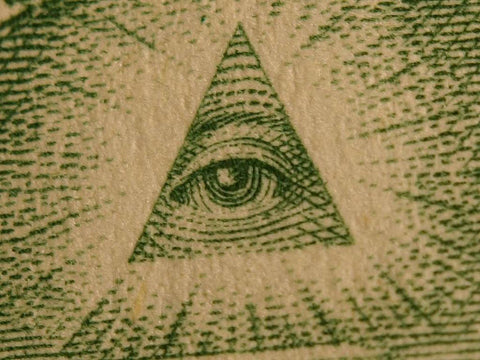
The All Seeing Eye


The All Seeing Eye, also known as the Masonic Eye or Eye of Providence, is up there as one of the most recognized Freemason symbols. This is especially so considering it features on none other than the American dollar bill. It’s been around since way back in 1797 when it was introduced in a publication of the Freemasons Monitor.

It represents the eye of God and serves as a reminder to Freemasons that God is always watching, seeing all of their actions and thoughts.

2. The Letter G

The Letter G
While Freemasons can’t claim an entire letter of the alphabet as their own, they do use the letter G within their symbolism quite frequently. The problem is, there’s a bit of contention around what it actually means.

Some say it’s as simple as standing for ‘God’ and ‘Geometry’. Others believe it represents the word ‘Gnosis’, meaning the knowledge of spiritual mysteries, which is a big component of Masonry. Others still devise that the letter G in ancient Hebrew had a numerical value of 3, which is highly referenced throughout history when talking about God.


3. Square and Compasses

As well-represented as the All Seeing Eye is, the Square and Compasses are really the most well known or recognized Freemason symbol. The meaning behind it is quite literal, with the square representing morality in that Freemasons need to ‘square [their] actions by the square of virtue with all mankind’.

The compass then measures the ability to wisely conduct actions within certain boundaries. In other words, together the Square and Compasses remind Freemasons to explore their desires and passions without stepping outside the realms of moral behaviour.


4. The Anchor and the Ark

The Anchor And The Ark
The anchor is used a lot in Christian symbolism and has been adopted by Freemasons to have a similar meaning. Basically, it represents hope, as well as peace against stormy weather.

An anchor is used, quite literally, as a way of grounding a ship, and in the same way this symbol talks about living a life that is grounded in hope and peace.

5. Masonic Blazing Star

A Blazing Star Within a Star
The Masonic Blazing Star is said to be the pinnacle of a Freemason’s journey. In Masonry, a man tries to use knowledge to guide him, much like a star that is blazing against a dark night sky.

6. Masonic Gavel

Masonic Gavel
There are two meanings to this symbol. Firstly, it represents the authority of the Freemason yielding it, who might use his gavel to punctuate his ideas and command order like a judge in court does.

Secondly, it’s a tool used to break off the rough edges of a stone. Used in this way, the Masonic Gavel can be a reminder for Freemasons to chip off certain vices and maintain a pure, moral and spiritual heart.

7. Masonic Sheaf of Corn

Sheaf of Corn
Back in the days of King Solomon, Mason’s gave corn as part of their earnings, kind of like a tax. These days it’s used during dedication ceremonies, mainly, and sometimes to represent charitable giving to the less fortunate.

8. The Acacia Tree

An Acacia Tree
The Acacia tree is an incredibly hardy, durable tree, and as such has been used to depict immortality throughout ancient history. The Hebrew people used to mark their graves with a sprig of Acacia for this very reason.

Aligning with the Masonry belief in the afterlife, the Acacia Tree represents their enduring, immortal souls.

9. Ark of the Covenant

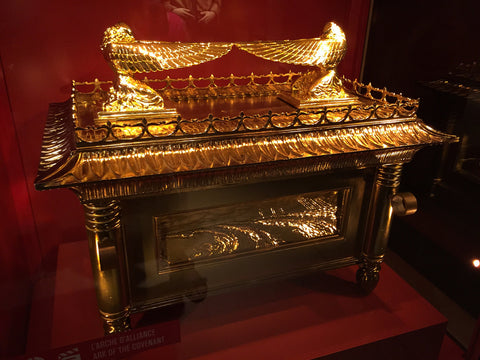
The Ark of the Covenant

The Ark of the Covenant can be found in the Bible as God’s promise to David. Freemasons draw significance and symbolism from it as today, it represents God’s continued forgiveness of their transgressions.

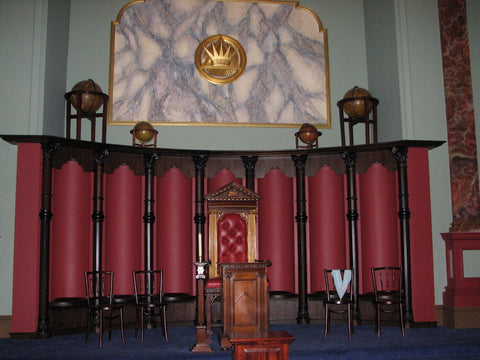
10. Masonic Altar

A Masonic Alter

Like many religious entities, the Masonic Altar represents a place where communion can take place with God. It’s where the Holy Book(s) are stored, as well.

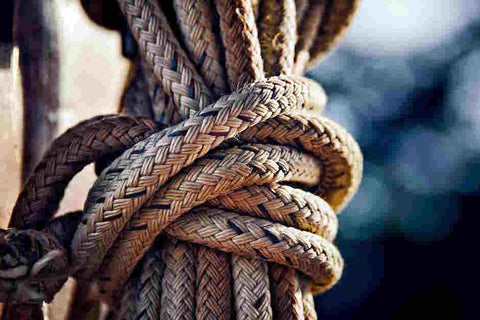
11. Cable Tow

Cable Tow Rope

A cable tow is attached to a Freemason’s robe and represents a promise that he will help his Brother however much he can – as long as it’s within the length of his tow rope. That’s why the length of the cable tow rope is so important; it measures how capable the Brother is in terms of being able to assist his fellow Freemason.

12. Masonic Shoe

Blue Masonic Shoes

A long time ago, people would confirm a verbal contract by taking off their shoe and giving it to the other person. Now the Masonic Shoe, also known as Blue Slipper, is a symbolic confirmation that what has been said will be done.

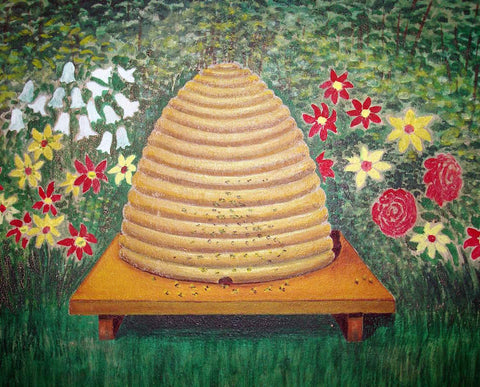
13. The Beehive

A Masonic Beehive

Another hotly contested symbol, it’s widely accepted that The Beehive symbolizes the need for Masons to work together to keep the world operating. Some believe that there is a deeper, more complex meaning behind it, but generally, this is the idea represented wherever The Beehive is present.

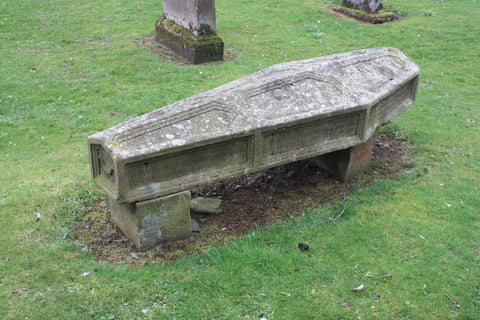
14. Coffins

An Old Stone Coffin

Coffins usually represent mortality, but within the world of Freemasonry, the meaning behind them can get a bit murky. Sometimes coffins are represented with a Sprig of Acacia, which would depict immortality. Other times it has a 5 pointed star associated with it.

The meaning behind the coffin, then, seems to be interchangeable with whatever context it’s provided in.

15. 47th Problem of Euclid

47th Problem of Euclid

Things get a bit geometrical here, so bear with us. The 47th Problem of Euclid – also known as Pythagorean Theorem – is symbolic of the need to ‘square your square’. In everyday practice, this means to keep your life in order, and in building infrastructure, it is the method Freemasons follow when laying foundations.


George H Lilley specialises in Masonic and Fraternal regalia, providing impeccable quality services and products to customers right across Australia.

Alchemical Symbolism of the Double-Headed Eagle

In alchemy, the double-headed eagle symbolizes the reconciliation of spirit and matter. The eagle itself represents purified sulfur and an ascending spirit, while the double heads represent the reconciliation of these two principles.

This symbol relates to the alchemical regeneration and transmutation of the “soul personality” in the individual: a spiritual alchemical awakening process that can only be integrated by upright living. The double-headed eagle is also known as the “phoenix, the bird of resurrection”.

SOURCE: newjerseygrandlodge.org

ALCHEMICAL SYMBOLISM of the DOUBLE-HEADED EAGLE
SOLVE et COAGULA:
ALCHEMICAL SYMBOLISM
of the
DOUBLE-HEADED EAGLE
Gregory H. Peters 32˚ K\S\A\
24 August 2008

PREFACE

One of the most prevalent emblems of the Scottish Rite is that of the Double-Headed Eagle. Mentioned briefly in comparison to the white-lambskin apron of the Craft Lodge, the symbol of the double-headed eagle is perhaps one of the most ancient emblems in Scottish Rite, having been represented for thousands of years in many of the worlds cultures.

What is the significance of this symbol such that it has found its way into the mythology and symbolism of so many cultures over time? As a symbol, the image embodies many layers of meaning, each of which are significant. The eagle itself has always represented such ideas as nobility and just rulership. The large wings are protective, while the razor sharp talons inflict punishment to evil. The noble white head indicates just and aristocratic ruler. Strength, courage, foresight and immorality have all been associated with this image.

What, however, of the double headed eagle? Something in this image speaks to humanity at a primal, archetypal level. As a symbol, it is capable of transcending language, race, history, time itself – and presenting to the mind a presence of transformation and the eternal truth of man’s real nature.

In order to understand this symbol we will necessarily have to venture into the recesses of the secret chambers of our hearts, the true sanctum sanctorum or secret shrine of the Divine. At the portico to the temple of Apollo at Delphi were said to be inscribed in gold letters the words GNOTHI SEUTON meaning “Know Thyself.” The symbol of the double-headed eagle will be found to harkens back to this simple instruction of the Greek sage Pythagoras; an instruction which is the gateway to Light and Truth, and the perfected nature of man when elevated to the highest.

HISTORICAL SIGHTINGS

In the Louvre are two large terra cotta cylinders dating from approximately 3000 BC covered completely in cuneiform characters. Recovered from the remains of the Babylonian city of Lagash they record the foundation of the city by Gudea. The cylinders recite the story of the King, how the county was in drought with the “waters of the Tigris fell low” and the people feared that the gods were displeased. King Gudea had a dream in which a divine man came to him; a man whose stature was immense, with his feet firmly on the earth and his head reaching to the heavens, and upon his head was the corona of a god surmounted by the Storm Bird that extended it wings across all of Lagash.

The Divine Man of Gudea’s dream is the Babylonian god Ningersu, a solar deity. Associated with Ningersu is an eagle called Imgig, usually depicted lion-headed. There are a few extant examples of Imgig depicted as a double headed eagle. The oldest known example is a clay cylinder from a priest of the Sun god Ningersu which depicts a Priestess presenting a nude neophyte before an altar to the goddess Bau. Raised behind the goddess is an inscription supported by the heads of the double headed eagle. To date, this is the oldest known representation of the double-headed eagle.

In ancient Mesopotamia among the ruins of the Hittites, dating from around the sixth millennium B.C. are several instances. The Hittite empire went through three general phases, at its greatest point stretching from Mesopotamia to all of Palestine and Syria. A conquering empire, they had successfully taken over Sumerian remnants of Babylonian civilization, and in doing so had adopted many of the cultural, political and religions ideas of the conquered peoples. The Hittite capital of Bogazkoy was a primary center of commerce and culture in Western Asia. The civilization fell first to the invasions in 1200B.C. of the Tracians, Phrygians and Assyrians, and after a brief resurgence from 1050 – 700 B.C., they were finally conquered by the Assyrians.

Excavations at the former capital have unearthed cylindrical clay seals with a double-headed eagle with outspread wings upon it which appear to have been used as a type of currency. Similar images have been found in AlacaHuyuk and Yzailikaya, dating from 1400 and 1250 B.C. which are more religious in nature, the image being surrounded in one instance by deities and in another as the guardian of the gate to the capital city.

Similarly, in the city of Cappadocia there are several ruins which contain the image of the double-headed eagle, almost invariably at the entrance to gates, surrounding a sanctuary, or at the doorway to a palace. The Greek name for the city was Pteris, meaning “wing.” It has been suggested that this was the literal translation of the cities name, which was a county filled with icons of double-headed eagles with wings outstretched.

In the ruins of the city of Boghaz Keui is the temple of Iasily Kaya with a sculpture depicting a royal and divine procession. J. Garstang describes an ancient “house or temple of the Eagle in The Land of the Hittites:

The significance of the double headed eagle is unknown. But that there was a local worship associated with the eagle is indicated by the discovery at Boghaz Keui of a sculptured head of this bird in black stone, larger than natural size.

He further describes the translation of a cuneiform fragment from the same site which describes “the house or temple of the eagle.”

Before Moses received his revelation, the ancient Chaldeans worshipped many gods including a Sun god similar to Ningersu, atop Mount Sinai. Alluded to in the 29th psalm as a Lord of thunder and lightning, powerful and majestic, whose voice shakes the deserts of Kadesh, the god was no doubt inherited from the Hittites and their storm god represented by a double headed eagle.

Long before the unification of the two kingdoms of Egypt by King Narmer, before the Pyramids of the Giza plateau had even been dreamt of let alone built, the pre-dynastic culture of the Nile were worshippers of a earth mother type of goddess. While little is known of this period, it is remarkable that stone representations of a two-headed bird were frequent, with many tombs having been discovered containing these relics which were built thousands of years before our common era.

The last dynasty to rule the Byzantine Empire was led by Palaiologos. Rising to power after the close of the Fourth Crusade, in 1261AD he recaptured Constantinople, attempting to unite the Eastern Orthodox Church with the Roman Catholic Church, and adopting the double-headed eagle as his emblem. After the fall of Byzantium the double-headed eagle found its way into the imperial ensigns of many eastern European nations.

The symbol was also used as the coat of arms for many of the primary crusaders in their journeys to protect the Holy Land, most likely having been acquired in their journeys in the eastern Turkish empires.

Within our Rite, the symbol was inherited from the Order of the Royal Secret as the ensign of their highest degree the Knight Kadosh or Knight of the White and Black Eagle. The Order of the Royal Secret was considered thene plus ultra of Masonry at the time. Established in 1761 by Etienne (Stephen) Morin, who received a patent from the French Masonic authority known as the Council of the Emperors of the East and West to establish the Order. The emblem of the Council was the double-headed eagle. We see echoes of this inheritance in our rituals of the 17th degree, Knight of the East and West, and in our 30th degree of Knight Kadosh.

Many authorities feel that the pre-cursor body, the Council of the Emperors of the East and West, were given explicit permission to use the emblem from King Frederick of Prussia. As such it represented the effort of unification of the fractured Holy Roman Empire.

These are just a few references to the historical usage of this icon. The emblem of the double-headed eagle has made a significant appearance throughout time and across cultures, awakening within man a remembrance of his nobility, aristocracy and remembrance of his divine nature. From ancient Egypt and Babylon to the Roman Empire, Knights Templar and the Greek Orthodox Church, the double headed eagle has played a significant role.

ALCHEMICAL EMBLEM

What is significant about this symbol that it should be so deeply embedded in the consciousness of the worlds cultures? We find some indication by looking to the Scottish Rite itself, and in particular the writings of Albert Pike.

Pike’s monumental work in organizing and enriching the Scottish rite is undeniable. He held that the Scottish Rite was the supreme sanctuary of Masonry, containing a synthesis of all the wisdom of the ancients, and a complete system of initiation for spiritual enlightenment. Encoded within the degrees of the order are doctrines of the western mysteries from the kabala, hermeticism, philosophical schools and Rosicrucian traditions.

Much of the work of revising the rite from the old French rituals was a result of Pikes learning in these areas of study, and his work on the ritual committee to revise the rituals was, in his own words, motivated by a desire to spiritualize the work.

In a letter to the Masonic historian Robert Gould from 1888, Pike writes that he has spent considerable time collecting the old Hermetic and alchemical works in order to ascertain their relationship to Masonic symbols. He writes:

“I cannot conceive of anything that could have induced Ashmole, Mainwaring, and other men of their class to unite themselves with a lodge of working Masons, except this – that as the Alchemists, Hermeticists, andRosicrucians had no association of [their] own in England or Scotland, they joined the Masonic lodges in order to meet one another without being suspected, and I am convinced that it was the men who inherited their doctrine who brought their symbols into Masonry, but kept the Hermetic meanings to themselves. To these men we owe, I believe, the Master’s degree. The substitute word means “the Creative Energy from the Father” – the Demiourgos and Hiram, I think, was made the hero, because his name resembled Hermes, “The Master of the Lodge”; the Divine Word (the Egyptian Thoth), the Mercury of the Alchemists.”

Albert Pike believed that the emblem of the double-headed eagle ultimately derived from alchemy. As a science and art, alchemy was practiced throughout the ancient world. The name most likely derives from the Greekkhemeia, the “transmutation of metals.” According to many hermetic traditions, this ultimately derived from the Arabic al-khimiya, which was thought to be a reference to the art of the Egyptians, khem meaning the “black land” which referred to the rich alluvial soil of the Nile.

The alchemists thrived in the middle ages predominantly in Europe and Arabia. The most acclaimed goals were the transmutation of base metals into gold, the creation of the elixir of life which would prevent and cure all diseases and prolong life indefinitely, and the discovery of a universal solvent.

Alchemical literature is a rich treasure trove of puzzling metaphors, symbolic stories and dream like sequences presented as instruction for those with “eyes to see.” At the center of alchemical research was the quest for thePhilosopher’s Stone, a fantastic material which was thought to be both physical and spiritual, an instrument by which all of the alchemical transformations were empowered. The Stone has many titles and attributes. It was called the lapsit exilis (“stone fallen from heaven”). In some texts it was said to be composed all of fire; in others, of a special water of the stars that does not wet. It was said to be composed of a common matter that was often overlooked or outright rejected, thought useless by the ignorant and discarded.

Alchemical work was called the spagyric art, and was under the aegis of Hermes Trismegistus or Thrice Greatest. This celebrated figure was an amalgamation of the Greek Hermes and the Egyptian God Thoth, both considered Lords of Writing and Magick.

Attributed to thrice-greatest Hermes are a series of writings known as the Corpus Hermeticum, which formed the foundation of Alchemical and Rosicrucian texts. The texts are structured as several dialogues between Hermes and his disciple, covering a wide range of philosophical and spiritual subjects. The text contains traces of Gnostic and Egyptian thought, with the ultimate subject being the regeneration and spiritual illumination of man.

Thrice Greatest Hermes was also known as Poemandres, the Sheppard of Men. In one of the most famous passages from the Corpus Hermeticum, Poemandres explains the constitution and spiritual regeneration of humanity:

  1. So he who hath the whole authority o’er [all] the mortals in the cosmos and o’er its lives irrational, bent his face downwards through the Harmony, breaking right through its strength, and showed to downward Nature God’s fair form.

And when she saw that Form of beauty which can never satiate, and him who [now] possessed within himself each single energy of [all seven] Rulers as well as God’s own Form, she smiled with love; for ’twas as though she’d seen the image of Man’s fairest form upon her Water, his shadow on her Earth.

He in turn beholding the form like to himself, existing in her, in her Water, loved it and willed to live in it; and with the will came act, and [so] he vivified the form devoid of reason.

And Nature took the object of her love and wound herself completely around him, and they were intermingled, for they were lovers.

  1. And this is why beyond all creatures on the earth man is twofold; mortal because of body, but because of the essential man immortal.

The Hermetica also includes the celebrated Hymnodia Krypte, the “Secret Sermon on the Mount,” which stirs the mind towards its true Divine nature:

Ye powers that are within me, hymn the One and All; sing with my Will, Powers all that are within me!
O blessed Gnosis, by thee illumined, hymning through thee the Light that mind alone can see, I joy in Joy of Mind.
Sing with me praises, all ye Powers!
Sing praise, my Self-control; sing thou through me, my Righteousness, the praises of the Righteous; sing thou, my Sharing-all, the praises of the All; through me sing, Truth, Truth’spraises!
Sing thou, O Good, the Good! O Life and Light, from us to you our praises flow!
Father, I give Thee thanks, to Thee Thou Energy of all my Powers; I give Thee thanks, O God, Thou Power of all my Energies!

Thy Logos sings through me Thy praises. Take back through me the All into Thy Reason – my reasonable oblation!
Thus cry the Powers in me. They sing Thy praise, Thou All; they do Thy Will.
From Thee Thy Will; to Thee the All. Receive from all their reasonable oblation. The All that is in us, O Life, preserve; O Light illumine it; O God in-spirit it.
It it Thy Mind that plays the Shepherd to Thy Word, O Thou Creator, Bestower of the Spirit.

Thou art God; Thy Man thus cries to Thee through Fire, through Air, through Earth, through Water, through Spirit, through Thy creatures.
’Tis from Thy Aeon I have found Praise-giving; and in Thy Will, the object of my search, have I found rest.

In addition to the Corpus Hermeticum, the Tabula Smaragdina or Emerald Tablet of Hermes is the veritable cornerstone the Hermetic tradition. With possible roots in Arabic alchemical writings, the Emerald Tablet outlines the entire doctrine of the Alchemical work in a few short lines which purported to describe the work of the Philosophers Stone, also known as the Operation of the Sun. Found among the alchemical notes of Isaac Newton is a translation of the tablet:

  1. Tis true without lying, certain & most true.
  2. That which is below is like that which is above & that which is above is like that which is below to do the miracles of one only thing.
  3. And as all things have been & arose from one by the meditation of one: so all things have their birth from this one thing by adaptation.
  4. The Sun is its father, the moon its mother,
  5. The wind hath carried it in its belly, the earth its nurse.
  6. The father of all perfection in the whole world is here.
  7. Its force or power is entire if it be converted into earth.

7a. Separate thou the earth from the fire, the subtle from the gross sweetly with great industry.

  1. It ascends from the earth to the heaven & again it descends to the earth and receives the force of things superior & inferior.
  2. By this means you shall have the glory of the whole world & thereby all obscurity shall fly from you.
  3. Its force is above all force, for it vanquishes every subtle thing & penetrates every solid thing.

11a. So was the world created.

  1. From this are & do come admirable adaptations where of the means (or process) is here in this.
  2. Hence I am called Hermes Trismegist, having the three parts of the philosophy of the whole world.
  3. That which I have said of the operation of the Sun is accomplished & ended.
    Alchemists and Hermeticists of the middle ages wrote countless studies of the Philosophers Stone and its attributes. In the Golden Tract by an anonymous German philosopher, the Stone is described as

one, [and] the medicine one, which, however according to the philosophers, is called Rebis (Two-thing), being composed of two things, namely, a body and a spirit (red or white)…Rebis is two things, and these two things are one thing […]which is called Elixir[…] the nature of sulphur and mercury above ground, while underground they become gold and silver.

Furthermore, he writes “Know that the secret of the work consists in male and female, i.e. an active and a passive principle. “

The dual natured rebis was usually depicted as a two headed royal figure, and also often as a double headed eagle.

A somewhat more suggestive description of the Philosophers Stone was given in the tract La Lumiere sortant des Tenebres (The Light Coming forth from the Darkness):
The philosophers have given sulfur, or fire, the name gold not for nothing, because it is truly gold both in essence and in substance, but much more perfect than common gold. It is a gold that is completely sulfur, or rather a true sulfur of gold, a gold that is entirely fire, or the true fire of gold that develops; in philosophical caves and mines; a gold that cannot be changed or surpassed by any element, because it is itself the master of elements; a very fixed gold in which is only fixity; a very pure gold, because it is purity itself; a very powerful gold because without it everything else pines away; a balsamy gold, because it preserves all bodies against decomposition; an animal gold because it is the soul of elements of the entire lower nature; a vegetable gold, because it is the principle of the entire vegetation; a mineral gold, because it is sulfury, quicksilvery, and salty; an ethereal gold, because it is of heavenly nature and it is a true earthly heaven that is veiled by another heaven; finally it is a solar gold, because it is the rightful son of the Sun and the true Sun of Nature; its power gives force to the elements of which the warmth vivifies the souls and of which the movement of the entire Nature is brought into movement; from its influence the power of things arises, because it is the influence of the light, a part of the heavens, the lower Sun and the Light of Nature, without which even science would be blind; without its warmth reason would be stupid; without its rays imagination would be dead; without its influences spirit is sterile; and without its light intellect renaming in eternal darkness.

The alchemists held that the Philosophers Stone was created by unification of two opposites to create a third, perfected thing. The Operation of the Sun and Moon, sometimes described as the work of Gold and Silver, or Fire and Water, Male and Female, and so on. In this was God and Man mingled, and the powers of creation would open up to the perfected adept who had cultivated the philosophical stone. By the application of an intense heat, or fire, the separated elements would be combined into philosophical gold.

The sage Paracelsus wrote:

First, and chiefly, the principal subject of this Art is fire, which always exists in one and the same property and mode of operation, nor can it receive its life from anything else. It possess […] a state and power common to all fires which lie hid in secret, of vivifying. The fire in the furnace may be compared to the sun. It heats the furnace and the vessels, just as the sun heats the vast universe. For as nothing can be produced in the world without the sun, so also in this Art nothing can be produced without this simple fire. No operation can be completed without it. It is the Great Arcanum of Art, embracing all things which are comprised therein […]. It abides by itself, and needs nothing; but all others which stand in need of this can get fruition of it and have life from it. Know, then, that the ultimate and also the primal matter of everything is fire. This is, as it were, the key that unlocks the chest. It is this which makes manifest whatever is hidden in anything.

By the element of fire all that is imperfect is destroyed and taken away, as for instance, the five metals, Mercury, Jupiter, Mars, Venus and Saturn. On the other hand, the perfect metals, Sol and Luna, are not consumed in that same fire […]. Fire separates that which is constant or fixed from that which is fugitive or volatile. Fire is the father or active principle of separation.[…] Fire contains within itself the whole of Alchemy […].

Gold, Fire, the Sun, and Silver, Water and the Moon find correspondence in the Eastern philosophies of the subtle energetic nerves which when activated stimulate the kundalini or fire serpent at the base of the spine which is said to be a sleeping goddess which, when awakened rises up the spine bringing with its ascent the spiritual illumination and ecstasy of the adept. When the alchemical philosophers spoke of sulphur, mercury, salt, gold, silver, and so on, they were not referring to the base physical elements and metals as we usually understand them. Rather, the alchemical elements referred to subtle energies within the alchemist himself. The seven classical planets may be seen as a reference to the “interior stars” of chakras of the Hindu alchemical and tantric teachings. Aspects of consciousness which might be dissolved through analysis and deep insight, purified and consecrated, and then reconstituted by unification that results in the perfected man.

Anonymously published in 1670, the Invocation of the Flame from the comte de Gabalis is a beautiful, stirring invocation of the divine Light achived through the perfection of the Stone:

I call upon Thee, O Living God, radiant with illuminating fire. O Unseen parent of the Sun! Pour forth Thy light givin power and energise Thy divine spark. Enter into this flame and let it be agitated by the breaths of Thy holy spirit. Manifest Thy power and open for me the Temple of Almighty God which is within this fire! Maniest Thy Light for my regeneration and let the breath, height, fullness and crown of the solar radiance appear and may the God within shine forth!

From the Chaldean Oracles, cited often throughout alchemical literature, we read:

There is above the Celestial Lights an Incorruptible Flame always sparkling; the spring of lie, the formation of all beings, the original of all things. This Flame produceth all things, and nothing perisheth but what it consumeth. It maketh itself known by itself. This Fire cannot be contained in any place; it is without body and without matter. It encompasseth the heavens.

The heart should not fear to approach this adorable Fire, or to be touched by it; it will never be consume by this sweet Fire, whose mild and tranquil heat maketh the binding, the harmony, and the duration of the world. Nothing subisteth but by this Fire, which is God Himself. All is full of God, and God is in all.

Pike cited several of these works as evidence for the true meaning and significance of the double-headed eagle, which he equated with the alchemical Stone of the Philosophers.

THE REBIS AS CORNERSTONE
In Lambsprinks’s Tractatus de Lapide Philosophico there is an image of an alchemist in the garb of an Imperial messenger. Upon his chest is a double-headed eagle of white and black, showing the union of opposites in one being and the noble ascent to the heavens in the guise of the proud bird of eternity.

Pike similarly noted a significant diagram from Basil Valentine’s Azoth, which depicts a double-headed eagle in a shield, again symbolic of the combination of opposites. Around the circumference of the diagram is the sentence Visita Interiora Terra Rectificanto Inveniens Occultum Lapidem, meaning “Visit the Interior of the Earth; by rectification thou shalt find the Hidden Stone.” This formula was often referred to as V.I.T.R.I.O.L. in the alchemical texts.

The Arcanum Hermeticae Philosophiae of Jean d’Espagnet reads:

It is even so in the Philosopher’s Work; for the matter of the Stone possesseth his interior fire, which is partly innate, partly also is added by the Philosopher’s Art, for those are united and come inward together […] the internal standeth in need of the external, which the Philosopher administereth according to the precepts of Art and Nature […] Because the whole Work consisteth in separation and perfect preparation of the four elements, therefore so many grades of fire are necessary thereunto; for every element is extracted by the degree of fire proper to it.
Published anonymously in Altona in 1785, Gehime Figuren der Rosenkreuzer (Secret Symbols of the Rosicrucians) contains alchemical and hermetic diagrams with many instances of the double-headed eagle. This book was purported to be a work of 16th and 17th century Rosicrucian adepts. Pike found much of the material in the book significant, and in particular one of the diagrams to be of a highly suggestive nature regarding the Double-headed Eagle and its association with the Stone of the Philosophers.

The diagram shows the alchemical-hermetic Rosy Cross, which was considered to be the key of all esoteric knowledge. The Adepts of the Rosy Cross were said to wear this device in pure gold upon their breasts. The ribbon of the cross is surmounted by two double-headed eagles, one white and one gold. The dual mouths of the white eagle hold the moon, and the gold eagle hold the sun. Upon their breasts are the alchemical symbols for mercury, sulphur and salt, considered to be the three foundational building elements for spiritual regeneration.

Sulphur represented the caustic agent, which was used to burn away the dross of the first matter and purify it. It was akin to self-consciousness, and the ability of the rational mind to analyse itself. Salt was the preservative principle, representing the dormant and unenlightened state, as well as the vast storehouse of material in the subconscious. Mercury represented the illuminated, enlightened or super-consciousness.

Between the two eagles is the hermetic hexagram, again with the glyphs of mercury, sulphur and salt and the signs of the seven classical planets. The hexagram is held aloft by two angels, and in the center is an image of Christ bestowing blessings. The diagram shows the red and white tinctures, symbolized by the red and white double-headed eagles, and indicates that by unification of these opposites in the heart and mind of man, true illumination and spiritual grace may be achieved.

The double-headed eagle as an alchemical symbol illustrates the hermetic and alchemical axiom SOLVE et COAGULA, the process of separating the elements and then bringing them together after purification and consecration. This process is somewhat analogous to the psychological practice of depth analysis, where the personality is analyzed in detail, subconscious elements are brought to light and processed, and the personality is then made whole or fully integrated so that all the aspects of consciousness are in harmony – the divided self is healed and the person becomes whole.

Alipili’s The Center of Nature Concentrated alludes to this Great Work of regeneration:

He that hath knowledge of the Microcosm, cannot long be ignorant of the knowledge of the Macrocosm. This is that which the Egyptian industrious searchers of Nature so often said, and loudly proclaimed – that every one should KNOW HIMSELF. This speech their dull disciplis took in a moral sense, and in ignorance affixed it to their Temples. But I admonish thee, whosoever thou art, that desirest to dive into the inmost parts of Nature, if that which thou seekest thou findest not within thee, thou wilt never find it without thee. If thou knowest not the excellency of thine own house, why dost thou seek and search after the excellency of other things? The universal Orb of the world contains not so great mysteries and excellences as a little Man, formed by God to his won Image. And he who desires the primacy amongst the students of Nature, will nowhere find a greater or better field of study than himself. Therefore will I follow the examples of the Egyptians, and from my whole heart, and certain true experience proved by me, speak to my neighbor in the words of the Egyptians, and with a loud voice do now proclaim: O MAN, KNOW THYSELF, in Thee is hid the Treasure of Treasures.

Michael Maier also discusses:

Almost everybody who has heard of the philosopher’s stone and its power, asks where it can be found. The philosopher always answers twofold. First, they say that Adam has taken the philosopher’s stone with him from Paradise, and that it is now present within you, within me, and within everybody, and that the birds of far countries has taken it with them. Second, the philosophers answer that it can be found in the earth, in the mountains, in the air and in the river. Now what way should one seek? To me, both ways; but each way has its own way.

The Philosophical Stone may also be alluded to in the Bible. Revelations 2:17 reads:

He that hath an ear, let him hear what the Spirit saith unto the churches; To him that overcometh will I give to eat of the hidden manna, and will give a white stone, and in the stone a new name written, which no man knoweth saving he that receiveth it.

Could this in fact be referring to the spiritual perfection of man in the philosophical gold of the lapsit exilis – the Stone fallen from Heaven?

Furthermore, a passage from Psalm 118:22 is highly suggestive:

The stone which the builders refused is become the head stone of the corner.

In Hebrew the phrase “the Stone which the builders refused” is Ehben masu ha-bonaim Using a method of letter substitution from the Hebrew Kabbalah, the phrase has the numerical value of 273. In the literal kabbalah, words with the same numerical value are thought to be related in significant ways. Other Hebrew words with the identical value of 273 are Aur Ganuz, meaning “Hidden Light,” and Hiram Abif.

Might the cornerstone of the Holy Royal Arch, and the hero of the Third Degree of our Blude Lodges be referring to this Stone of the Philosophers, the Hidden Light of the sages by which spiritual regeneration is to be accomplished? As if for further proof, the substitute for the Ancient Master’s word is encoded into the very Hebrew phrase itself: MAsu HA BoNaim.

CONCLUSIONS

Throughtout the history of mankind, symbols have been used to represent universal truths. The most powerful of these find expression across cultures, in recurring motifs that seem to have their origin in the Platonic First Forms or Jungian archetypes of the race consciousness; a common origin and heritage which goes far in proving the ultimate universal brotherhood of humanity.

“The aim of the alchemists,” wrote Joseph Campbell,

“was to achieve not a terminal perfection but a process ever continuing, of which their ‘stone’, the lapis philosophorum, should become at once the model and the catalyst: a process whereby and wherein all pairs of opposites – eternity and time, heaven and hell, male and female, youth and age – should be brought together by something ‘midway between perfected and unperfected bodies.’

The double headed-eagle, as the ensign of the Alchemical Rebus or Stone of the Philosophers, symbolizes this process, the magnum opus or Great Work of spiritual regeneration. Through its unification of opposites and association with alchemical Fire, the path of regeneration and ascent up the Tree of Life is indicated.

As Scottish Rite masons, may we each undertake the task of so analyzing and purifying our natures, that we too may be as proud, noble, august and bold as the Eagle which is our symbol, showing our minds the direct path ofthe ascent into the Heavens, carrying our souls aloft to the very throne of All Creation.
SELECT BIBLIOGRAPHY

King James Bible

Anonymous. Secret Symbols of the Rosicrucians of the 16th and 17th Centuries. Reprinted by AMORC, 1987.

Atwood, Mary Anne. A Suggestive Inquiry into the Hermetic Mystery. Yogi Publication Society, 1918.

Campbell, Joseph. The Mythic Image. Princeton Universiry Press, 1974.

Case, Paul Foster. Private publications from the School of Ageless Wisdom.

De Hoyos, Arturo. The Scottish Rite Ritual Monitor & Guide. Supreme Council 33˚

Garstang, John. The Land of the Hittites. E.P. Dutton, 1910.

Mathers, S.L. MacGregor. The Kabbalah Unveiled. Weiser, 1989.

Parker, Arthur C. The Double-Headed Eagle and Whence It Came. Published in The Builder, 1923.

Pike, Albert. Magnus Opus or the Great Work. Kessinger Publishing reprint.

Pike, Albert. Morals & Dogma. Supreme Council 33˚ Southern Jurisdiction, 1950.

Pike, Albert. Symbolism of the Blue Degrees of Freemasonry (Albert Pike’s Esoterika). Transcribed & Edited by Arturo de Hoyos. Scottish Rite Research Society, 2005.

Roob, Alexander. Alchemy & Mysticism: The Hermetic Museum. Taschen, 1996.

Scott, Walter (ed.). Hermetica. Shambala, 1985.

Waite, Arthur Edward. The Hermetic Museum. Weiser, 1990.

Westcott, William Wynn. Collectanea Hermetica. Weiser, 1998.